Right side scores higher (3.5 vs 2.5) due to superior scenic variety across the entire flight. Takeoff offers Rarotonga's dramatic volcanic island scenery, while landing delivers one of the South Pacific's most visually distinctive approaches with Rangitoto, the Hauraki Gulf archipelago, and Auckland's harbors. Left side is dominated by open ocean for most of the flight with minimal landmark density.
Flown RAR to AKL? Did we get it right?
Flight Path
Avarua to Auckland is 1,873 miles (3,014 km), a flight of about 3 hours 15 minutes.
Open South Pacific Ocean with no visible landmarks; flight path crosses approximately 1,200 km of deep ocean between the Cook Islands and New Zealand's North Island. No islands or significant geographic features are visible during the cruise phase.
Great circle distance and headings ›Phase by phase
Takeoff from RAR
RIGHTRight side captures Rarotonga's dramatic volcanic terrain during climb-out. The island's central ridge and surrounding lagoon are immediately visible, with the fringing reef creating a distinctive turquoise-to-deep-blue color gradient. Left side faces open ocean with no immediate landmarks.
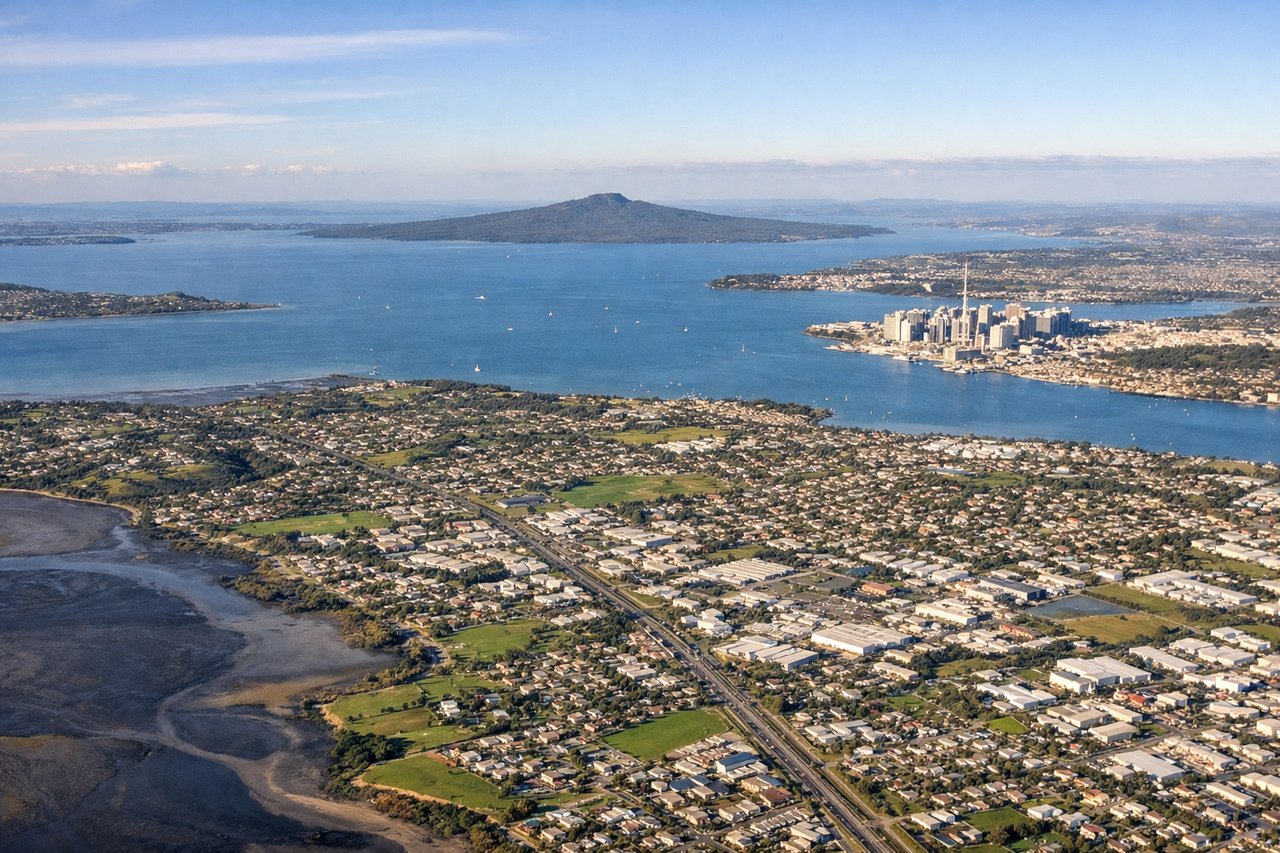
Landing at AKL
RIGHTRight side provides the superior Auckland approach. Passengers see the Waitakere Ranges to the west, the Hauraki Gulf with its island archipelago (Rangitoto, Great Barrier Island), and Auckland's harbors and city skyline during final descent. Left side faces the Tasman Sea with minimal landmarks until the final turn.
Will your flight be in sunlight?
Pick a date and time in the Sun Map to watch the sun move across your whole flight.
About This Route
Which side of the plane should I sit on flying from Rarotonga International (RAR) to Auckland International (AKL)?
Sit on the Right side of the plane for the best views on flights from Avarua to Auckland. Right side scores higher (3.5 vs 2.5) due to superior scenic variety across the entire flight. Takeoff offers Rarotonga's dramatic volcanic island scenery, while landing delivers one of the South Pacific's most visually distinctive approaches with Rangitoto, the Hauraki Gulf archipelago, and Auckland's harbors. Left side is dominated by open ocean for most of the flight with minimal landmark density.
What can I see during takeoff from Rarotonga International in Avarua?
During takeoff from Rarotonga International (RAR), sit on the Right side for the best views. Right side captures Rarotonga's dramatic volcanic terrain during climb-out. The island's central ridge and surrounding lagoon are immediately visible, with the fringing reef creating a distinctive turquoise-to-deep-blue color gradient. Left side faces open ocean with no immediate landmarks. Notable sights include: Rarotonga's central volcanic ridge (Te Manga peak area), fringing coral reef and lagoon, neighboring Aitutaki visible to the northwest at altitude.
What can I see when landing at Auckland International in Auckland?
When landing at Auckland International (AKL), sit on the Right side for the best views. Right side provides the superior Auckland approach. Passengers see the Waitakere Ranges to the west, the Hauraki Gulf with its island archipelago (Rangitoto, Great Barrier Island), and Auckland's harbors and city skyline during final descent. Left side faces the Tasman Sea with minimal landmarks until the final turn. Notable sights include: Rangitoto Island (distinctive volcanic cone in the gulf), Hauraki Gulf island chain, Waitakere Ranges, Auckland's Waitemata and Manukau harbors with city skyline.
How long is the flight from Avarua to Auckland?
The flight from Rarotonga International (RAR) to Auckland International (AKL) takes about 3 hours 15 minutes. The shortest flight path between them is 1,873 miles (3,014 km); winds and air traffic control usually add a few percent.
What does the Avarua to Auckland flight path pass over?
Open South Pacific Ocean with no visible landmarks; flight path crosses approximately 1,200 km of deep ocean between the Cook Islands and New Zealand's North Island. No islands or significant geographic features are visible during the cruise phase.