While the takeoff offers excellent Cascade views on the left, the landing approach on the right provides more dramatic and iconic scenery—the Golden Gate Bridge, San Francisco Bay, and the Bay Area's distinctive geography make for a more memorable flight conclusion.
Flown RDM to SFO? Did we get it right?
Flight Path
Redmond to San Francisco is 463 miles (745 km), a flight of about 1 hour 15 minutes.
Mount Shasta visible to the north on clear days during the climb-out phase; the Sierra Nevada range far to the southeast; the Sacramento Valley floor during cruise; the San Francisco Bay Area's urban sprawl and water bodies during descent
Great circle distance and headings ›


Phase by phase
Takeoff from RDM
LEFTLeft side captures the Cascade Range immediately west of Redmond, with Mount Jefferson and the Three Sisters volcanic peaks visible as you climb out. Right side faces the high desert plateau with minimal relief.
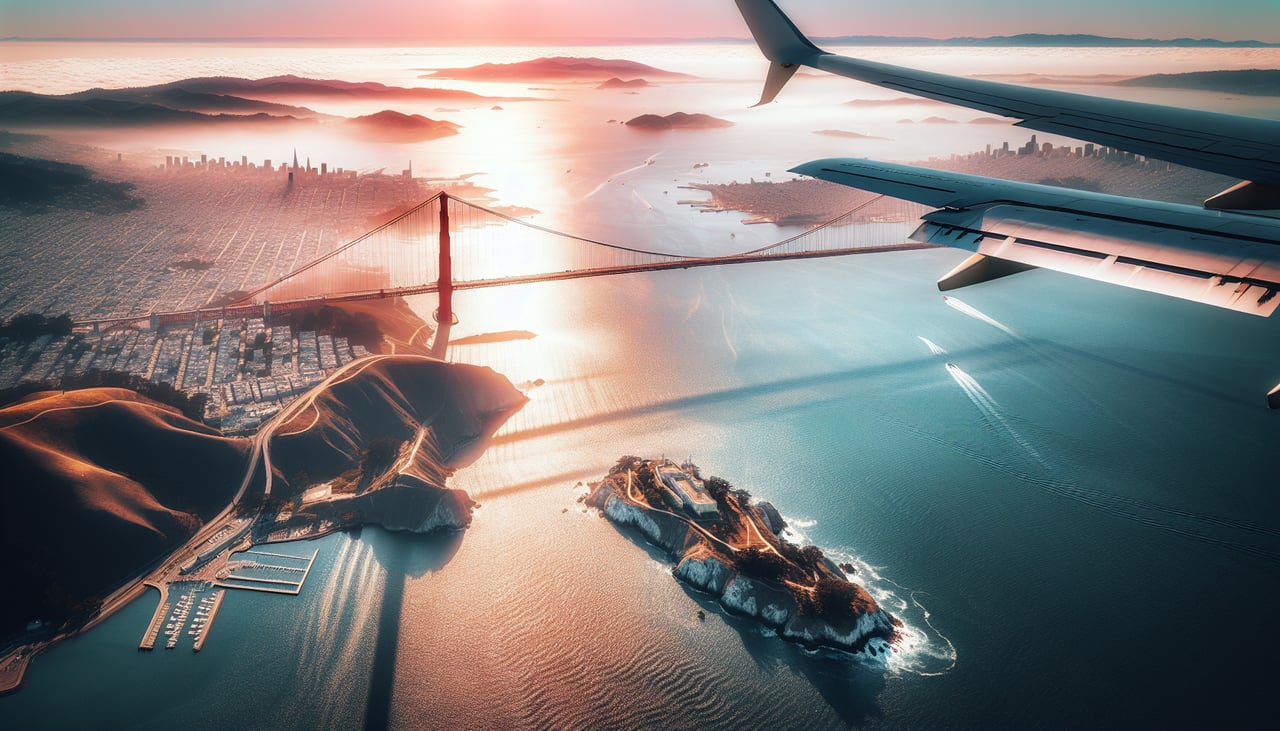
Landing at SFO
RIGHTRight side provides the best views during descent into SFO. You'll see the San Francisco Bay, the Golden Gate Bridge, and the San Francisco Peninsula's urban landscape as you approach from the east.
Will your flight be in sunlight?
Pick a date and time in the Sun Map to watch the sun move across your whole flight.
About This Route
Which side of the plane should I sit on flying from Roberts Field (RDM) to San Francisco International (SFO)?
Sit on the Right side of the plane for the best views on flights from Redmond to San Francisco. While the takeoff offers excellent Cascade views on the left, the landing approach on the right provides more dramatic and iconic scenery—the Golden Gate Bridge, San Francisco Bay, and the Bay Area's distinctive geography make for a more memorable flight conclusion.
What can I see during takeoff from Roberts Field in Redmond?
During takeoff from Roberts Field (RDM), sit on the Left side for the best views. Left side captures the Cascade Range immediately west of Redmond, with Mount Jefferson and the Three Sisters volcanic peaks visible as you climb out. Right side faces the high desert plateau with minimal relief. Notable sights include: Cascade Range (Mount Jefferson, Three Sisters), Deschutes River valley below, high desert plateau to the east.
What can I see when landing at San Francisco International in San Francisco?
When landing at San Francisco International (SFO), sit on the Right side for the best views. Right side provides the best views during descent into SFO. You'll see the San Francisco Bay, the Golden Gate Bridge, and the San Francisco Peninsula's urban landscape as you approach from the east. Notable sights include: San Francisco Bay, Golden Gate Bridge, San Francisco Peninsula and downtown skyline, Marin Headlands.
How long is the flight from Redmond to San Francisco?
The flight from Roberts Field (RDM) to San Francisco International (SFO) takes about 1 hour 15 minutes. The shortest flight path between them is 463 miles (745 km); winds and air traffic control usually add a few percent.
What does the Redmond to San Francisco flight path pass over?
Mount Shasta visible to the north on clear days during the climb-out phase; the Sierra Nevada range far to the southeast; the Sacramento Valley floor during cruise; the San Francisco Bay Area's urban sprawl and water bodies during descent