Both sides score equally at 2.0 due to the short flight duration (2h 15m) over predominantly flat terrain with no mountains, coastlines, or dramatic geographic features. However, the right side edges ahead for the landing sequence: the Dallas skyline and Trinity River provide more concentrated urban visual interest during descent than the Research Triangle departure offers. For a flight this short and flat, neither side delivers exceptional scenery, but right captures the more memorable moment.
Flown RDU to DAL? Did we get it right?
Flight Path
Raleigh-Durham to Dallas is 1,050 miles (1,689 km), a flight of about 2 hours 15 minutes.
The flight crosses the flat to gently rolling terrain of central North Carolina and northern Texas. Notable features include the Piedmont region of North Carolina (rolling hills, mixed forest), the transition to the Coastal Plain near the North Carolina-Virginia border, the flat agricultural plains of southern Virginia and Tennessee, and the gradual rise into the Texas prairie. The flight passes east of the Appalachian Mountains and west of the Atlantic coastal plain. No major mountain ranges, significant bodies of water, or dramatic geological features are visible along the typical cruise altitude flight path. The landscape is predominantly forested in the east, transitioning to open prairie and agricultural land in Texas.
Great circle distance and headings ›

Phase by phase
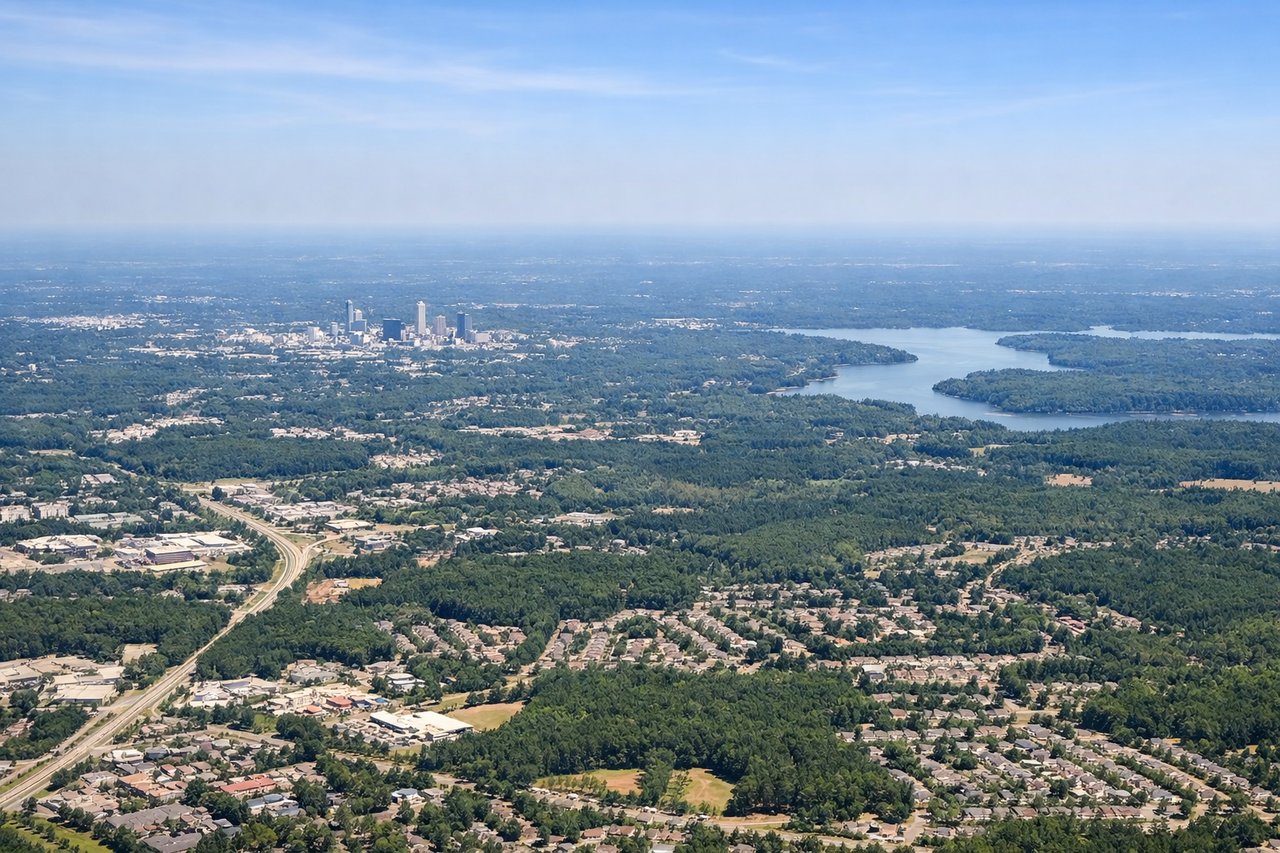
Takeoff from RDU
LEFTLeft side captures the Research Triangle region (Raleigh, Durham, Chapel Hill) during initial climb, offering brief urban texture before the flight transitions to flat terrain. Right side shows only open farmland and forest immediately after departure.
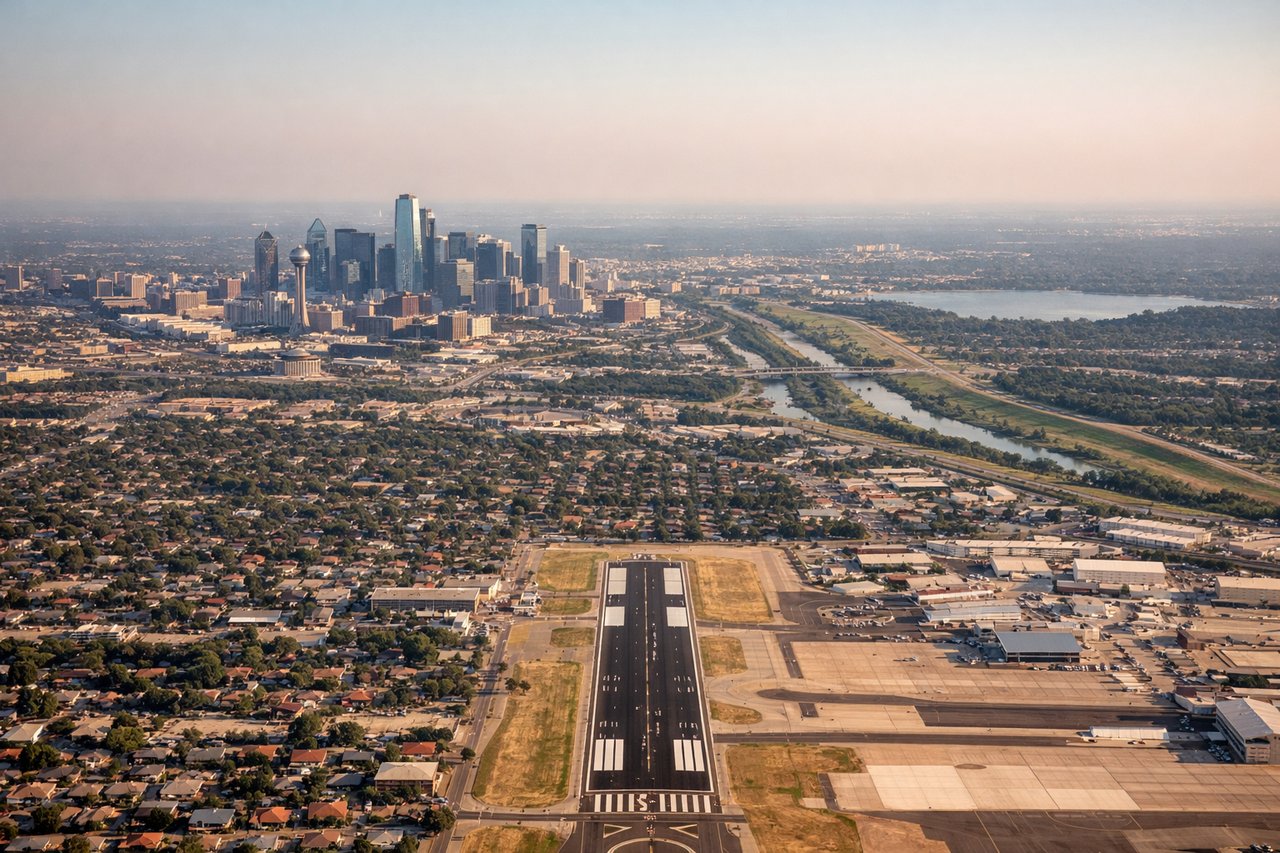
Landing at DAL
RIGHTRight side (north) during approach to Dallas Love Field offers views of the Dallas-Fort Worth urban corridor and the Trinity River system. Left side (south) shows only suburban sprawl and flat prairie with minimal visual interest.
Will your flight be in sunlight?
Pick a date and time in the Sun Map to watch the sun move across your whole flight.
About This Route
Which side of the plane should I sit on flying from Raleigh Durham International (RDU) to Dallas Love Fld (DAL)?
Sit on the Right side of the plane for the best views on flights from Raleigh-Durham to Dallas. Both sides score equally at 2.0 due to the short flight duration (2h 15m) over predominantly flat terrain with no mountains, coastlines, or dramatic geographic features. However, the right side edges ahead for the landing sequence: the Dallas skyline and Trinity River provide more concentrated urban visual interest during descent than the Research Triangle departure offers. For a flight this short and flat, neither side delivers exceptional scenery, but right captures the more memorable moment.
What can I see during takeoff from Raleigh Durham International in Raleigh-Durham?
During takeoff from Raleigh Durham International (RDU), sit on the Left side for the best views. Left side captures the Research Triangle region (Raleigh, Durham, Chapel Hill) during initial climb, offering brief urban texture before the flight transitions to flat terrain. Right side shows only open farmland and forest immediately after departure. Notable sights include: Research Triangle urban cluster, Neuse River valley, piedmont forest canopy.
What can I see when landing at Dallas Love Fld in Dallas?
When landing at Dallas Love Fld (DAL), sit on the Right side for the best views. Right side (north) during approach to Dallas Love Field offers views of the Dallas-Fort Worth urban corridor and the Trinity River system. Left side (south) shows only suburban sprawl and flat prairie with minimal visual interest. Notable sights include: Dallas downtown skyline, Trinity River, Fort Worth metropolitan area, Lake Lewisville (north).
How long is the flight from Raleigh-Durham to Dallas?
The flight from Raleigh Durham International (RDU) to Dallas Love Fld (DAL) takes about 2 hours 15 minutes. The shortest flight path between them is 1,050 miles (1,689 km); winds and air traffic control usually add a few percent.
What does the Raleigh-Durham to Dallas flight path pass over?
The flight crosses the flat to gently rolling terrain of central North Carolina and northern Texas. Notable features include the Piedmont region of North Carolina (rolling hills, mixed forest), the transition to the Coastal Plain near the North Carolina-Virginia border, the flat agricultural plains of southern Virginia and Tennessee, and the gradual rise into the Texas prairie. The flight passes east of the Appalachian Mountains and west of the Atlantic coastal plain. No major mountain ranges, significant bodies of water, or dramatic geological features are visible along the typical cruise altitude flight path. The landscape is predominantly forested in the east, transitioning to open prairie and agricultural land in Texas.