While landing favors left seats for the Mississippi River and Gateway Arch, the takeoff view of the Neuse River valley and Piedmont terrain is more distinctive and sustained. Right seats also capture better views during the westbound cruise segment over central North Carolina and Tennessee foothills.
Flown RDU to STL? Did we get it right?
Flight Path
Raleigh-Durham to St. Louis is 666 miles (1,072 km), a flight of about 2 hours 15 minutes.
The flight path crosses central North Carolina's Piedmont (rolling forested terrain with scattered lakes), then enters Tennessee, passing near or over the Cumberland Plateau's eastern edge. The Tennessee River valley becomes visible in the descent phase. The Ohio River valley appears as the aircraft approaches Missouri. No major mountain ranges are crossed, but the gradual elevation change from Piedmont to Cumberland Plateau creates subtle terrain relief visible at cruise altitude.
Great circle distance and headings ›Phase by phase
Takeoff from RDU
RIGHTRDU typically departs runway 05L/05R (northeast heading) or 23L/23R (southwest heading). Right seats on northeast departures offer views of the Neuse River valley and Durham's urban sprawl. Southwest departures favor right seats for Chapel Hill and the Piedmont terrain rolling westward.
Landing at STL
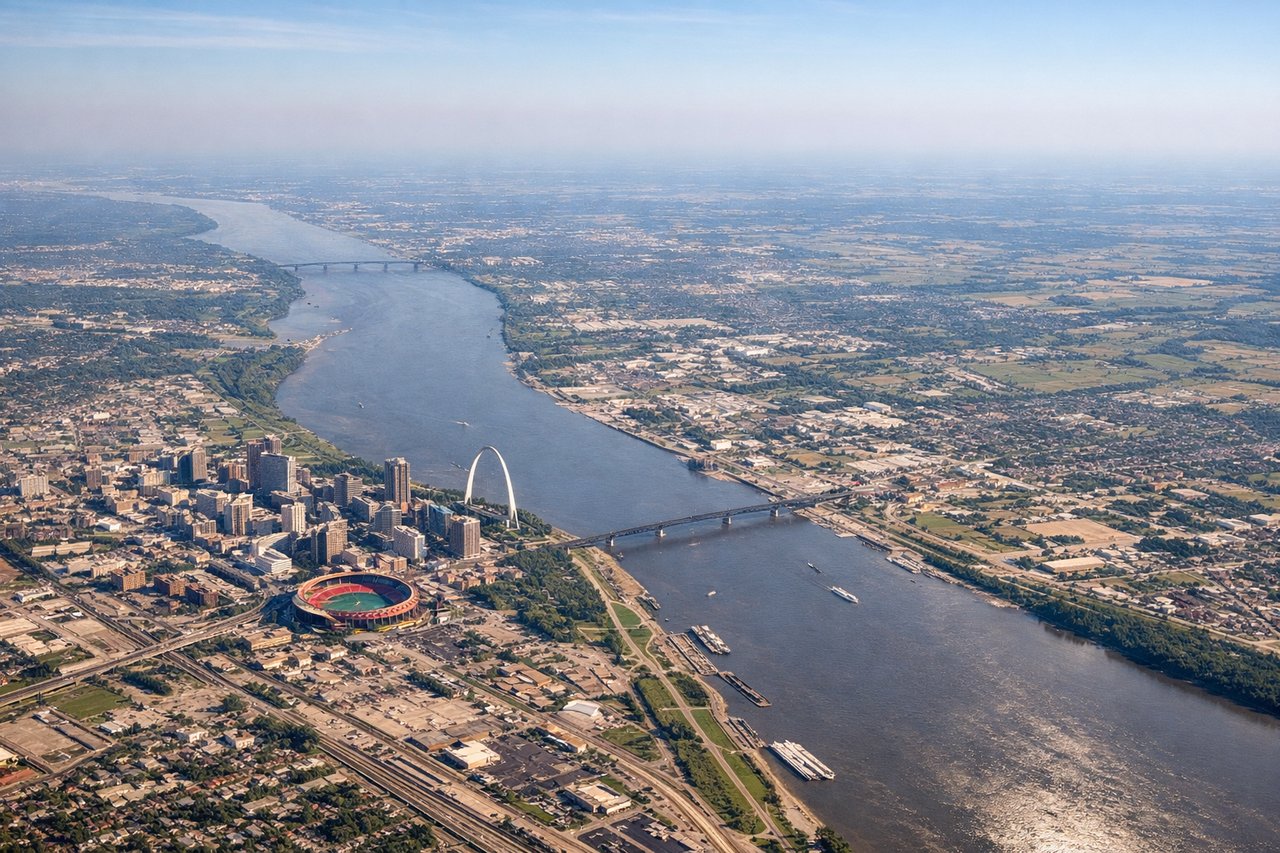
LEFTSTL approaches typically use runways 24L/24R (westbound) or 30L/30R (northbound). Left seats on westbound approaches descend over the Mississippi River valley with excellent views of the river's broad meanders. Northbound approaches favor left seats for the Gateway Arch and downtown St. Louis skyline.
Will your flight be in sunlight?
Pick a date and time in the Sun Map to watch the sun move across your whole flight.
About This Route
Which side of the plane should I sit on flying from Raleigh Durham International (RDU) to Lambert St Louis International (STL)?
Sit on the Right side of the plane for the best views on flights from Raleigh-Durham to St. Louis. While landing favors left seats for the Mississippi River and Gateway Arch, the takeoff view of the Neuse River valley and Piedmont terrain is more distinctive and sustained. Right seats also capture better views during the westbound cruise segment over central North Carolina and Tennessee foothills.
What can I see during takeoff from Raleigh Durham International in Raleigh-Durham?
During takeoff from Raleigh Durham International (RDU), sit on the Right side for the best views. RDU typically departs runway 05L/05R (northeast heading) or 23L/23R (southwest heading). Right seats on northeast departures offer views of the Neuse River valley and Durham's urban sprawl. Southwest departures favor right seats for Chapel Hill and the Piedmont terrain rolling westward. Notable sights include: Neuse River (visible as a meandering ribbon east of the airport), Durham urban core (grid pattern of streets and commercial areas), Chapel Hill to the west (smaller town cluster), Piedmont foothills rising gradually to the northwest.
What can I see when landing at Lambert St Louis International in St. Louis?
When landing at Lambert St Louis International (STL), sit on the Left side for the best views. STL approaches typically use runways 24L/24R (westbound) or 30L/30R (northbound). Left seats on westbound approaches descend over the Mississippi River valley with excellent views of the river's broad meanders. Northbound approaches favor left seats for the Gateway Arch and downtown St. Louis skyline. Notable sights include: Mississippi River (dominant feature, wide and meandering), Gateway Arch (distinctive stainless steel monument in downtown), St. Louis downtown skyline (cluster of office towers), Illinois bluffs on the eastern bank (forested ridgeline).
How long is the flight from Raleigh-Durham to St. Louis?
The flight from Raleigh Durham International (RDU) to Lambert St Louis International (STL) takes about 2 hours 15 minutes. The shortest flight path between them is 666 miles (1,072 km); winds and air traffic control usually add a few percent.
What does the Raleigh-Durham to St. Louis flight path pass over?
The flight path crosses central North Carolina's Piedmont (rolling forested terrain with scattered lakes), then enters Tennessee, passing near or over the Cumberland Plateau's eastern edge. The Tennessee River valley becomes visible in the descent phase. The Ohio River valley appears as the aircraft approaches Missouri. No major mountain ranges are crossed, but the gradual elevation change from Piedmont to Cumberland Plateau creates subtle terrain relief visible at cruise altitude.