Left side wins both ends of the flight. At takeoff you get Reykjavik, Esja, and Faxaflói Bay; at landing you get the Denver skyline framed against the entire Rocky Mountain Front Range. The right side offers open ocean and open plains at the respective ends — far less visually rewarding.
Flight Path
The route tracks southwest over the North Atlantic, crossing southern Greenland's ice sheet and coastal fjords, then over Baffin Island or Labrador depending on routing. Over Canada the flight crosses the boreal forest of Quebec and Ontario, then the Great Lakes region may be visible depending on exact routing. Crossing into the US, the flight passes over the northern Great Plains of the Dakotas and Nebraska before descending toward Denver. The most dramatic midpoint feature is the Greenland ice sheet — a vast white plateau visible from cruising altitude on clear days.
Great circle distance and headings ›Phase by phase
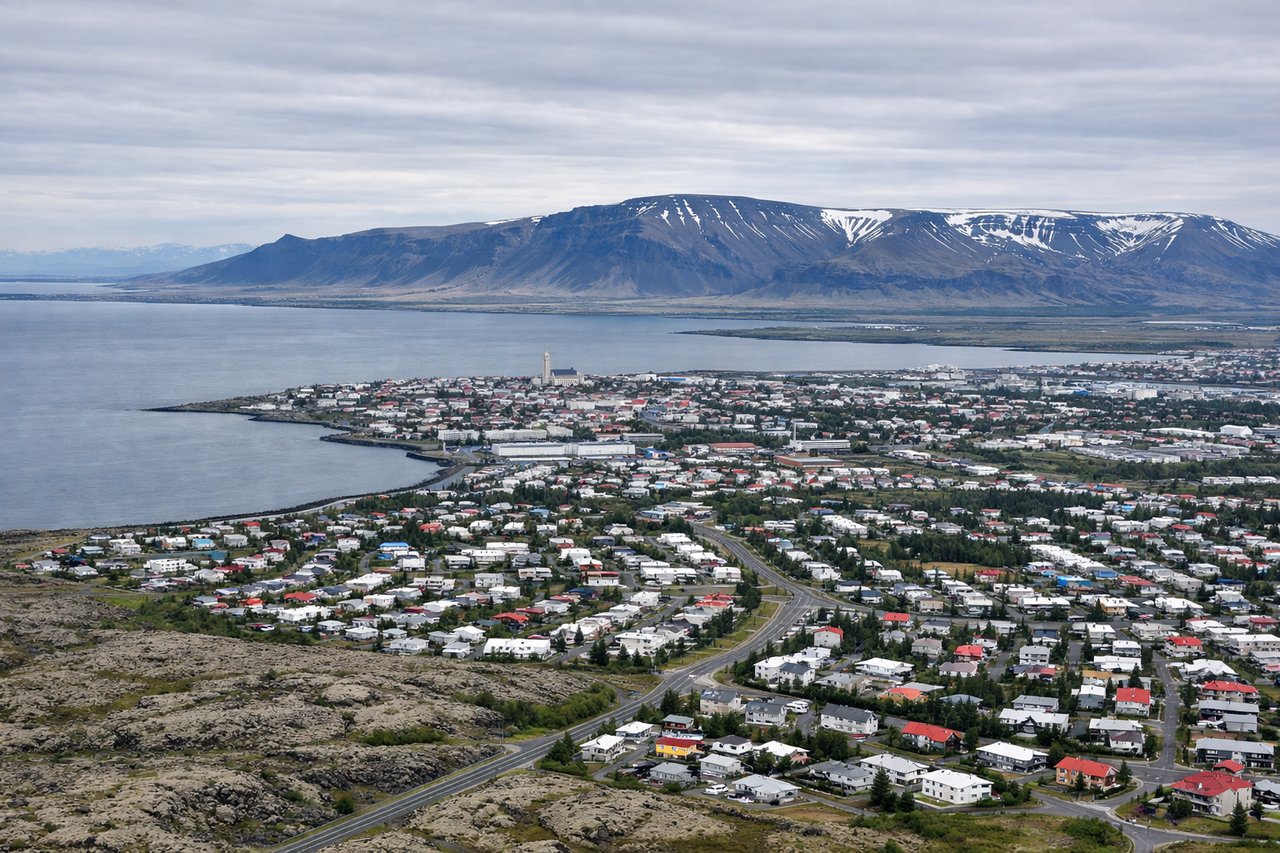
Takeoff from RKV
LEFTReykjavik City Airport (RKV) departures heading roughly southwest or west will put Faxaflói Bay and the Snæfellsnes Peninsula on the left side. The left seat also captures the city of Reykjavik itself and Mount Esja directly across the bay. Right side gets suburban sprawl and less dramatic terrain.
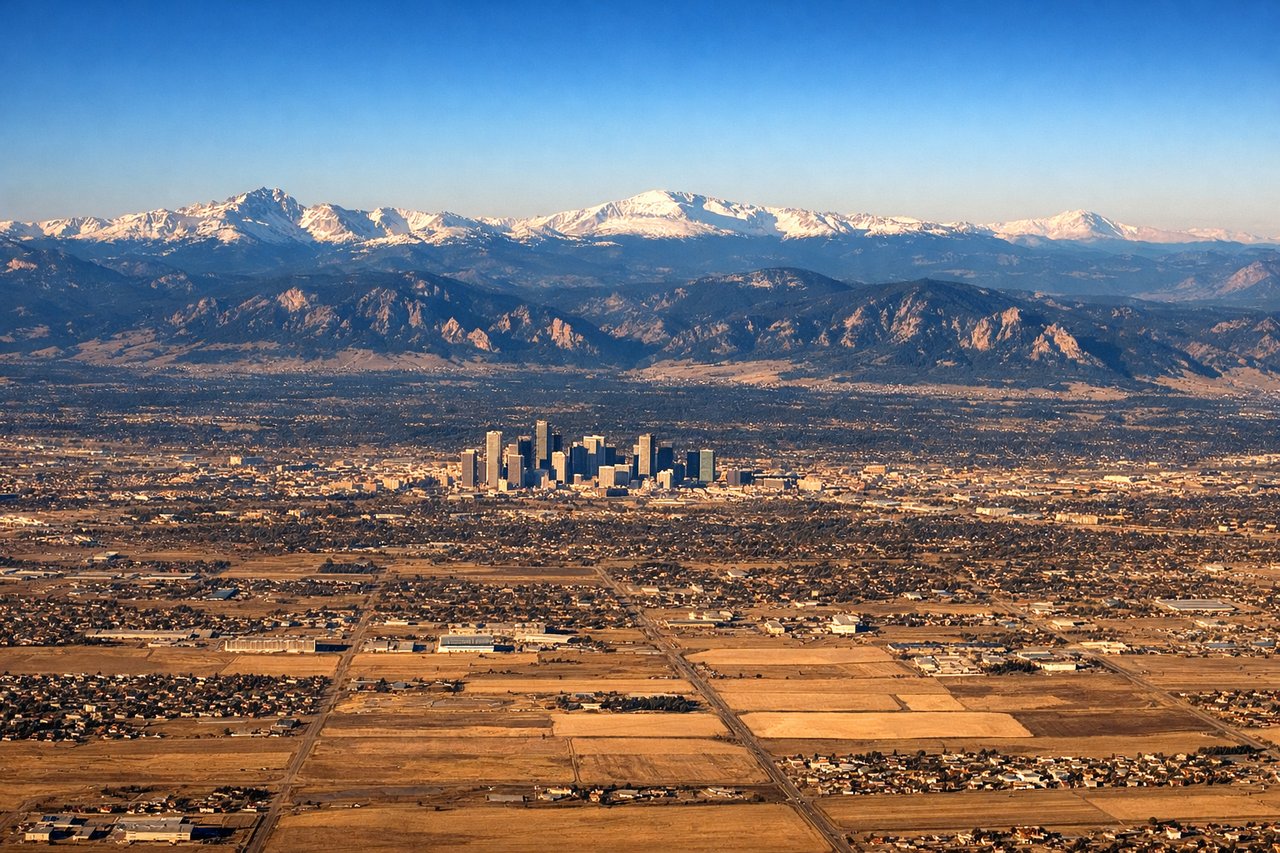
Landing at DEN
LEFTDenver International sits on the plains east of the city, and aircraft typically land from the east heading west. The left side on approach gives a clear view of the Denver skyline against the Front Range of the Rockies, with the Rocky Mountain peaks stretching from Pikes Peak in the south to Longs Peak in the north. The right side faces open eastern plains with little of interest.
Landmarks on this routeAll landmarks →
Will your flight be in sunlight?
See exactly which side of the plane gets sun and shade at your departure time.
About This Route
Which side of the plane should I sit on flying from Reykjavik (RKV) to Denver International (DEN)?
Sit on the Left side of the plane for the best views on flights from Reykjavik to Denver. Left side wins both ends of the flight. At takeoff you get Reykjavik, Esja, and Faxaflói Bay; at landing you get the Denver skyline framed against the entire Rocky Mountain Front Range. The right side offers open ocean and open plains at the respective ends — far less visually rewarding.
What can I see during takeoff from Reykjavik in Reykjavik?
During takeoff from Reykjavik (RKV), sit on the Left side for the best views. Reykjavik City Airport (RKV) departures heading roughly southwest or west will put Faxaflói Bay and the Snæfellsnes Peninsula on the left side. The left seat also captures the city of Reykjavik itself and Mount Esja directly across the bay. Right side gets suburban sprawl and less dramatic terrain. Notable sights include: Mount Esja (914m flat-topped ridge north of Reykjavik), Faxaflói Bay (wide open bay west of the city), Reykjavik city center and Hallgrímskirkja church spire, Snæfellsjökull glacier on the distant Snæfellsnes Peninsula.
What can I see when landing at Denver International in Denver?
When landing at Denver International (DEN), sit on the Left side for the best views. Denver International sits on the plains east of the city, and aircraft typically land from the east heading west. The left side on approach gives a clear view of the Denver skyline against the Front Range of the Rockies, with the Rocky Mountain peaks stretching from Pikes Peak in the south to Longs Peak in the north. The right side faces open eastern plains with little of interest. Notable sights include: Denver city skyline (downtown skyscrapers clearly visible), Front Range of the Rocky Mountains (including Longs Peak, Mount Evans, and Pikes Peak visible as a long wall of peaks), Rocky Mountain Arsenal National Wildlife Refuge (flat open land immediately west of DEN), South Platte River valley.
How long is the flight from Reykjavik to Denver?
The flight from Reykjavik (RKV) to Denver International (DEN) takes Approximately 8 to 9 hours.
What does the Reykjavik to Denver flight path pass over?
The route tracks southwest over the North Atlantic, crossing southern Greenland's ice sheet and coastal fjords, then over Baffin Island or Labrador depending on routing. Over Canada the flight crosses the boreal forest of Quebec and Ontario, then the Great Lakes region may be visible depending on exact routing. Crossing into the US, the flight passes over the northern Great Plains of the Dakotas and Nebraska before descending toward Denver. The most dramatic midpoint feature is the Greenland ice sheet — a vast white plateau visible from cruising altitude on clear days.