Left side wins at both ends of the flight. Over the ocean cruise portion there is little to differentiate sides, but the left seat captures the best of both Reykjavik's dramatic volcanic landscape on departure and Amsterdam's canal city and polder geography on arrival.
Flight Path
The flight tracks southeast over the North Atlantic, crossing the Faroe Islands roughly 45 minutes after departure — visible as small dark rocky outcrops in grey sea on clear days. The route then passes over or near the Shetland Islands before crossing the North Sea. The North Sea crossing occupies the final 45-60 minutes, with occasional offshore wind farm arrays visible as clusters of white turbines in the shallow grey water on descent into the Netherlands.
Great circle distance and headings ›


Phase by phase
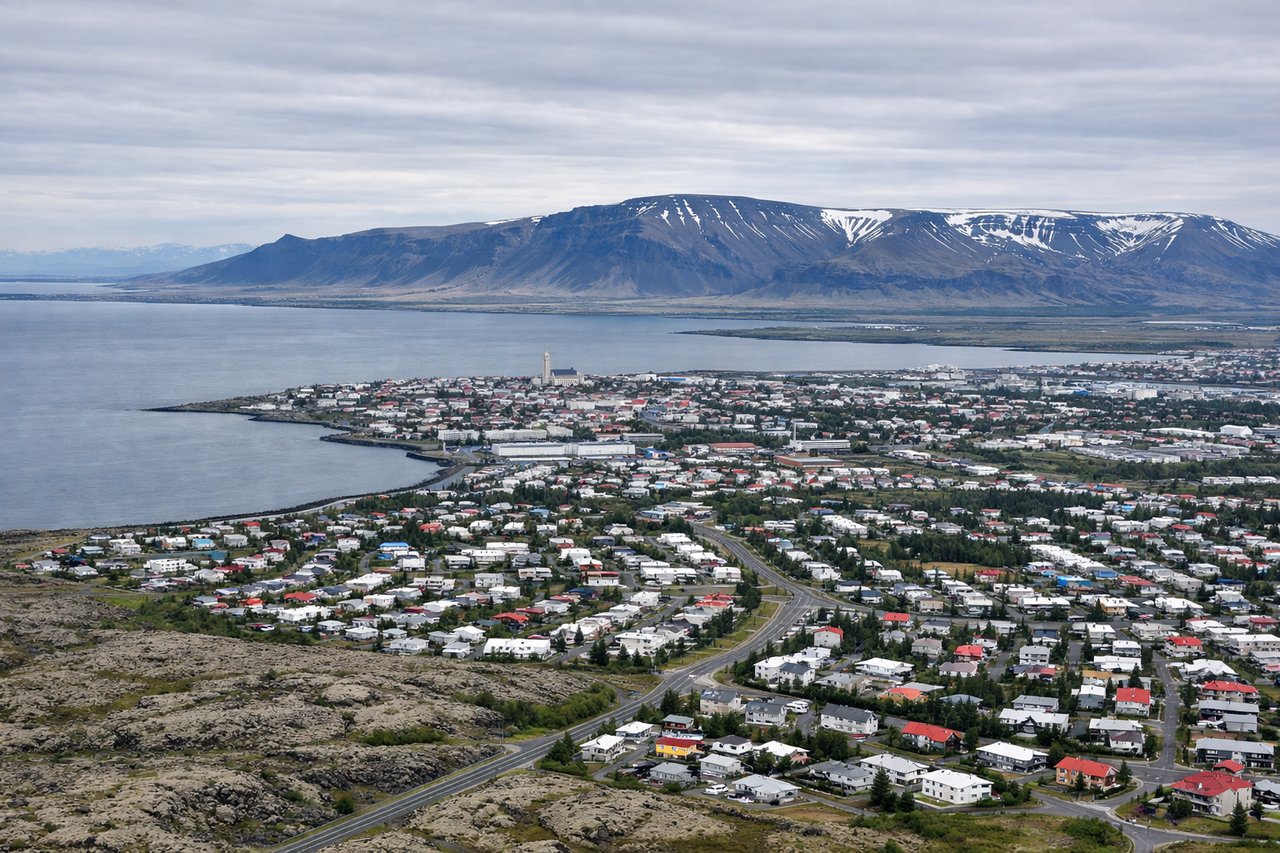
Takeoff from RKV
LEFTReykjavik Airport (RKV) typically departs on runway 19 heading south or runway 01 heading north. On a southbound departure toward AMS, the left side faces east toward Mount Esja and the Reykjavik city center spreading along the bay. The right side looks out over Faxaflói Bay with less visual interest.
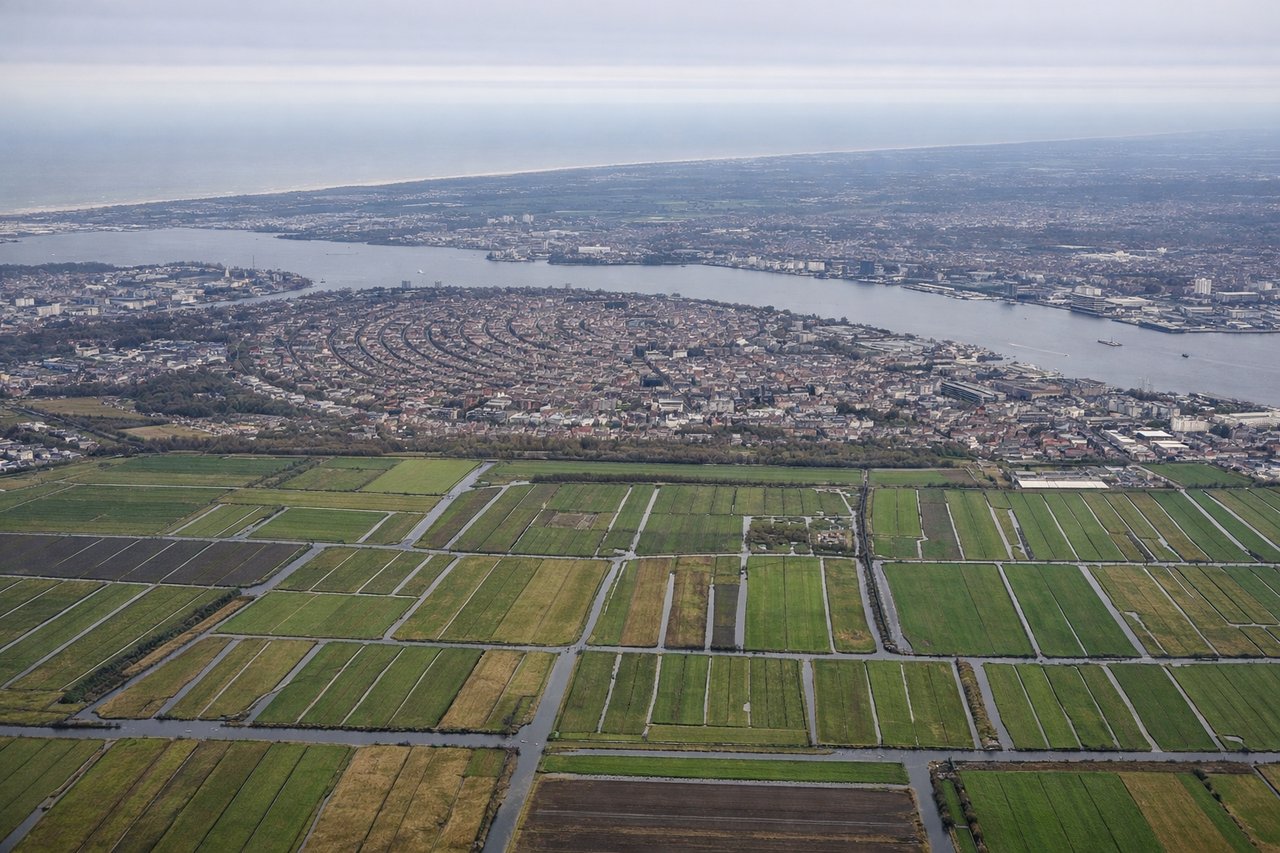
Landing at AMS
LEFTSchiphol typically uses runways oriented northeast-southwest or east-west. On approach from the north-northwest, the left side faces south toward Amsterdam city center, the IJ waterway, and the distinctive patchwork of Dutch polders. The right side looks mostly over flat agricultural land west of the city with less to identify.
Landmarks on this routeAll landmarks →
Will your flight be in sunlight?
See exactly which side of the plane gets sun and shade at your departure time.
About This Route
Which side of the plane should I sit on flying from Reykjavik (RKV) to Schiphol (AMS)?
Sit on the Left side of the plane for the best views on flights from Reykjavik to Amsterdam. Left side wins at both ends of the flight. Over the ocean cruise portion there is little to differentiate sides, but the left seat captures the best of both Reykjavik's dramatic volcanic landscape on departure and Amsterdam's canal city and polder geography on arrival.
What can I see during takeoff from Reykjavik in Reykjavik?
During takeoff from Reykjavik (RKV), sit on the Left side for the best views. Reykjavik Airport (RKV) typically departs on runway 19 heading south or runway 01 heading north. On a southbound departure toward AMS, the left side faces east toward Mount Esja and the Reykjavik city center spreading along the bay. The right side looks out over Faxaflói Bay with less visual interest. Notable sights include: Mount Esja (914m), Reykjavik city center and Hallgrímskirkja church spire, Faxaflói Bay coastline, Kjalarnes peninsula.
What can I see when landing at Schiphol in Amsterdam?
When landing at Schiphol (AMS), sit on the Left side for the best views. Schiphol typically uses runways oriented northeast-southwest or east-west. On approach from the north-northwest, the left side faces south toward Amsterdam city center, the IJ waterway, and the distinctive patchwork of Dutch polders. The right side looks mostly over flat agricultural land west of the city with less to identify. Notable sights include: Amsterdam city center and canal ring, IJ waterway and IJmeer, Dutch polder landscape with geometric field patterns, Westpoort industrial harbor district.
How long is the flight from Reykjavik to Amsterdam?
The flight from Reykjavik (RKV) to Schiphol (AMS) takes Approximately 3 hours 15 minutes.
What does the Reykjavik to Amsterdam flight path pass over?
The flight tracks southeast over the North Atlantic, crossing the Faroe Islands roughly 45 minutes after departure — visible as small dark rocky outcrops in grey sea on clear days. The route then passes over or near the Shetland Islands before crossing the North Sea. The North Sea crossing occupies the final 45-60 minutes, with occasional offshore wind farm arrays visible as clusters of white turbines in the shallow grey water on descent into the Netherlands.