Right-side seats capture the most dramatic scenery on both segments: the volcanic peaks and Lake Ilopango during departure, and the approach provides reasonable views of the Central Valley and Cordillera Central. The takeoff views are particularly striking, making right the superior choice for this route.
Flown SAL to SJO? Did we get it right?
Flight Path
San Salvador to San Jose is 405 miles (652 km), a flight of about 1 hour 10 minutes.
The flight path crosses the Pacific coastal lowlands of El Salvador and Guatemala, then enters Nicaragua's western region before turning southeast toward Costa Rica. The Cordillera de Guanacaste (volcanic range in northwestern Costa Rica) becomes visible as the aircraft approaches Costa Rican airspace. The terrain transitions from coastal plains to increasingly mountainous topography as the aircraft descends into the Central Valley.
Great circle distance and headings ›Phase by phase
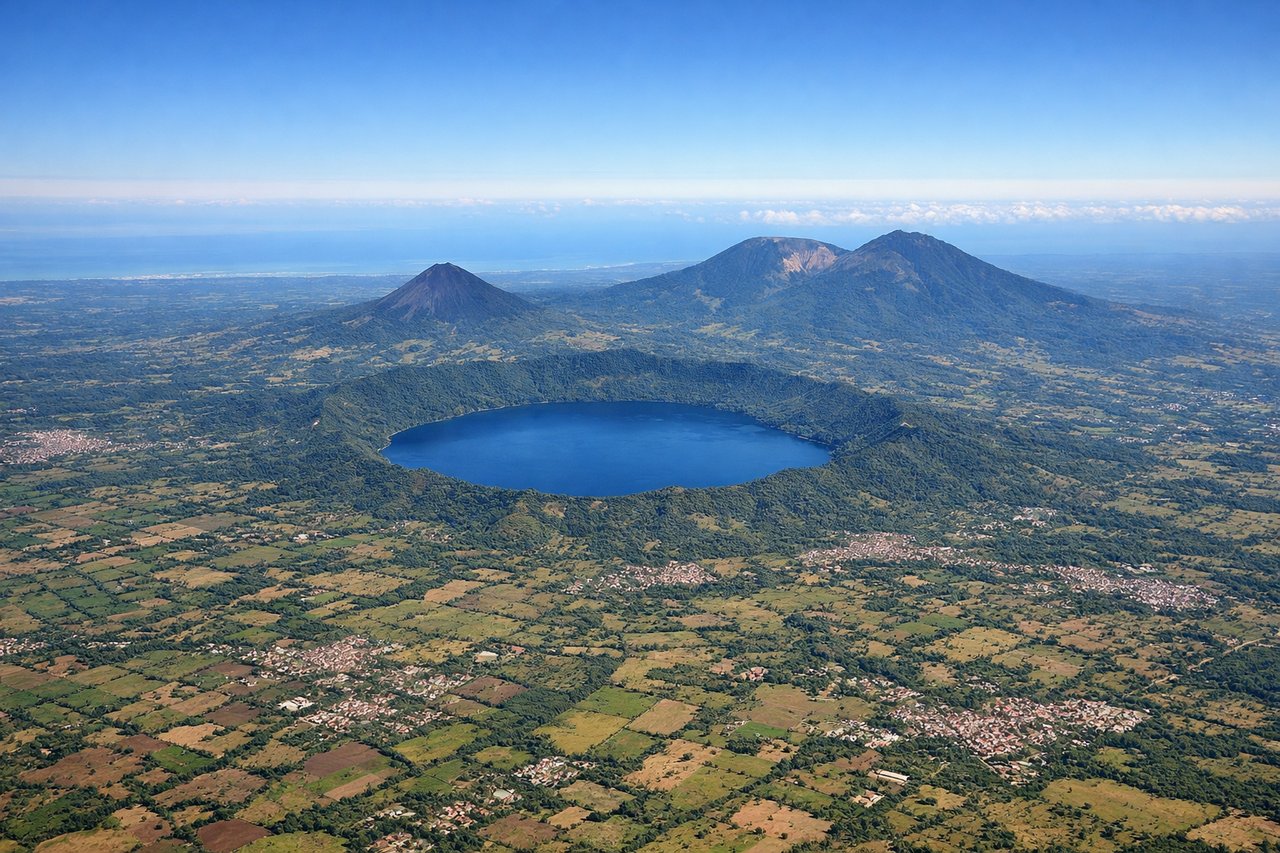
Takeoff from SAL
RIGHTRight-side seats offer views of the Central American volcanic chain immediately after departure. The flight climbs southeast toward Costa Rica, so right-side passengers see the prominent volcanic peaks that define El Salvador's landscape as they gain altitude.
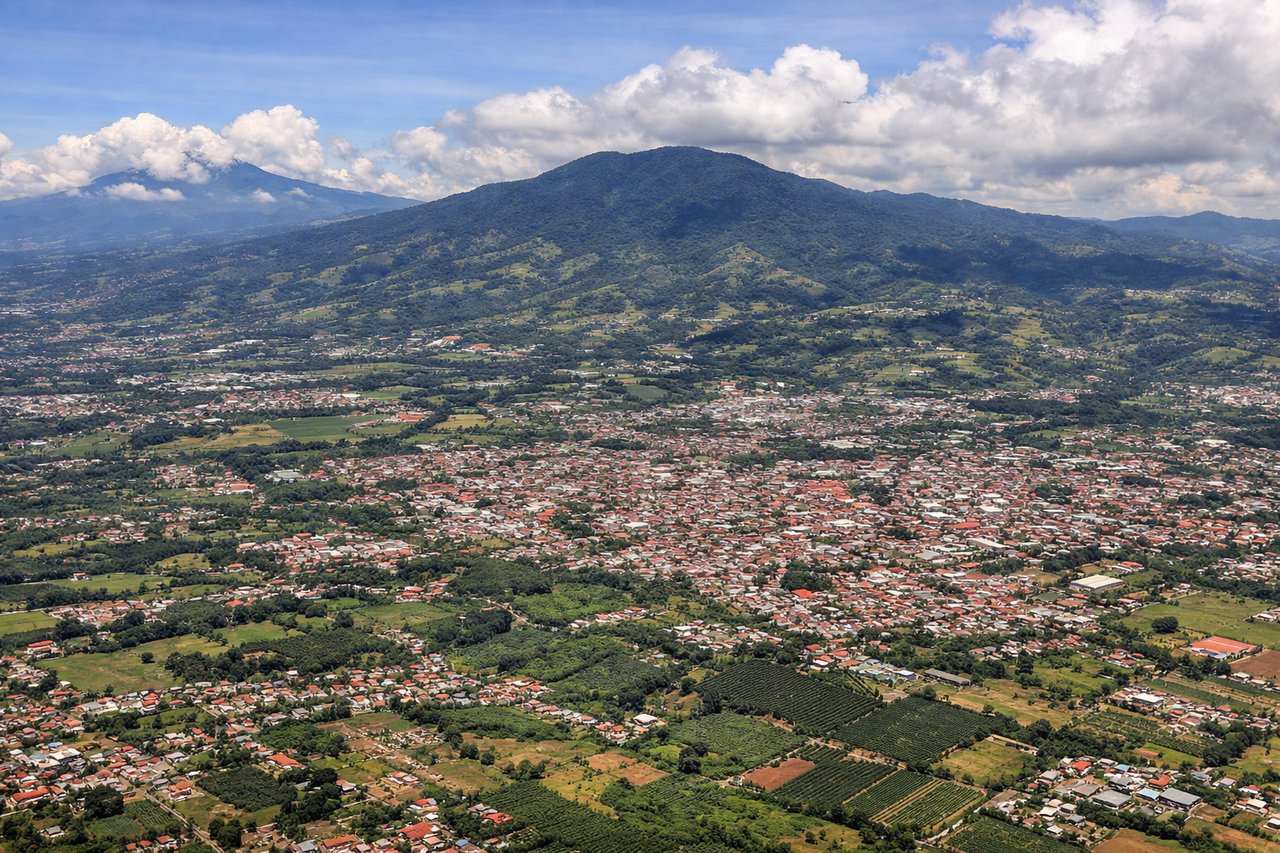
Landing at SJO
LEFTLeft-side seats provide the best views during approach to San Jose. The aircraft descends from the northwest into the Central Valley, and left-side passengers see the dramatic Cordillera Central mountain range and the valley's topography as the plane lines up for landing.
Will your flight be in sunlight?
Pick a date and time in the Sun Map to watch the sun move across your whole flight.
About This Route
Which side of the plane should I sit on flying from El Salvador International (SAL) to Juan Santamaria International (SJO)?
Sit on the Right side of the plane for the best views on flights from San Salvador to San Jose. Right-side seats capture the most dramatic scenery on both segments: the volcanic peaks and Lake Ilopango during departure, and the approach provides reasonable views of the Central Valley and Cordillera Central. The takeoff views are particularly striking, making right the superior choice for this route.
What can I see during takeoff from El Salvador International in San Salvador?
During takeoff from El Salvador International (SAL), sit on the Right side for the best views. Right-side seats offer views of the Central American volcanic chain immediately after departure. The flight climbs southeast toward Costa Rica, so right-side passengers see the prominent volcanic peaks that define El Salvador's landscape as they gain altitude. Notable sights include: Santa Ana Volcano (2,365 m, visible to the west-southwest), San Salvador Volcano (1,893 m, closer to the airport), Lake Ilopango (large crater lake southeast of the city), Pacific coastal plain stretching south.
What can I see when landing at Juan Santamaria International in San Jose?
When landing at Juan Santamaria International (SJO), sit on the Left side for the best views. Left-side seats provide the best views during approach to San Jose. The aircraft descends from the northwest into the Central Valley, and left-side passengers see the dramatic Cordillera Central mountain range and the valley's topography as the plane lines up for landing. Notable sights include: Cordillera Central (mountain range to the north and east of San Jose), Central Valley of Costa Rica (the broad valley containing San Jose), Barva Volcano (3,052 m, visible to the northeast), Irazu Volcano (3,432 m, visible on clear days to the east).
How long is the flight from San Salvador to San Jose?
The flight from El Salvador International (SAL) to Juan Santamaria International (SJO) takes about 1 hour 10 minutes. The shortest flight path between them is 405 miles (652 km); winds and air traffic control usually add a few percent.
What does the San Salvador to San Jose flight path pass over?
The flight path crosses the Pacific coastal lowlands of El Salvador and Guatemala, then enters Nicaragua's western region before turning southeast toward Costa Rica. The Cordillera de Guanacaste (volcanic range in northwestern Costa Rica) becomes visible as the aircraft approaches Costa Rican airspace. The terrain transitions from coastal plains to increasingly mountainous topography as the aircraft descends into the Central Valley.