While the takeoff offers good Sea of Marmara views on the right, the landing approach into Itami provides more dramatic and visually distinctive scenery: Osaka Bay, the Kansai urban corridor, and the Rokko Mountains create a more compelling final descent experience than the Istanbul departure.
Flown SAW to ITM? Did we get it right?
Flight Path
Pendik, Istanbul to Osaka is 5,417 miles (8,718 km), a flight of about 11 hours 30 minutes.
Flight path crosses the Anatolian Plateau (central Turkey), then transitions over the Caucasus region or southern Russia, continuing across the Caspian Sea region, through Kazakhstan/Turkmenistan, over the Iranian plateau, and into the Arabian Sea before turning north toward Japan. Notable visible features include the Taurus Mountains (south of central Anatolia), the Elburz Mountains (south of the Caspian), and the Hindu Kush/Pamir ranges (if routing permits). The descent into Osaka crosses the Japanese Alps and approaches from the Seto Inland Sea region.
Great circle distance and headings ›Phase by phase
Takeoff from SAW
RIGHTRight-side seats offer views of the Sea of Marmara and the Asian side of Istanbul during the initial climb-out. The aircraft departs eastward from Sabiha Gökçen, so the right wing captures the water body and coastal topography immediately.
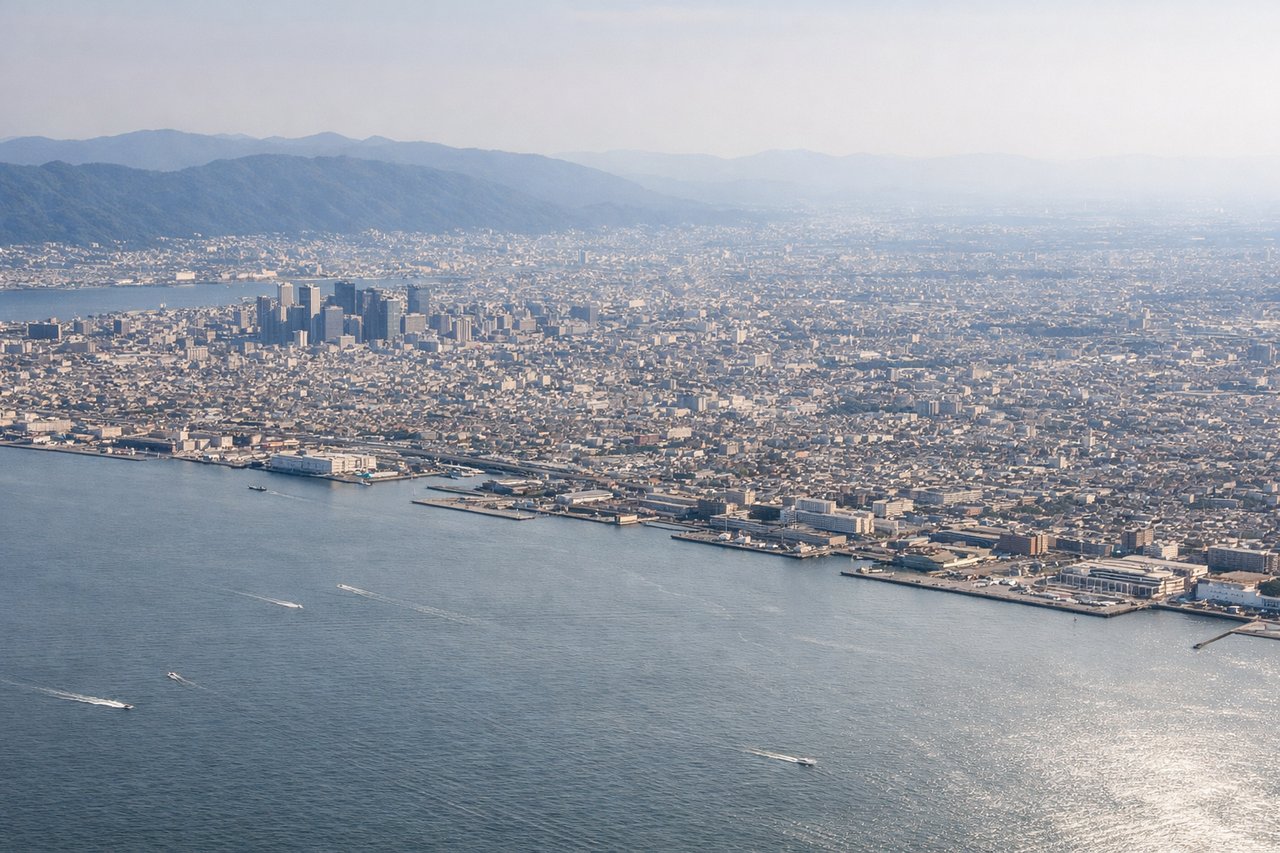
Landing at ITM
LEFTLeft-side seats provide views of Osaka Bay, Kobe, and the Kansai region's urban sprawl during descent. The aircraft approaches Itami from the southwest, so the left wing captures the bay's distinctive geography and the industrial waterfront.
Will your flight be in sunlight?
Pick a date and time in the Sun Map to watch the sun move across your whole flight.
About This Route
Which side of the plane should I sit on flying from Istanbul Sabiha Gökçen International Airport (SAW) to Osaka International (ITM)?
Sit on the Left side of the plane for the best views on flights from Pendik, Istanbul to Osaka. While the takeoff offers good Sea of Marmara views on the right, the landing approach into Itami provides more dramatic and visually distinctive scenery: Osaka Bay, the Kansai urban corridor, and the Rokko Mountains create a more compelling final descent experience than the Istanbul departure.
What can I see during takeoff from Istanbul Sabiha Gökçen International Airport in Pendik, Istanbul?
During takeoff from Istanbul Sabiha Gökçen International Airport (SAW), sit on the Right side for the best views. Right-side seats offer views of the Sea of Marmara and the Asian side of Istanbul during the initial climb-out. The aircraft departs eastward from Sabiha Gökçen, so the right wing captures the water body and coastal topography immediately. Notable sights include: Sea of Marmara, Pendik waterfront and residential districts, Prince Islands (Kınalıada and Burgazada visible as small landmasses), Asian coastline extending southeast.
What can I see when landing at Osaka International in Osaka?
When landing at Osaka International (ITM), sit on the Left side for the best views. Left-side seats provide views of Osaka Bay, Kobe, and the Kansai region's urban sprawl during descent. The aircraft approaches Itami from the southwest, so the left wing captures the bay's distinctive geography and the industrial waterfront. Notable sights include: Osaka Bay (Osaka-wan), Kobe city and port facilities across the bay to the west, Kansai Plain with dense urban grid, Rokko Mountains forming the northern backdrop.
How long is the flight from Pendik, Istanbul to Osaka?
The flight from Istanbul Sabiha Gökçen International Airport (SAW) to Osaka International (ITM) takes about 11 hours 30 minutes. The shortest flight path between them is 5,417 miles (8,718 km); winds and air traffic control usually add a few percent.
What does the Pendik, Istanbul to Osaka flight path pass over?
Flight path crosses the Anatolian Plateau (central Turkey), then transitions over the Caucasus region or southern Russia, continuing across the Caspian Sea region, through Kazakhstan/Turkmenistan, over the Iranian plateau, and into the Arabian Sea before turning north toward Japan. Notable visible features include the Taurus Mountains (south of central Anatolia), the Elburz Mountains (south of the Caspian), and the Hindu Kush/Pamir ranges (if routing permits). The descent into Osaka crosses the Japanese Alps and approaches from the Seto Inland Sea region.