Right seats win overall because the takeoff views over Guanabara Bay and Rio's iconic mountain backdrop are more visually distinctive than the landing approach. While left seats offer good industrial/suburban context on arrival, the departure scenery is geographically more dramatic and memorable.
Flown SDU to GRU? Did we get it right?
Flight Path
Rio De Janeiro to Sao Paulo is 213 miles (343 km), a flight of about 1 hour 15 minutes.
The flight path travels southwest from Rio over the coastal lowlands and then inland toward São Paulo. Notable features include the Paraíba do Sul River valley (visible as a linear feature in the terrain), the transition from coastal mountains to the interior plateau, and the gradual shift from Rio's granite peaks to São Paulo's more subdued topography. The Mantiqueira Mountains appear on the western horizon during the cruise phase, marking the border region between Rio and São Paulo states.
Great circle distance and headings ›

Phase by phase
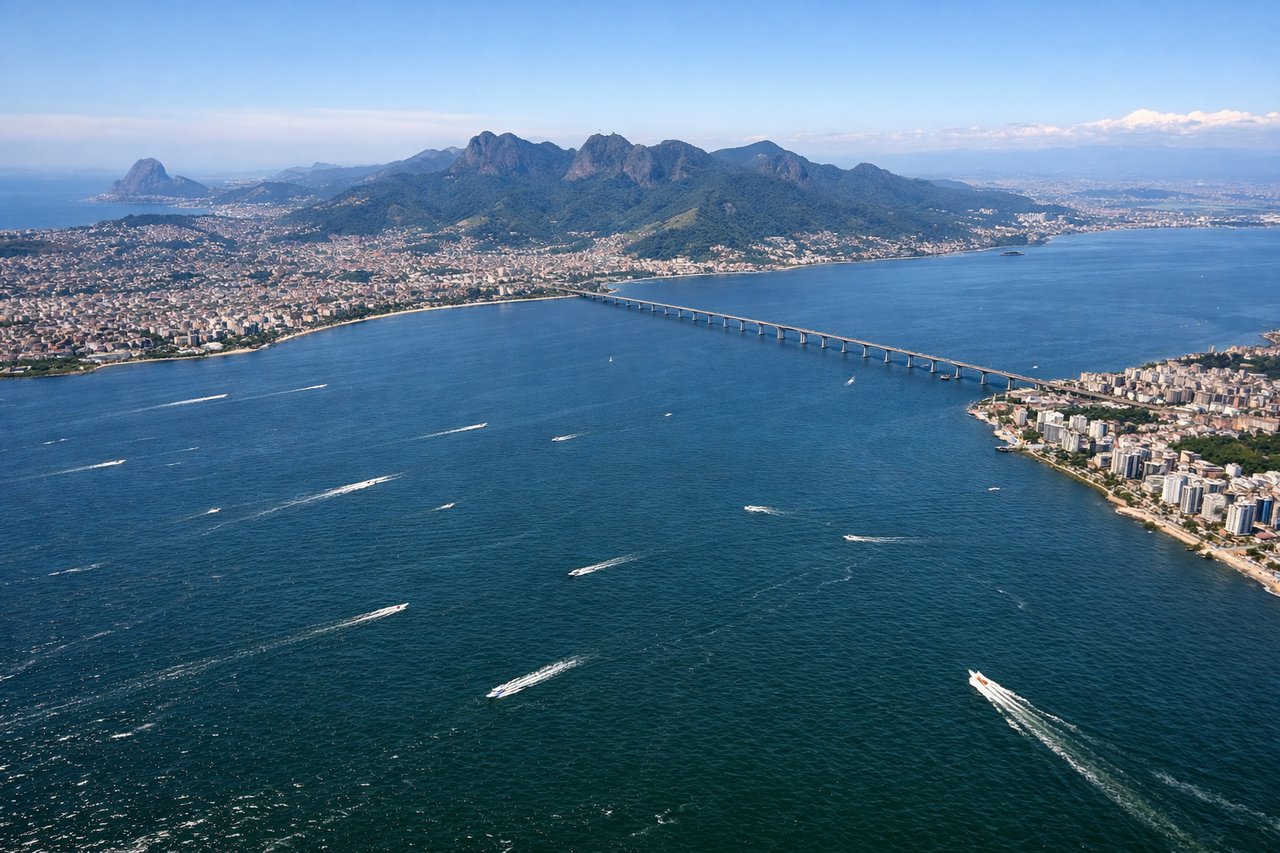
Takeoff from SDU
RIGHTRight seats capture the climb-out over Guanabara Bay and the Serra da Carioca mountain range to the west. SDU typically departs to the northeast over water, but right-side views show the dramatic escarpment and forested slopes that define Rio's geography.

Landing at GRU
LEFTLeft seats provide the best views during approach to GRU. The descent path typically brings aircraft over the industrial suburbs and reservoirs west of São Paulo. Left-side views show the Cantareira Mountains and the sprawling metropolitan landscape that defines the approach corridor.
Will your flight be in sunlight?
Pick a date and time in the Sun Map to watch the sun move across your whole flight.
About This Route
Which side of the plane should I sit on flying from Santos Dumont (SDU) to Guarulhos (GRU)?
Sit on the Right side of the plane for the best views on flights from Rio De Janeiro to Sao Paulo. Right seats win overall because the takeoff views over Guanabara Bay and Rio's iconic mountain backdrop are more visually distinctive than the landing approach. While left seats offer good industrial/suburban context on arrival, the departure scenery is geographically more dramatic and memorable.
What can I see during takeoff from Santos Dumont in Rio De Janeiro?
During takeoff from Santos Dumont (SDU), sit on the Right side for the best views. Right seats capture the climb-out over Guanabara Bay and the Serra da Carioca mountain range to the west. SDU typically departs to the northeast over water, but right-side views show the dramatic escarpment and forested slopes that define Rio's geography. Notable sights include: Guanabara Bay (immediate departure zone), Serra da Carioca (western ridge line), Sugarloaf Mountain (Pão de Açúcar, visible as a distinct peak on the bay's eastern shore), Christ the Redeemer statue location on Corcovado (identifiable as the highest point inland).
What can I see when landing at Guarulhos in Sao Paulo?
When landing at Guarulhos (GRU), sit on the Left side for the best views. Left seats provide the best views during approach to GRU. The descent path typically brings aircraft over the industrial suburbs and reservoirs west of São Paulo. Left-side views show the Cantareira Mountains and the sprawling metropolitan landscape that defines the approach corridor. Notable sights include: Cantareira Mountains (northern ridge visible during descent), Guarapiranga Reservoir (large water body southwest of São Paulo), São Paulo's urban sprawl (high-rise clusters in the distance), Serra do Mar escarpment (southern horizon, marking the coastal range).
How long is the flight from Rio De Janeiro to Sao Paulo?
The flight from Santos Dumont (SDU) to Guarulhos (GRU) takes about 1 hour 15 minutes. The shortest flight path between them is 213 miles (343 km); winds and air traffic control usually add a few percent.
What does the Rio De Janeiro to Sao Paulo flight path pass over?
The flight path travels southwest from Rio over the coastal lowlands and then inland toward São Paulo. Notable features include the Paraíba do Sul River valley (visible as a linear feature in the terrain), the transition from coastal mountains to the interior plateau, and the gradual shift from Rio's granite peaks to São Paulo's more subdued topography. The Mantiqueira Mountains appear on the western horizon during the cruise phase, marking the border region between Rio and São Paulo states.