The right side scores higher due to the dramatic geography of the Istanbul approach and the Marmara Sea crossing. While Shanghai's departure offers urban interest, the westbound cruise over Central Asia (Xinjiang, Kazakhstan, Caspian region) is predominantly flat, arid steppe with minimal landmarks. The landing into Istanbul's water-dominated geography and the visible Bosphorus strait provide substantially more scenic variety and landmark density than the relatively monotonous cruise segment.
Flight Path
Tian Shan mountains (northern Xinjiang), Taklamakan Desert (southern Xinjiang), Aral Sea region (Kazakhstan/Uzbekistan), Caspian Sea eastern shore, Caucasus Mountains (Georgia/Azerbaijan border), Anatolia plateau approaching Turkey
Great circle distance and headings ›
.jpg?width=600)


_in_Istanbul.jpg?width=600)
Phase by phase
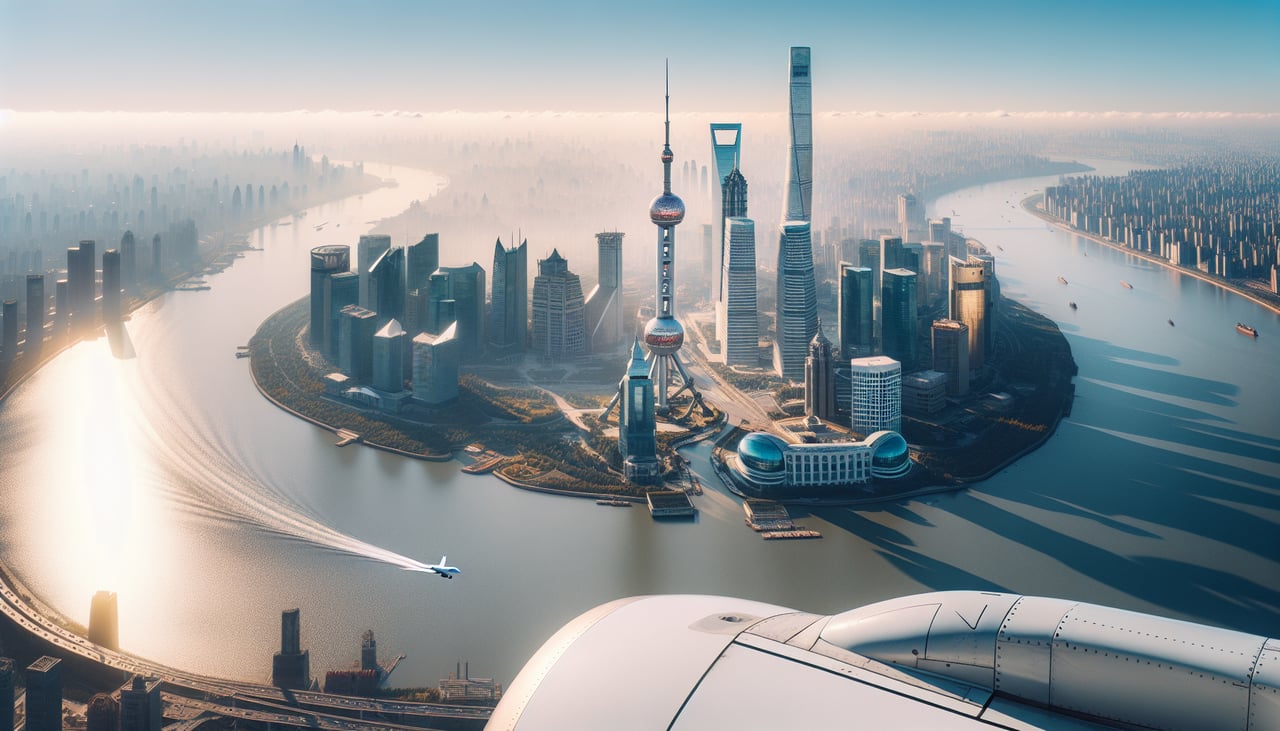
Takeoff from SHA
LEFTShanghai's Hongqiao departure offers urban and water scenery. Left side captures the Huangpu River, Pudong skyline, and Hangzhou Bay as the aircraft climbs westward, providing immediate visual interest over water and dense urban development.
Landing at SAW
RIGHTIstanbul's approach from the east provides dramatic geography. Right side captures the Marmara Sea, the Bosphorus strait, and the transition from Anatolian plateau to coastal terrain. The city's position spanning two continents and the water features create strong visual interest during descent into Sabiha Gökçen.
Landmarks on this routeAll landmarks →
Will your flight be in sunlight?
See exactly which side of the plane gets sun and shade at your departure time.
About This Route
Which side of the plane should I sit on flying from Hongqiao International (SHA) to Istanbul Sabiha Gökçen International Airport (SAW)?
Sit on the Right side of the plane for the best views on flights from Shanghai to Pendik, Istanbul. The right side scores higher due to the dramatic geography of the Istanbul approach and the Marmara Sea crossing. While Shanghai's departure offers urban interest, the westbound cruise over Central Asia (Xinjiang, Kazakhstan, Caspian region) is predominantly flat, arid steppe with minimal landmarks. The landing into Istanbul's water-dominated geography and the visible Bosphorus strait provide substantially more scenic variety and landmark density than the relatively monotonous cruise segment.
What can I see during takeoff from Hongqiao International in Shanghai?
During takeoff from Hongqiao International (SHA), sit on the Left side for the best views. Shanghai's Hongqiao departure offers urban and water scenery. Left side captures the Huangpu River, Pudong skyline, and Hangzhou Bay as the aircraft climbs westward, providing immediate visual interest over water and dense urban development. Notable sights include: Huangpu River with Bund district, Pudong financial district towers, Hangzhou Bay coastline, Suzhou Creek.
What can I see when landing at Istanbul Sabiha Gökçen International Airport in Pendik, Istanbul?
When landing at Istanbul Sabiha Gökçen International Airport (SAW), sit on the Right side for the best views. Istanbul's approach from the east provides dramatic geography. Right side captures the Marmara Sea, the Bosphorus strait, and the transition from Anatolian plateau to coastal terrain. The city's position spanning two continents and the water features create strong visual interest during descent into Sabiha Gökçen. Notable sights include: Sea of Marmara, Bosphorus strait, Anatolian plateau terrain, Istanbul's urban sprawl across both European and Asian shores.
How long is the flight from Shanghai to Pendik, Istanbul?
The flight from Hongqiao International (SHA) to Istanbul Sabiha Gökçen International Airport (SAW) takes 10h 15m.
What does the Shanghai to Pendik, Istanbul flight path pass over?
Tian Shan mountains (northern Xinjiang), Taklamakan Desert (southern Xinjiang), Aral Sea region (Kazakhstan/Uzbekistan), Caspian Sea eastern shore, Caucasus Mountains (Georgia/Azerbaijan border), Anatolia plateau approaching Turkey