While takeoff from Cape Verde favors the right side, the landing approach into Gatwick is significantly more visually rewarding on the left. The descent over the English countryside—the Weald, North Downs, and suburban transition—offers more varied and distinctive scenery than the Atlantic crossing. Left-side passengers get the better overall experience.
Flight Path
The flight path crosses the Atlantic at roughly 35,000 feet. Notable features include the Azores archipelago (visible as small islands if passing nearby, though the typical great-circle route passes north of them), the Bay of Biscay (open ocean with occasional shipping lanes), and the western approaches to the English Channel. The Iberian Peninsula (Spain and Portugal) may be visible on the horizon during the final descent phase if weather permits, though most of the mid-flight is open ocean with minimal visible landmarks.
Great circle distance and headings ›


.jpeg?width=600)
Phase by phase
Takeoff from SID
RIGHTRight-side seats offer views of Sal Island's eastern coastline and the Atlantic immediately after departure. The aircraft climbs northwestward, so right-side passengers see the island's volcanic terrain and the open ocean stretching toward Europe.
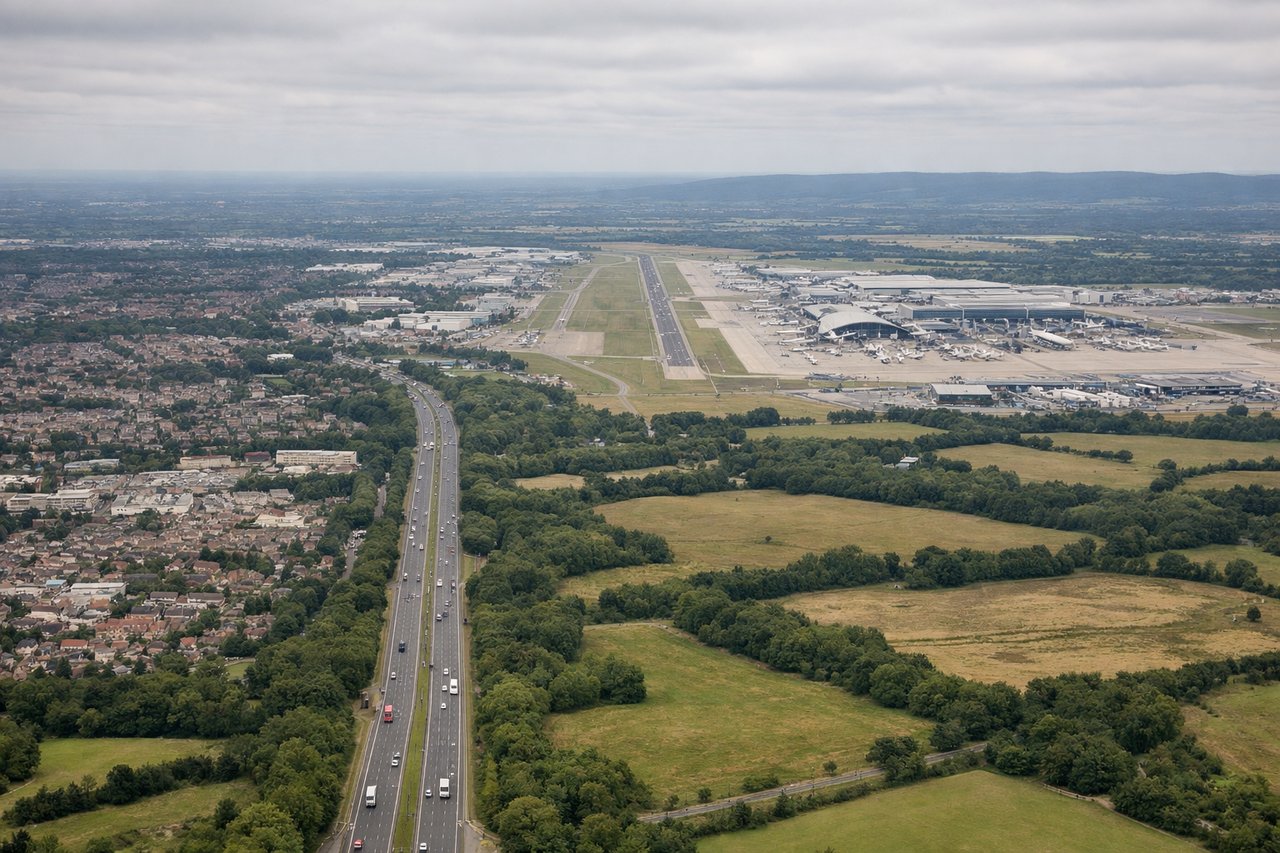
Landing at LGW
LEFTLeft-side seats provide excellent views during the approach to Gatwick. The aircraft descends from the southeast over the Weald of Kent and Sussex, and left-side passengers see the patchwork of English farmland, the North Downs ridge, and eventually the airport's runways and surrounding suburban sprawl.
Landmarks on this routeAll landmarks →
Will your flight be in sunlight?
See exactly which side of the plane gets sun and shade at your departure time.
About This Route
Which side of the plane should I sit on flying from Amilcar Cabral International (SID) to Gatwick (LGW)?
Sit on the Left side of the plane for the best views on flights from Amilcar Cabral to London. While takeoff from Cape Verde favors the right side, the landing approach into Gatwick is significantly more visually rewarding on the left. The descent over the English countryside—the Weald, North Downs, and suburban transition—offers more varied and distinctive scenery than the Atlantic crossing. Left-side passengers get the better overall experience.
What can I see during takeoff from Amilcar Cabral International in Amilcar Cabral?
During takeoff from Amilcar Cabral International (SID), sit on the Right side for the best views. Right-side seats offer views of Sal Island's eastern coastline and the Atlantic immediately after departure. The aircraft climbs northwestward, so right-side passengers see the island's volcanic terrain and the open ocean stretching toward Europe. Notable sights include: Sal Island's eastern coast, Santa Maria town (small settlement visible on southern tip), volcanic crater formations, Atlantic Ocean horizon.
What can I see when landing at Gatwick in London?
When landing at Gatwick (LGW), sit on the Left side for the best views. Left-side seats provide excellent views during the approach to Gatwick. The aircraft descends from the southeast over the Weald of Kent and Sussex, and left-side passengers see the patchwork of English farmland, the North Downs ridge, and eventually the airport's runways and surrounding suburban sprawl. Notable sights include: North Downs escarpment, Weald agricultural landscape (green fields and hedgerows), River Mole valley, Greater London urban area on northern horizon.
How long is the flight from Amilcar Cabral to London?
The flight from Amilcar Cabral International (SID) to Gatwick (LGW) takes Approximately 6 hours 15 minutes.
What does the Amilcar Cabral to London flight path pass over?
The flight path crosses the Atlantic at roughly 35,000 feet. Notable features include the Azores archipelago (visible as small islands if passing nearby, though the typical great-circle route passes north of them), the Bay of Biscay (open ocean with occasional shipping lanes), and the western approaches to the English Channel. The Iberian Peninsula (Spain and Portugal) may be visible on the horizon during the final descent phase if weather permits, though most of the mid-flight is open ocean with minimal visible landmarks.