Singapore to Xi'an is 2,307 miles (3,713 km), a flight of about 5 hours 30 minutes.
The left side wins overall. While the right side has the better Singapore departure view, the left side delivers the more sustained geographic interest across the flight: the South China Sea coastline of Vietnam, the Red River delta, Yunnan plateau terrain, and the dramatic Qinling Mountains arrival into Xi'an. The landing view on the left is also the clear winner.
Flight Path
The route tracks north-northeast over the South China Sea, crossing the Vietnamese coastline near Da Nang, then over the Annamite Range into Laos and Yunnan Province in southern China. The Yunnan Plateau presents rugged dissected terrain with deep river gorges including the upper Mekong and Salween valleys. The route then crosses Sichuan Basin edges and the Daba Mountains before descending into the Guanzhong Plain toward Xi'an. The Qinling-Daba mountain system is the most visually dramatic feature of the second half of the flight.
Great circle distance and headings ›


Phase by phase
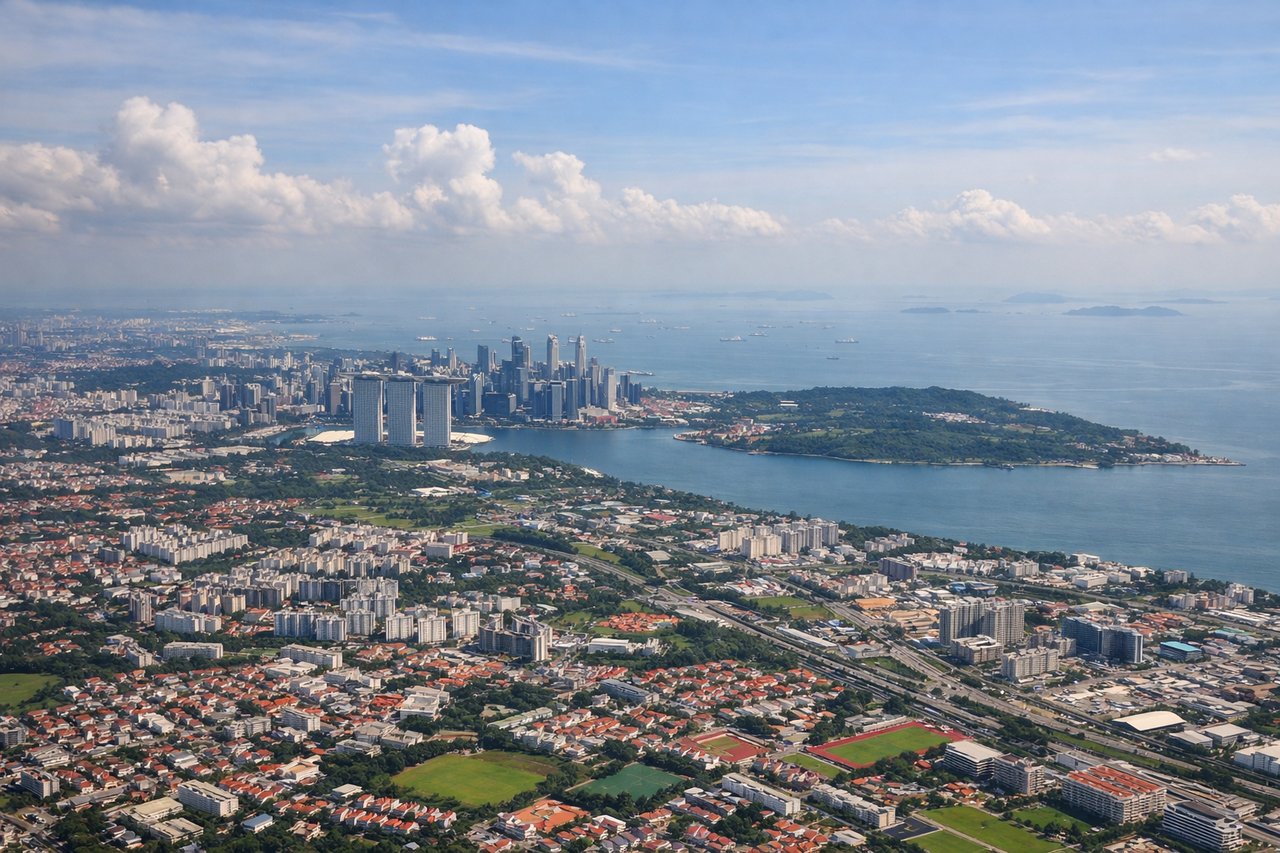
Takeoff from SIN
RIGHTChangi typically departs westbound on runway 02L/20R or 02C/20C. A westbound departure swings the aircraft northward over the city, and the right side gives you the Singapore city skyline, Marina Bay, and the southern strait. Left side faces east toward open sea and Changi's industrial areas.
Landing at XIY
LEFTXIY runway 05/23 means arrivals typically come in from the east or southeast. On approach from the south, the left side faces west toward the Wei River valley and the Qinling Mountains ridge to the south of Xi'an, while also giving views of Xi'an city proper. The right side looks north toward the flat Guanzhong Plain with less visual interest.
Landmarks on this routeAll landmarks →
Will your flight be in sunlight?
Pick a date and time in the Sun Map to watch the sun move across your whole flight.
About This Route
Which side of the plane should I sit on flying from Singapore Changi (SIN) to Xianyang (XIY)?
Sit on the Left side of the plane for the best views on flights from Singapore to Xi'an. The left side wins overall. While the right side has the better Singapore departure view, the left side delivers the more sustained geographic interest across the flight: the South China Sea coastline of Vietnam, the Red River delta, Yunnan plateau terrain, and the dramatic Qinling Mountains arrival into Xi'an. The landing view on the left is also the clear winner.
What can I see during takeoff from Singapore Changi in Singapore?
During takeoff from Singapore Changi (SIN), sit on the Right side for the best views. Changi typically departs westbound on runway 02L/20R or 02C/20C. A westbound departure swings the aircraft northward over the city, and the right side gives you the Singapore city skyline, Marina Bay, and the southern strait. Left side faces east toward open sea and Changi's industrial areas. Notable sights include: Marina Bay Sands and CBD skyline, Sentosa Island and Keppel Harbour, Johor Strait and southern Malaysia coastline, Singapore Strait shipping lanes.
What can I see when landing at Xianyang in Xi'an?
When landing at Xianyang (XIY), sit on the Left side for the best views. XIY runway 05/23 means arrivals typically come in from the east or southeast. On approach from the south, the left side faces west toward the Wei River valley and the Qinling Mountains ridge to the south of Xi'an, while also giving views of Xi'an city proper. The right side looks north toward the flat Guanzhong Plain with less visual interest. Notable sights include: Qinling Mountains ridge south of Xi'an, Wei River valley and floodplain, Xi'an urban grid and ancient city walls, Guanzhong Plain agricultural patchwork.
How long is the flight from Singapore to Xi'an?
The flight from Singapore Changi (SIN) to Xianyang (XIY) takes about 5 hours 30 minutes. The shortest flight path between them is 2,307 miles (3,713 km); winds and air traffic control usually add a few percent.
What does the Singapore to Xi'an flight path pass over?
The route tracks north-northeast over the South China Sea, crossing the Vietnamese coastline near Da Nang, then over the Annamite Range into Laos and Yunnan Province in southern China. The Yunnan Plateau presents rugged dissected terrain with deep river gorges including the upper Mekong and Salween valleys. The route then crosses Sichuan Basin edges and the Daba Mountains before descending into the Guanzhong Plain toward Xi'an. The Qinling-Daba mountain system is the most visually dramatic feature of the second half of the flight.