Sitka to Seattle is 860 miles (1,384 km), a flight of about 2 hours 25 minutes.
The takeoff from Sitka offers more dramatic and continuous scenery—the Inside Passage's intricate island and water geography is visually distinctive throughout climb-out. While the landing approach into Seattle is scenic, the takeoff experience provides longer exposure to genuinely spectacular coastal terrain.
Flight Path
During the flight south, you'll pass over the Inside Passage's central corridor—Clarence Strait, Revillagigedo Island, and the northern reaches of the Alexander Archipelago. The aircraft typically climbs to cruise altitude around 25,000 feet, where individual islands become smaller but the overall pattern of the archipelago remains visible. The transition from Southeast Alaska's island geography to the mainland Cascade Range occurs gradually as you approach the Washington coast. Deception Pass and the San Juan Islands become visible in the final descent phase.
Great circle distance and headings ›


Phase by phase
Takeoff from SIT
RIGHTRight-side seats capture the dramatic coastal geography immediately after departure. You'll see Sitka's position on Baranof Island and the surrounding Inside Passage waterways as the aircraft climbs southeastward.
Landing at SEA
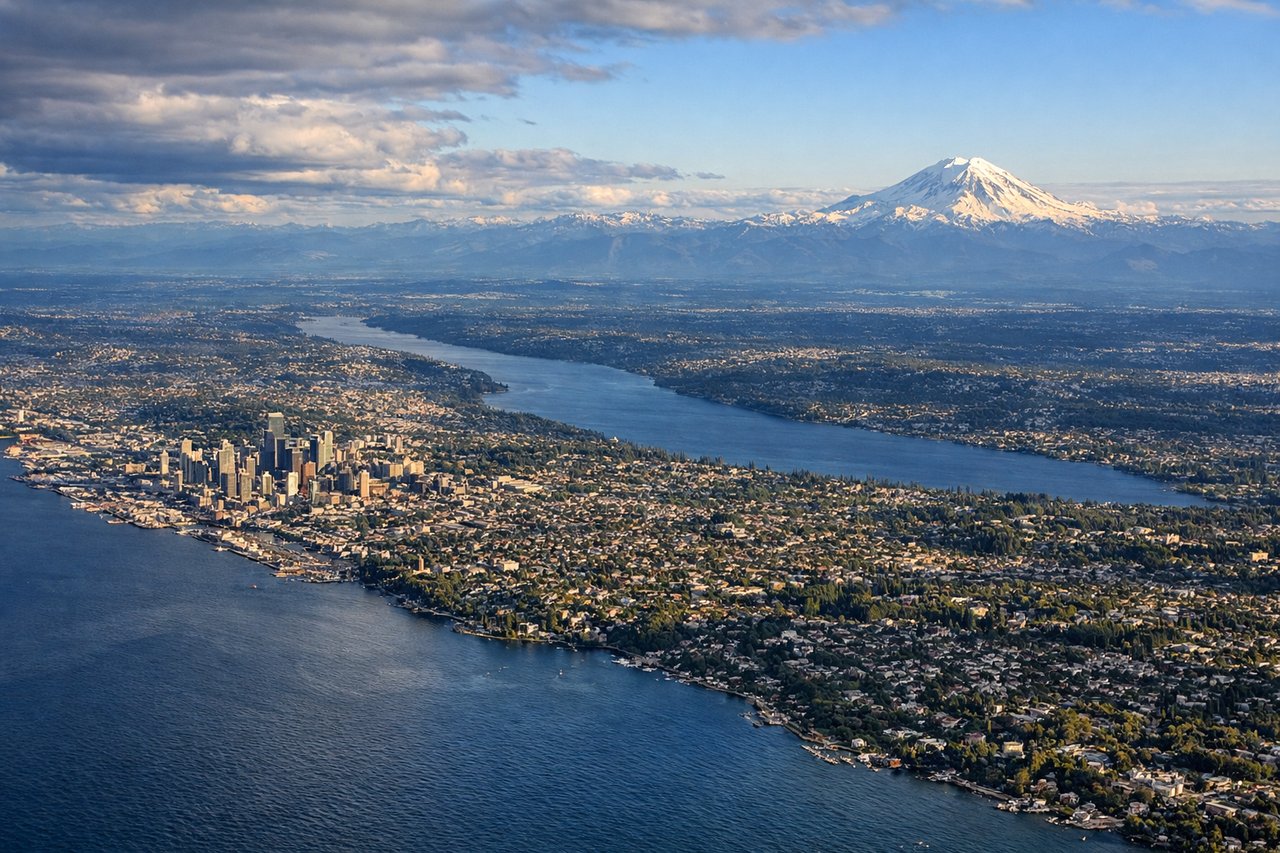
LEFTLeft-side seats offer the best views during the descent approach into Seattle. You'll see the Cascade Range, Puget Sound, and the Seattle metropolitan area as the aircraft descends on a westerly approach path.
Landmarks on this routeAll landmarks →
Will your flight be in sunlight?
Pick a date and time in the Sun Map to watch the sun move across your whole flight.
About This Route
Which side of the plane should I sit on flying from Sitka Rocky Gutierrez (SIT) to Seattle Tacoma International (SEA)?
Sit on the Right side of the plane for the best views on flights from Sitka to Seattle. The takeoff from Sitka offers more dramatic and continuous scenery—the Inside Passage's intricate island and water geography is visually distinctive throughout climb-out. While the landing approach into Seattle is scenic, the takeoff experience provides longer exposure to genuinely spectacular coastal terrain.
What can I see during takeoff from Sitka Rocky Gutierrez in Sitka?
During takeoff from Sitka Rocky Gutierrez (SIT), sit on the Right side for the best views. Right-side seats capture the dramatic coastal geography immediately after departure. You'll see Sitka's position on Baranof Island and the surrounding Inside Passage waterways as the aircraft climbs southeastward. Notable sights include: Baranof Island, Chatham Strait, Kruzof Island, Salisbury Sound.
What can I see when landing at Seattle Tacoma International in Seattle?
When landing at Seattle Tacoma International (SEA), sit on the Left side for the best views. Left-side seats offer the best views during the descent approach into Seattle. You'll see the Cascade Range, Puget Sound, and the Seattle metropolitan area as the aircraft descends on a westerly approach path. Notable sights include: Cascade Range, Puget Sound, Lake Washington, Seattle skyline.
How long is the flight from Sitka to Seattle?
The flight from Sitka Rocky Gutierrez (SIT) to Seattle Tacoma International (SEA) takes about 2 hours 25 minutes. The shortest flight path between them is 860 miles (1,384 km); winds and air traffic control usually add a few percent.
What does the Sitka to Seattle flight path pass over?
During the flight south, you'll pass over the Inside Passage's central corridor—Clarence Strait, Revillagigedo Island, and the northern reaches of the Alexander Archipelago. The aircraft typically climbs to cruise altitude around 25,000 feet, where individual islands become smaller but the overall pattern of the archipelago remains visible. The transition from Southeast Alaska's island geography to the mainland Cascade Range occurs gradually as you approach the Washington coast. Deception Pass and the San Juan Islands become visible in the final descent phase.