Right-side seats dominate both segments. Takeoff offers superior Central Valley and volcanic views, and while landing slightly favors left, the longer climb-out duration and more dramatic volcanic terrain at departure make right the overall choice for this route.
Flown SJO to LIM? Did we get it right?
Flight Path
San Jose to Lima is 1,597 miles (2,571 km), a flight of about 3 hours 15 minutes.
The flight path crosses the Pacific Ocean for roughly 1,200 nautical miles. Midway, you'll be over open ocean with no visible landmarks. The route passes west of the Galápagos Islands (not visible—too far west and south of typical routing). As you approach Peru, the Andes become visible on the eastern horizon around 45 minutes before landing. The coastal desert of Peru becomes visible approximately 30 minutes before descent into Lima, appearing as a stark tan-brown landscape with virtually no vegetation until the Rímac River valley and irrigated agricultural zones near the city.
Great circle distance and headings ›Phase by phase
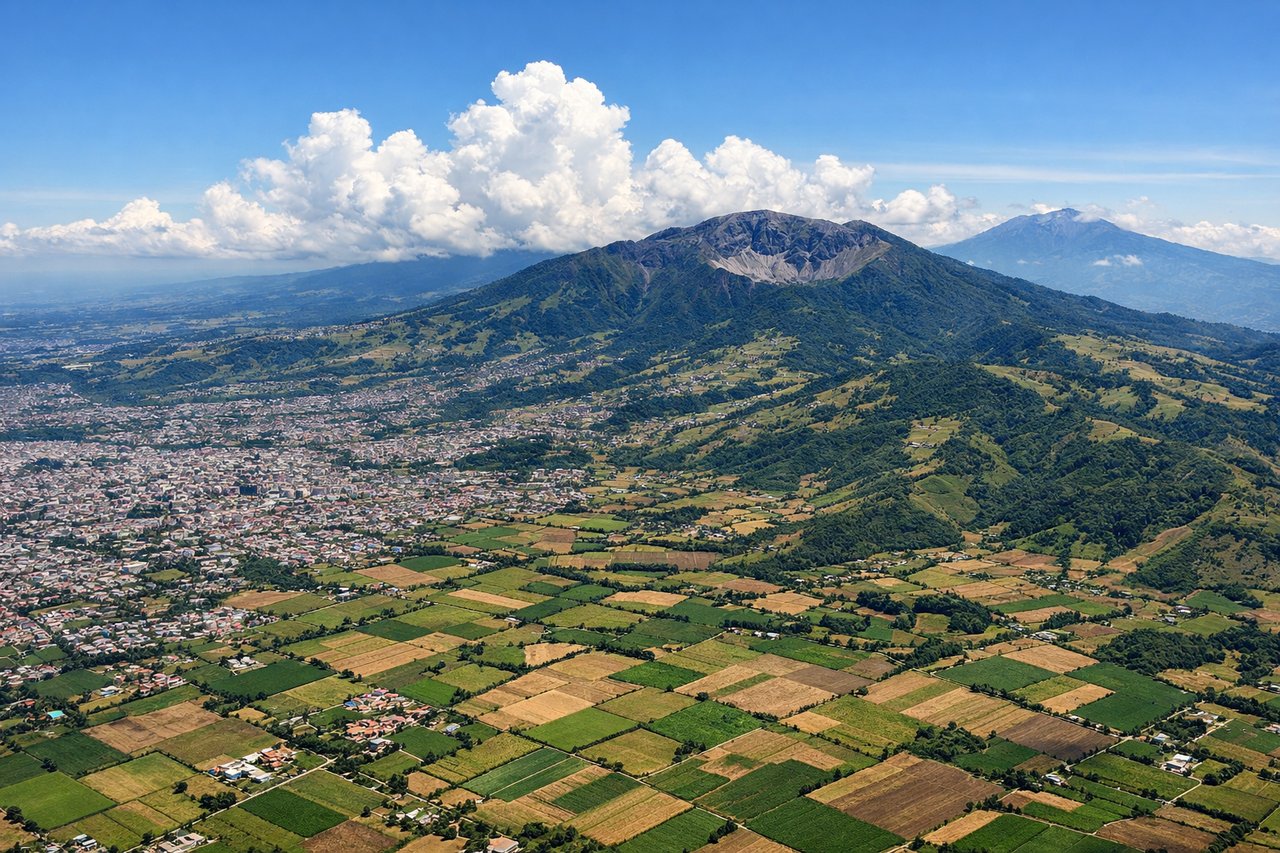
Takeoff from SJO
RIGHTSJO typically departs westbound (Runway 32) or eastbound (Runway 05). Right-side seats offer the best views regardless of runway: westbound departures show the Central Valley and Cordillera Central receding behind you, while eastbound departures (less common) would show Caribbean approaches. Right seats capture the volcanic terrain and valley geography most effectively during initial climb.
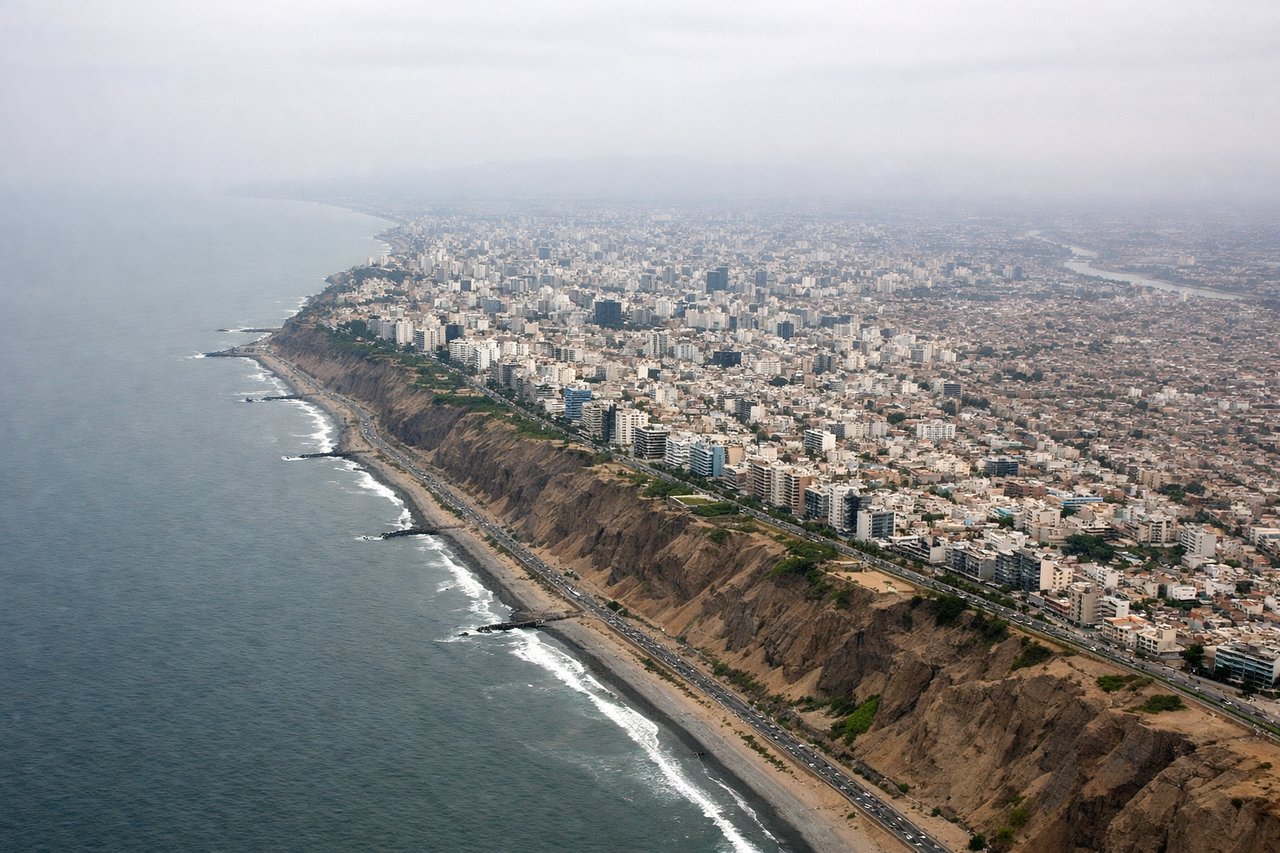
Landing at LIM
LEFTLIM uses Runway 15 (southbound approach over the Pacific) or Runway 33 (northbound approach over the city). Left-side seats on final approach to Runway 15 provide dramatic views of the Andes foothills, the Rímac River valley, and Lima's urban sprawl. Runway 33 approaches also favor left seats for viewing the coastal cliffs and city districts. Left consistently offers superior geography on descent.
Will your flight be in sunlight?
Pick a date and time in the Sun Map to watch the sun move across your whole flight.
About This Route
Which side of the plane should I sit on flying from Juan Santamaria International (SJO) to Jorge Chávez International Airport (LIM)?
Sit on the Right side of the plane for the best views on flights from San Jose to Lima. Right-side seats dominate both segments. Takeoff offers superior Central Valley and volcanic views, and while landing slightly favors left, the longer climb-out duration and more dramatic volcanic terrain at departure make right the overall choice for this route.
What can I see during takeoff from Juan Santamaria International in San Jose?
During takeoff from Juan Santamaria International (SJO), sit on the Right side for the best views. SJO typically departs westbound (Runway 32) or eastbound (Runway 05). Right-side seats offer the best views regardless of runway: westbound departures show the Central Valley and Cordillera Central receding behind you, while eastbound departures (less common) would show Caribbean approaches. Right seats capture the volcanic terrain and valley geography most effectively during initial climb. Notable sights include: Cordillera Central (volcanic ridge running east-west), Central Valley of Costa Rica (agricultural plains), Poás or Irazú volcanoes (weather permitting, visible as distant peaks to the southeast).
What can I see when landing at Jorge Chávez International Airport in Lima?
When landing at Jorge Chávez International Airport (LIM), sit on the Left side for the best views. LIM uses Runway 15 (southbound approach over the Pacific) or Runway 33 (northbound approach over the city). Left-side seats on final approach to Runway 15 provide dramatic views of the Andes foothills, the Rímac River valley, and Lima's urban sprawl. Runway 33 approaches also favor left seats for viewing the coastal cliffs and city districts. Left consistently offers superior geography on descent. Notable sights include: Andes Mountains (eastern horizon, snow-capped peaks visible on clear days), Rímac River valley (cutting through desert toward the city), Lima urban area (sprawling across coastal plain), Pacific Ocean and coastal cliffs (western boundary).
How long is the flight from San Jose to Lima?
The flight from Juan Santamaria International (SJO) to Jorge Chávez International Airport (LIM) takes about 3 hours 15 minutes. The shortest flight path between them is 1,597 miles (2,571 km); winds and air traffic control usually add a few percent.
What does the San Jose to Lima flight path pass over?
The flight path crosses the Pacific Ocean for roughly 1,200 nautical miles. Midway, you'll be over open ocean with no visible landmarks. The route passes west of the Galápagos Islands (not visible—too far west and south of typical routing). As you approach Peru, the Andes become visible on the eastern horizon around 45 minutes before landing. The coastal desert of Peru becomes visible approximately 30 minutes before descent into Lima, appearing as a stark tan-brown landscape with virtually no vegetation until the Rímac River valley and irrigated agricultural zones near the city.