Salalah to Dubai is 573 miles (923 km), a flight of about 1 hour 15 minutes.
The right side wins overall because the takeoff view of the Dhofar Mountains is more visually dramatic and distinctive than the landing approach. While the landing offers interesting urban and coastal features, the mountain scenery during climb-out is the flight's most striking natural landmark.
Flight Path
The flight path crosses the Musandam Peninsula region to the east (visible as rocky, mountainous terrain if flying at lower cruise altitude), then transitions over open desert and the Strait of Hormuz approaches. The coastline of Oman gradually gives way to the UAE coast. At cruise altitude (typically 25,000-30,000 feet), individual landmarks become less distinct, but the general transition from Oman's mountainous terrain to the UAE's flat coastal and desert landscape is apparent. The Persian Gulf becomes visible approximately 30 minutes before landing.
Great circle distance and headings ›.jpg?width=600)
_and_the_Dubai_skyline_(25781049892).jpg?width=600)
Phase by phase
Takeoff from SLL
RIGHTRight-side seats capture the dramatic Dhofar Mountains as the aircraft climbs northward from Salalah. These peaks rise sharply inland and are visible for the first 10-15 minutes of flight, creating strong visual contrast against the coastal plain.
Landing at DXB
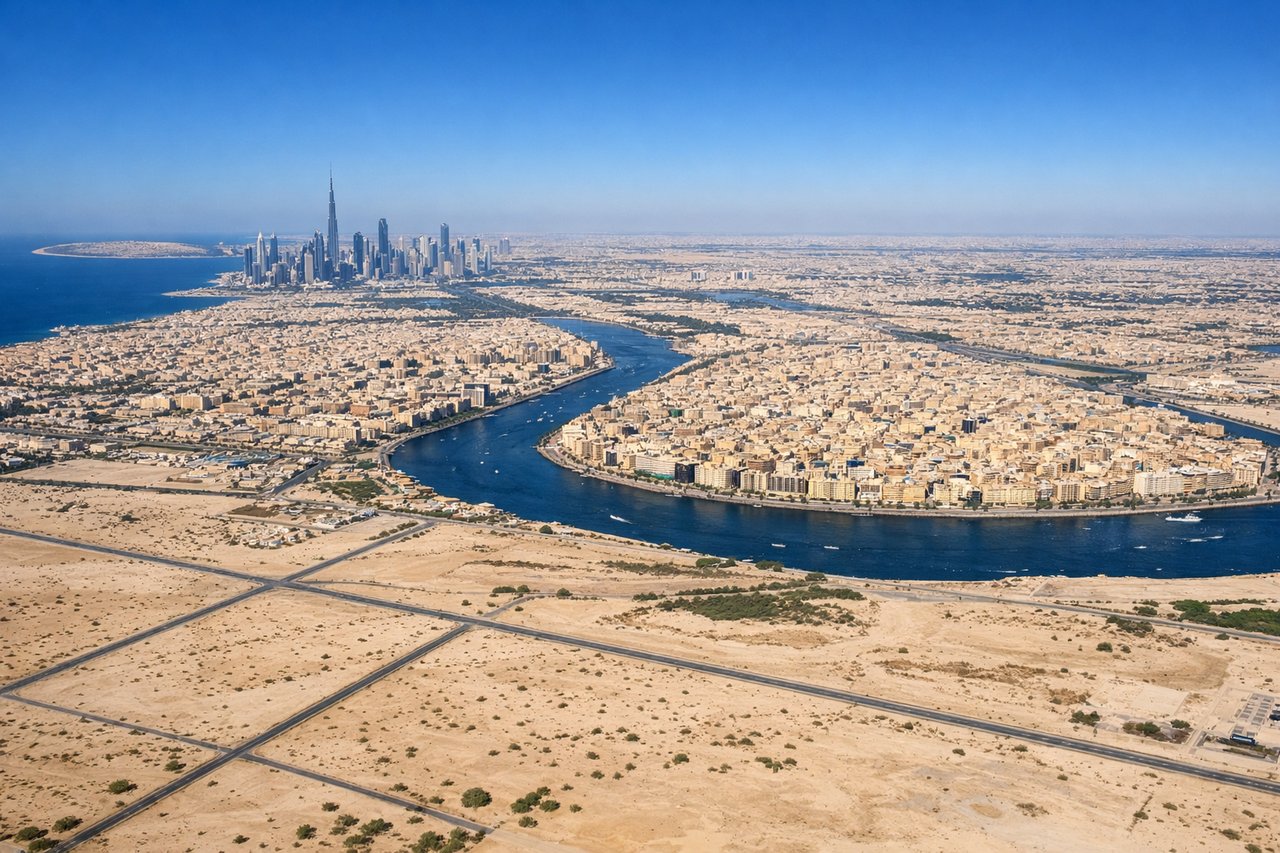
LEFTLeft-side seats offer the best view during descent into Dubai. As the aircraft approaches from the southeast, left-side passengers see the Persian Gulf coastline, the Dubai Creek inlet, and the distinctive Palm Jumeirah development. The approach also reveals the flat desert terrain inland.
Landmarks on this routeAll landmarks →
Will your flight be in sunlight?
Pick a date and time in the Sun Map to watch the sun move across your whole flight.
About This Route
Which side of the plane should I sit on flying from Salalah (SLL) to Dubai International (DXB)?
Sit on the Right side of the plane for the best views on flights from Salalah to Dubai. The right side wins overall because the takeoff view of the Dhofar Mountains is more visually dramatic and distinctive than the landing approach. While the landing offers interesting urban and coastal features, the mountain scenery during climb-out is the flight's most striking natural landmark.
What can I see during takeoff from Salalah in Salalah?
During takeoff from Salalah (SLL), sit on the Right side for the best views. Right-side seats capture the dramatic Dhofar Mountains as the aircraft climbs northward from Salalah. These peaks rise sharply inland and are visible for the first 10-15 minutes of flight, creating strong visual contrast against the coastal plain. Notable sights include: Dhofar Mountains, Arabian Sea coastline, Salalah coastal plain, Khareef seasonal vegetation patterns (visible as green patches in monsoon season).
What can I see when landing at Dubai International in Dubai?
When landing at Dubai International (DXB), sit on the Left side for the best views. Left-side seats offer the best view during descent into Dubai. As the aircraft approaches from the southeast, left-side passengers see the Persian Gulf coastline, the Dubai Creek inlet, and the distinctive Palm Jumeirah development. The approach also reveals the flat desert terrain inland. Notable sights include: Persian Gulf, Dubai coastline and creek system, Palm Jumeirah artificial islands, Jebel Ali port and industrial zone.
How long is the flight from Salalah to Dubai?
The flight from Salalah (SLL) to Dubai International (DXB) takes about 1 hour 15 minutes. The shortest flight path between them is 573 miles (923 km); winds and air traffic control usually add a few percent.
What does the Salalah to Dubai flight path pass over?
The flight path crosses the Musandam Peninsula region to the east (visible as rocky, mountainous terrain if flying at lower cruise altitude), then transitions over open desert and the Strait of Hormuz approaches. The coastline of Oman gradually gives way to the UAE coast. At cruise altitude (typically 25,000-30,000 feet), individual landmarks become less distinct, but the general transition from Oman's mountainous terrain to the UAE's flat coastal and desert landscape is apparent. The Persian Gulf becomes visible approximately 30 minutes before landing.