Surabaya to London is 7,610 miles (12,247 km), a flight of about 15 hours.
Left wins both the departure and arrival phases. During the long cruise the flight tracks northwest over India, Central Asia, and Europe, and left-side seats face generally south-southwest giving better daytime views of the Himalayas from a distance over northern India, the Caspian Sea, and the Alps on the European leg. Right seats face into the darker northern sky for much of the cruise.
Flight Path
Bay of Bengal crossing, Indian subcontinent with the Ganges plain and distant Himalayan foothills visible from the left side, Pakistan's Indus River valley, Afghanistan and Iran's arid plateau terrain, the Caspian Sea, Caucasus Mountains, Black Sea, Romania and Hungary's Danube plain, the Alps crossing into Western Europe, and finally the English Channel before descent into London
Great circle distance and headings ›
.jpg?width=600)


.jpeg?width=600)
Phase by phase
Takeoff from SUB
LEFTJuanda typically departs on Runway 10 heading east, then turns northwest toward the route. A left (south-facing) seat gives views over the Madura Strait and the city of Surabaya's port district. As the aircraft banks left climbing out, you get a clear look at the Java Sea coastline and the dense urban grid of Surabaya.
Landing at LHR
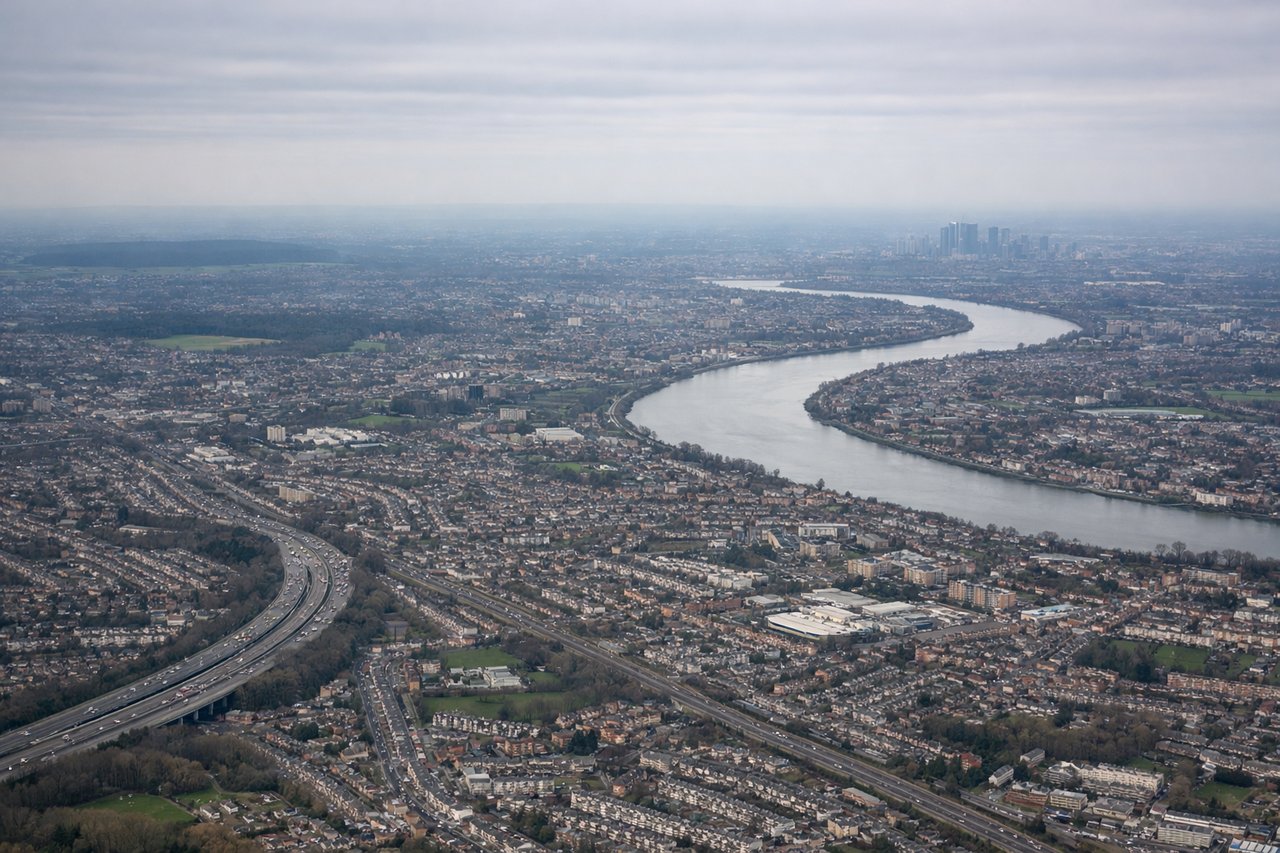
LEFTHeathrow predominantly uses easterly approaches on Runway 27L/27R, meaning the aircraft arrives from the west tracking east. A left (north-facing) seat on final approach gives views over Windsor, the Thames valley, and central London in the distance. The right seat faces south toward Surrey suburbs with less iconic scenery.
Landmarks on this routeAll landmarks →
Will your flight be in sunlight?
Pick a date and time in the Sun Map to watch the sun move across your whole flight.
About This Route
Which side of the plane should I sit on flying from Juanda International Airport (SUB) to Heathrow (LHR)?
Sit on the Left side of the plane for the best views on flights from Surabaya to London. Left wins both the departure and arrival phases. During the long cruise the flight tracks northwest over India, Central Asia, and Europe, and left-side seats face generally south-southwest giving better daytime views of the Himalayas from a distance over northern India, the Caspian Sea, and the Alps on the European leg. Right seats face into the darker northern sky for much of the cruise.
What can I see during takeoff from Juanda International Airport in Surabaya?
During takeoff from Juanda International Airport (SUB), sit on the Left side for the best views. Juanda typically departs on Runway 10 heading east, then turns northwest toward the route. A left (south-facing) seat gives views over the Madura Strait and the city of Surabaya's port district. As the aircraft banks left climbing out, you get a clear look at the Java Sea coastline and the dense urban grid of Surabaya. Notable sights include: Surabaya port and Tanjung Perak harbor, Madura Strait, Madura Island across the strait, Mount Penanggungan visible to the southwest on the horizon.
What can I see when landing at Heathrow in London?
When landing at Heathrow (LHR), sit on the Left side for the best views. Heathrow predominantly uses easterly approaches on Runway 27L/27R, meaning the aircraft arrives from the west tracking east. A left (north-facing) seat on final approach gives views over Windsor, the Thames valley, and central London in the distance. The right seat faces south toward Surrey suburbs with less iconic scenery. Notable sights include: Windsor Castle and Windsor Great Park, River Thames snaking eastward, Wembley Stadium arch visible to the north, western London suburbs of Hounslow and Ealing.
How long is the flight from Surabaya to London?
The flight from Juanda International Airport (SUB) to Heathrow (LHR) takes about 15 hours. The shortest flight path between them is 7,610 miles (12,247 km); winds and air traffic control usually add a few percent.
What does the Surabaya to London flight path pass over?
Bay of Bengal crossing, Indian subcontinent with the Ganges plain and distant Himalayan foothills visible from the left side, Pakistan's Indus River valley, Afghanistan and Iran's arid plateau terrain, the Caspian Sea, Caucasus Mountains, Black Sea, Romania and Hungary's Danube plain, the Alps crossing into Western Europe, and finally the English Channel before descent into London