Moscow to Los Angeles is 6,063 miles (9,757 km), a flight of about 11 hours 40 minutes.
The right side tracks the outer, poleward edge of the great-circle route, offering Scandinavian coastline near departure, Greenland's ice sheet and Baffin Bay pack ice at cruise, and mountain-and-skyline views on arrival into LAX, while the left side mostly overlooks featureless Canadian plains and open ocean.
Flight Path
Norwegian coastline and fjords, southern Greenland ice sheet edge, Baffin Bay sea ice, Hudson Bay shoreline, Canadian Rockies foothills
Great circle distance and headings ›


.jpg?width=600)

.jpg?width=600)
Phase by phase
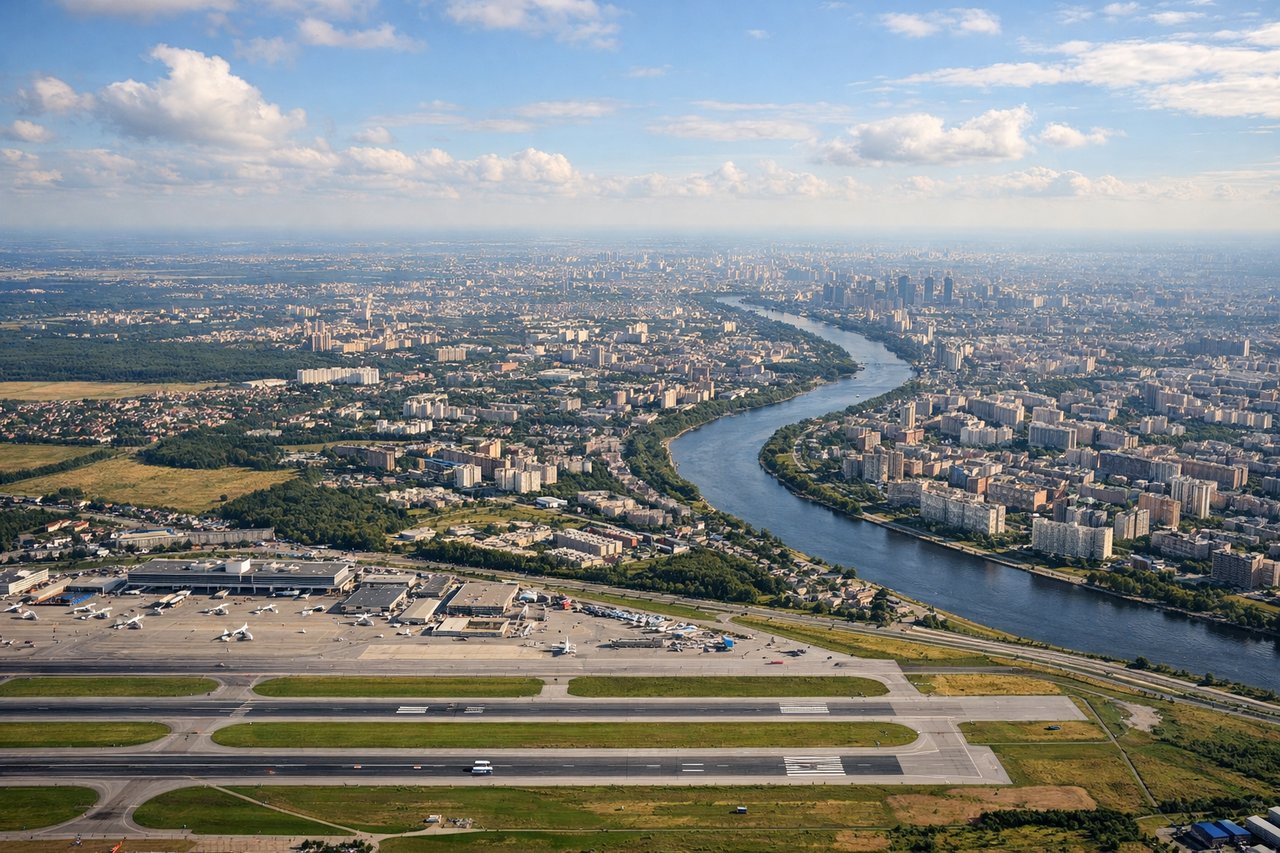
Takeoff from SVO
RIGHTSVO departs southwest on runway 24 then banks right onto its northbound track toward Scandinavia, bringing Moscow's skyline and the Moskva River briefly into view on the right side before the city falls away into farmland.
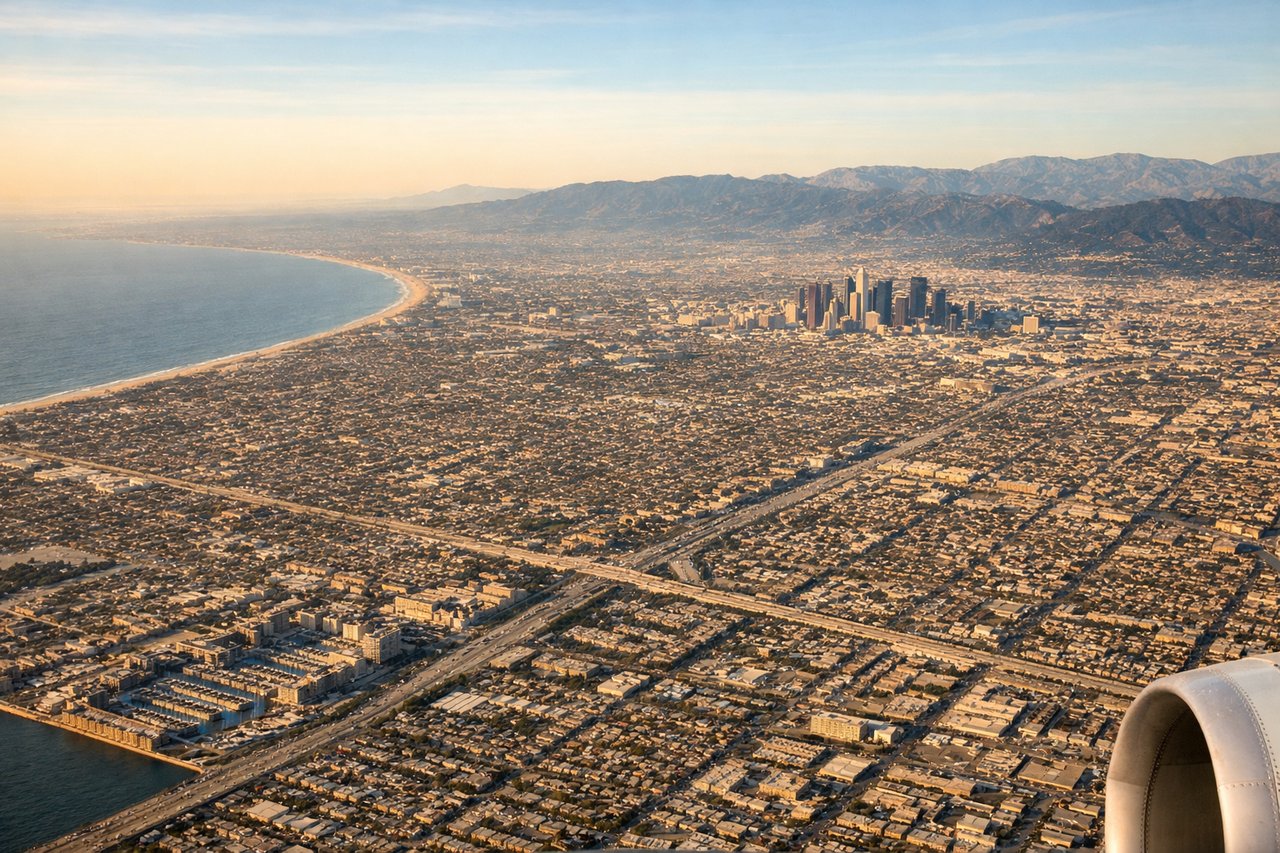
Landing at LAX
RIGHTArriving LAX from the east in typical west-flow conditions, the approach passes north of downtown, putting the San Gabriel Mountains and the LA skyline on the right side before the turn out over the Pacific for final approach.
Landmarks on this routeAll landmarks →
Will your flight be in sunlight?
Pick a date and time in the Sun Map to watch the sun move across your whole flight.
About This Route
Which side of the plane should I sit on flying from Sheremetyevo (SVO) to Los Angeles International (LAX)?
Sit on the Right side of the plane for the best views on flights from Moscow to Los Angeles. The right side tracks the outer, poleward edge of the great-circle route, offering Scandinavian coastline near departure, Greenland's ice sheet and Baffin Bay pack ice at cruise, and mountain-and-skyline views on arrival into LAX, while the left side mostly overlooks featureless Canadian plains and open ocean.
What can I see during takeoff from Sheremetyevo in Moscow?
During takeoff from Sheremetyevo (SVO), sit on the Right side for the best views. SVO departs southwest on runway 24 then banks right onto its northbound track toward Scandinavia, bringing Moscow's skyline and the Moskva River briefly into view on the right side before the city falls away into farmland. Notable sights include: Moscow skyline (Ostankino Tower, high-rise clusters), Moskva River bends, Sheremetyevo forest belt, Moscow Oblast farmland.
What can I see when landing at Los Angeles International in Los Angeles?
When landing at Los Angeles International (LAX), sit on the Right side for the best views. Arriving LAX from the east in typical west-flow conditions, the approach passes north of downtown, putting the San Gabriel Mountains and the LA skyline on the right side before the turn out over the Pacific for final approach. Notable sights include: San Gabriel Mountains, Downtown Los Angeles skyline, Santa Monica Bay, Pacific coastline.
How long is the flight from Moscow to Los Angeles?
The flight from Sheremetyevo (SVO) to Los Angeles International (LAX) takes about 11 hours 40 minutes. The shortest flight path between them is 6,063 miles (9,757 km); winds and air traffic control usually add a few percent.
What does the Moscow to Los Angeles flight path pass over?
Norwegian coastline and fjords, southern Greenland ice sheet edge, Baffin Bay sea ice, Hudson Bay shoreline, Canadian Rockies foothills