The left side wins primarily on the strength of the Sydney Harbour departure, one of the most iconic urban aerial views available on any flight, while the rest of the route — over ten hours of Australian outback and open ocean — offers limited scenery on either side.
Flight Path
Central Australian outback near the Northern Territory/Western Australia border, followed by a long crossing of the eastern Indian Ocean south of Java and Sri Lanka, then the Arabian Sea before reaching the UAE coast.
Great circle distance and headings ›.jpg?width=600)


.jpeg?width=600)

Phase by phase

Takeoff from SYD
LEFTDeparting SYD on runway 34, the aircraft climbs north over Botany Bay before banking left (west) toward the interior, putting Sydney Harbour, the CBD skyline, and the Harbour Bridge directly below on the left side. This is one of the most scenic departure turns in the world, briefly revealing the full harbor system before the plane heads over the Blue Mountains and the outback.
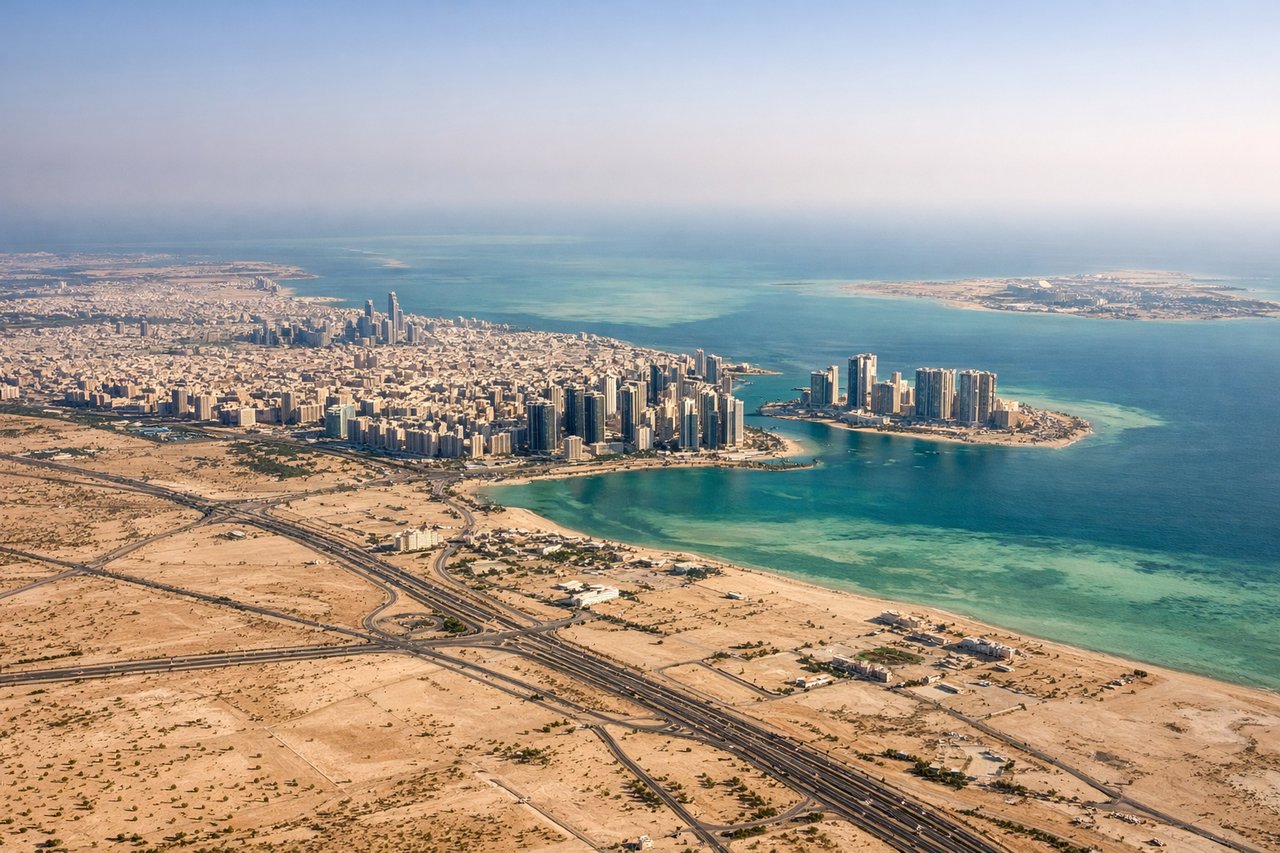
Landing at AUH
RIGHTArriving into AUH from the east over the Persian Gulf, the approach typically curves toward runway 13 or 31, giving right-side passengers a view of Abu Dhabi's turquoise coastal waters, the artificial islands of Saadiyat and Yas, and the city's skyline before touchdown. The left side mostly faces open desert with fewer distinct features.
Landmarks on this routeAll landmarks →
Will your flight be in sunlight?
See exactly which side of the plane gets sun and shade at your departure time.
About This Route
Which side of the plane should I sit on flying from Kingsford Smith International Airport (SYD) to Abu Dhabi International (AUH)?
Sit on the Left side of the plane for the best views on flights from Sydney to Abu Dhabi. The left side wins primarily on the strength of the Sydney Harbour departure, one of the most iconic urban aerial views available on any flight, while the rest of the route — over ten hours of Australian outback and open ocean — offers limited scenery on either side.
What can I see during takeoff from Kingsford Smith International Airport in Sydney?
During takeoff from Kingsford Smith International Airport (SYD), sit on the Left side for the best views. Departing SYD on runway 34, the aircraft climbs north over Botany Bay before banking left (west) toward the interior, putting Sydney Harbour, the CBD skyline, and the Harbour Bridge directly below on the left side. This is one of the most scenic departure turns in the world, briefly revealing the full harbor system before the plane heads over the Blue Mountains and the outback. Notable sights include: Sydney Harbour Bridge, Sydney Opera House, Sydney CBD skyline, Botany Bay.
What can I see when landing at Abu Dhabi International in Abu Dhabi?
When landing at Abu Dhabi International (AUH), sit on the Right side for the best views. Arriving into AUH from the east over the Persian Gulf, the approach typically curves toward runway 13 or 31, giving right-side passengers a view of Abu Dhabi's turquoise coastal waters, the artificial islands of Saadiyat and Yas, and the city's skyline before touchdown. The left side mostly faces open desert with fewer distinct features. Notable sights include: Persian Gulf coastline, Saadiyat Island, Yas Island, Abu Dhabi skyline.
How long is the flight from Sydney to Abu Dhabi?
The flight from Kingsford Smith International Airport (SYD) to Abu Dhabi International (AUH) takes 14h 35m.
What does the Sydney to Abu Dhabi flight path pass over?
Central Australian outback near the Northern Territory/Western Australia border, followed by a long crossing of the eastern Indian Ocean south of Java and Sri Lanka, then the Arabian Sea before reaching the UAE coast.