The right side bookends the flight with two of Australia's most iconic scenes — Sydney Harbour on departure and the Coral Sea/Great Barrier Reef fringe on arrival into Cairns — while the left side mostly overlooks inland Queensland farmland and distant ranges during the long cruise segment.
Flight Path
The route crosses the Great Dividing Range shortly after leaving the Sydney basin, then continues over the inland plains and low ranges of central New South Wales and Queensland, including the Carnarvon Range foothills, before descending toward the Atherton Tablelands and coastal ranges near Cairns.
Great circle distance and headings ›Phase by phase
Takeoff from SYD
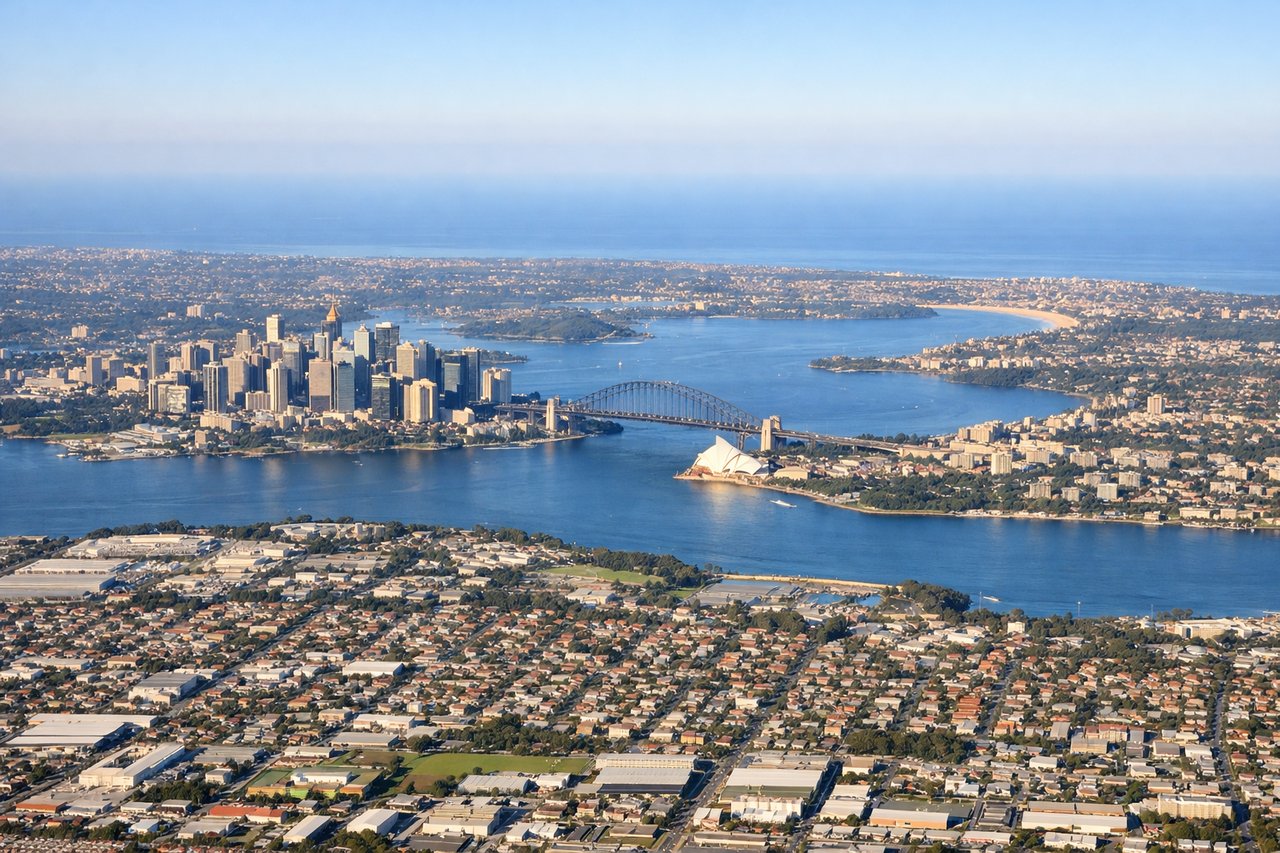
RIGHTNorthbound departures off Sydney's runway 34 typically track along the coast before turning onto the northerly airway, putting Sydney Harbour, the Opera House, and the eastern beaches on the right side of the aircraft as it climbs. The left side mostly shows the western suburbs and the distant, hazy outline of the Blue Mountains.
Landing at CNS
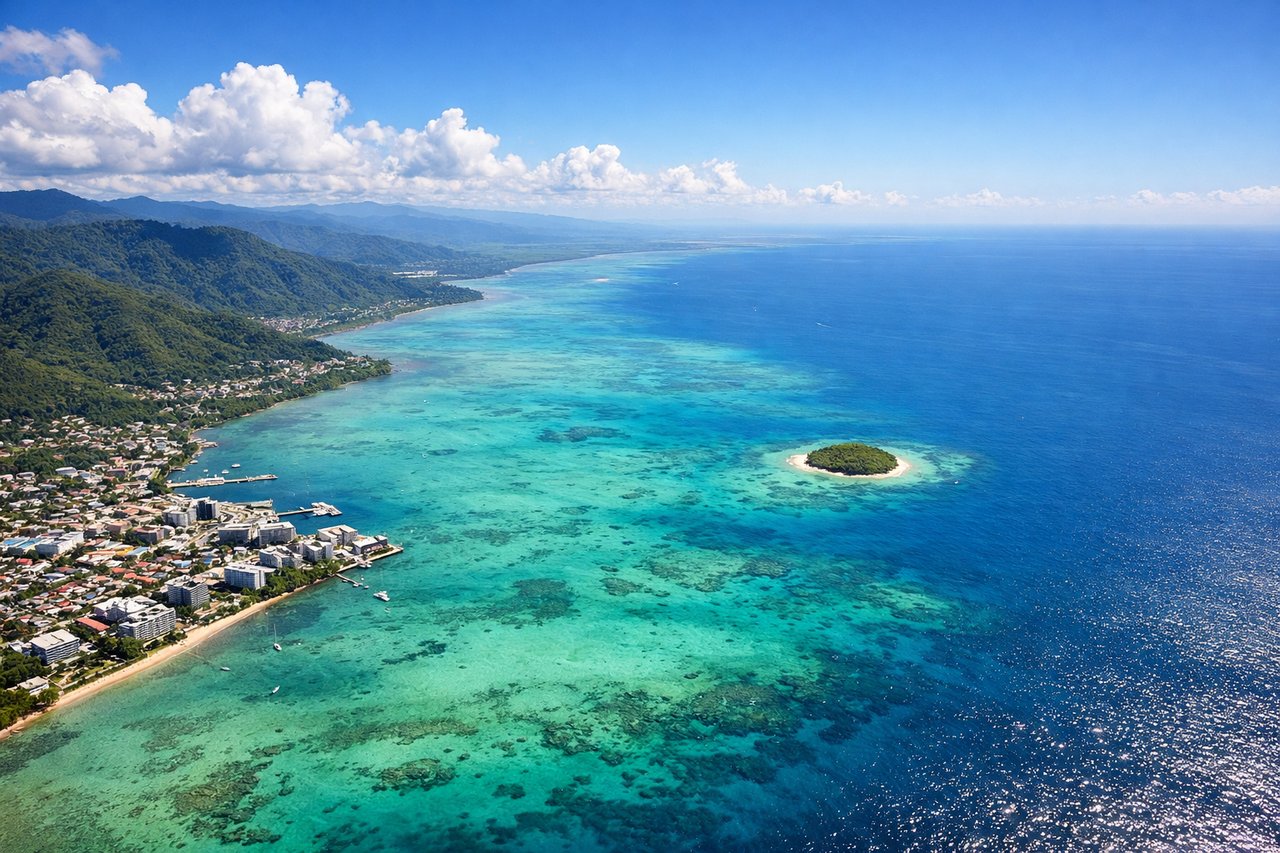
RIGHTOn the approach into Cairns the flight path runs close to the coastline, giving the right side clear views of the turquoise Coral Sea, fringing reef patches, and Trinity Inlet just before touchdown. The left side instead faces the steep, rainforest-covered Lamb Range and Bellenden Ker foothills that crowd the airport from the west.
Landmarks on this routeAll landmarks →
Will your flight be in sunlight?
See exactly which side of the plane gets sun and shade at your departure time.
About This Route
Which side of the plane should I sit on flying from Kingsford Smith International Airport (SYD) to Cairns International (CNS)?
Sit on the Right side of the plane for the best views on flights from Sydney to Cairns. The right side bookends the flight with two of Australia's most iconic scenes — Sydney Harbour on departure and the Coral Sea/Great Barrier Reef fringe on arrival into Cairns — while the left side mostly overlooks inland Queensland farmland and distant ranges during the long cruise segment.
What can I see during takeoff from Kingsford Smith International Airport in Sydney?
During takeoff from Kingsford Smith International Airport (SYD), sit on the Right side for the best views. Northbound departures off Sydney's runway 34 typically track along the coast before turning onto the northerly airway, putting Sydney Harbour, the Opera House, and the eastern beaches on the right side of the aircraft as it climbs. The left side mostly shows the western suburbs and the distant, hazy outline of the Blue Mountains. Notable sights include: Sydney Harbour and Harbour Bridge, Sydney Opera House, Bondi and Coogee beaches, Sydney CBD skyline.
What can I see when landing at Cairns International in Cairns?
When landing at Cairns International (CNS), sit on the Right side for the best views. On the approach into Cairns the flight path runs close to the coastline, giving the right side clear views of the turquoise Coral Sea, fringing reef patches, and Trinity Inlet just before touchdown. The left side instead faces the steep, rainforest-covered Lamb Range and Bellenden Ker foothills that crowd the airport from the west. Notable sights include: Coral Sea and outer reef patches, Trinity Inlet, Cairns Esplanade and waterfront, Green Island offshore.
How long is the flight from Sydney to Cairns?
The flight from Kingsford Smith International Airport (SYD) to Cairns International (CNS) takes 3h 20m.
What does the Sydney to Cairns flight path pass over?
The route crosses the Great Dividing Range shortly after leaving the Sydney basin, then continues over the inland plains and low ranges of central New South Wales and Queensland, including the Carnarvon Range foothills, before descending toward the Atherton Tablelands and coastal ranges near Cairns.