The right side wins on both ends of the flight—Sydney Harbour scenery at departure and the Dallas skyline on arrival—while most of the long Pacific crossing offers open ocean regardless of side, keeping the left side comparatively flat and featureless.
Flight Path
Vast open Pacific Ocean for the majority of the crossing, with landfall over the California coast near the Bay Area before the route continues across the Sierra Nevada, the Great Basin, and the southern Rockies en route to the Great Plains of Texas.
Great circle distance and headings ›Phase by phase
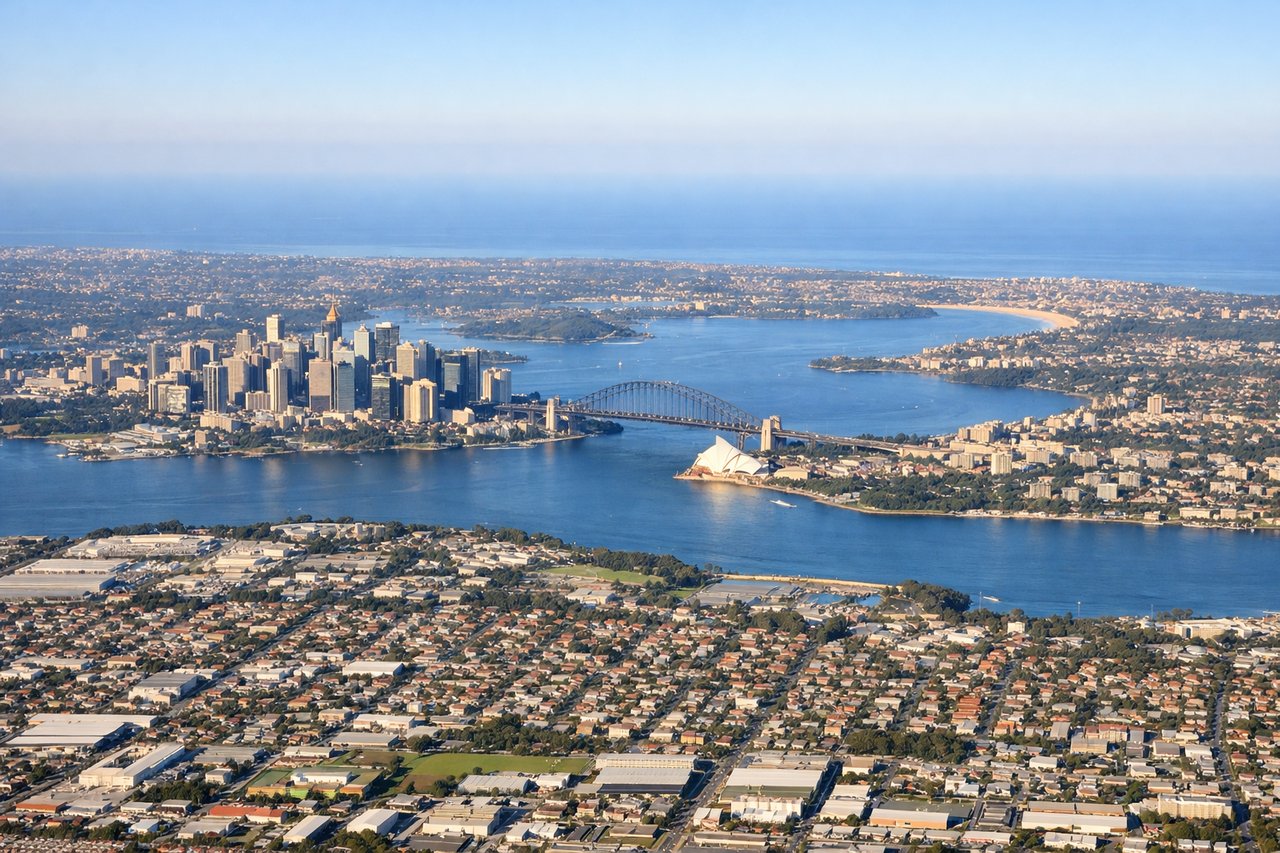
Takeoff from SYD
RIGHTDeparting SYD on the northerly plan, the aircraft climbs out over Sydney Harbour before banking east toward the Tasman Sea, putting the Opera House, Harbour Bridge, and the CBD skyline squarely on the right side. Left-side passengers mostly see the western suburbs and Blue Mountains foothills fading into haze.
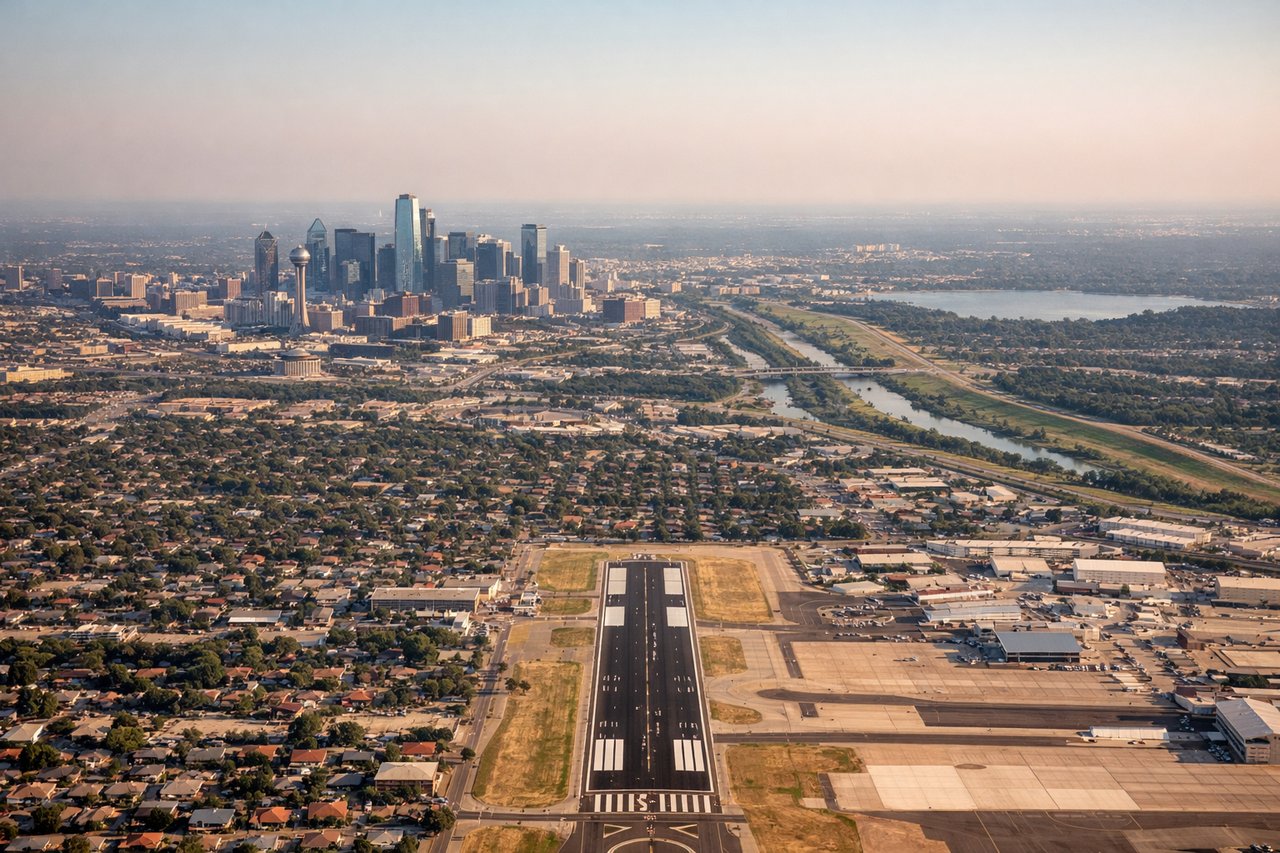
Landing at DAL
RIGHTOn approach to Dallas Love Field under typical southerly wind conditions, arrivals descend from the northwest onto runway 13, tracking just north of downtown before turning final. This puts the Dallas skyline and the looping Trinity River on the right side of the cabin during the final descent.
Landmarks on this routeAll landmarks →
Will your flight be in sunlight?
See exactly which side of the plane gets sun and shade at your departure time.
About This Route
Which side of the plane should I sit on flying from Kingsford Smith International Airport (SYD) to Dallas Love Fld (DAL)?
Sit on the Right side of the plane for the best views on flights from Sydney to Dallas. The right side wins on both ends of the flight—Sydney Harbour scenery at departure and the Dallas skyline on arrival—while most of the long Pacific crossing offers open ocean regardless of side, keeping the left side comparatively flat and featureless.
What can I see during takeoff from Kingsford Smith International Airport in Sydney?
During takeoff from Kingsford Smith International Airport (SYD), sit on the Right side for the best views. Departing SYD on the northerly plan, the aircraft climbs out over Sydney Harbour before banking east toward the Tasman Sea, putting the Opera House, Harbour Bridge, and the CBD skyline squarely on the right side. Left-side passengers mostly see the western suburbs and Blue Mountains foothills fading into haze. Notable sights include: Sydney Harbour Bridge, Sydney Opera House, Sydney CBD skyline, Tasman Sea coastline.
What can I see when landing at Dallas Love Fld in Dallas?
When landing at Dallas Love Fld (DAL), sit on the Right side for the best views. On approach to Dallas Love Field under typical southerly wind conditions, arrivals descend from the northwest onto runway 13, tracking just north of downtown before turning final. This puts the Dallas skyline and the looping Trinity River on the right side of the cabin during the final descent. Notable sights include: Downtown Dallas skyline, Trinity River, Reunion Tower, North Texas flatlands.
How long is the flight from Sydney to Dallas?
The flight from Kingsford Smith International Airport (SYD) to Dallas Love Fld (DAL) takes 15h 45m.
What does the Sydney to Dallas flight path pass over?
Vast open Pacific Ocean for the majority of the crossing, with landfall over the California coast near the Bay Area before the route continues across the Sierra Nevada, the Great Basin, and the southern Rockies en route to the Great Plains of Texas.