Takeoff from Sydney offers more dramatic and sustained scenic value with the Blue Mountains and coastal views. While landing into Seoul provides urban interest, the departure scenery is more visually distinctive and geographically significant.
Flown SYD to GMP? Did we get it right?
Flight Path
Sydney to Seoul is 5,183 miles (8,341 km), a flight of about 9 hours.
The flight path crosses the Coral Sea northeast of Australia, passes over the Philippines (Luzon visible on some routing), crosses the South China Sea, and approaches Korea over the Yellow Sea. Notable midpoint landmarks include the Philippine archipelago (if visible on routing), the Korean Peninsula's western coastline, and the transition from tropical to temperate geography.
Great circle distance and headings ›

Phase by phase

Takeoff from SYD
LEFTLeft seats capture the Blue Mountains and the Tasman Sea coastline as the aircraft climbs westward out of Sydney. Right seats face inland toward the Cumberland Plain with minimal scenic interest during initial climb.
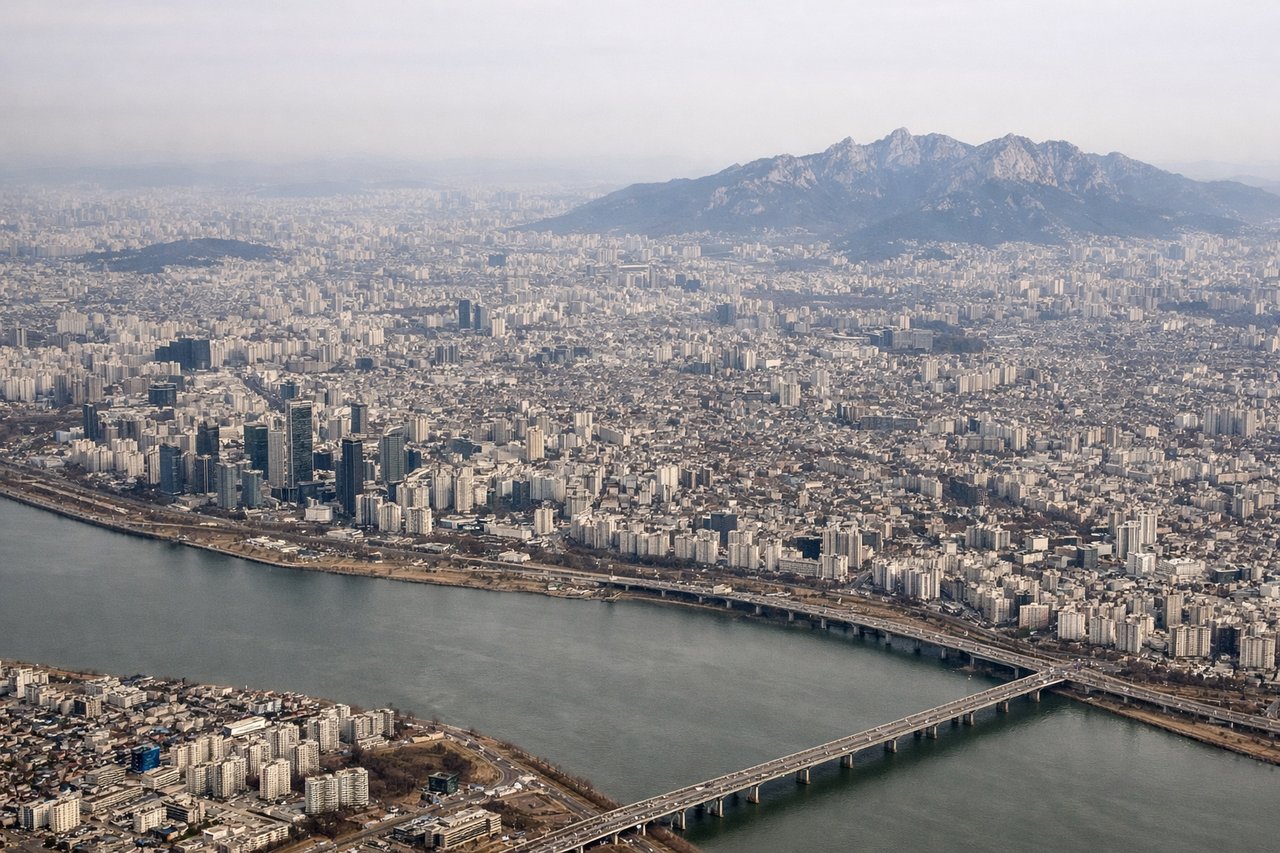
Landing at GMP
RIGHTRight seats offer views of the Han River, Seoul's urban sprawl, and the Gyeonggi Province landscape during descent into Gimpo. Left seats face away from the city during the final approach corridor.
Will your flight be in sunlight?
Pick a date and time in the Sun Map to watch the sun move across your whole flight.
About This Route
Which side of the plane should I sit on flying from Kingsford Smith International Airport (SYD) to Gimpo (GMP)?
Sit on the Left side of the plane for the best views on flights from Sydney to Seoul. Takeoff from Sydney offers more dramatic and sustained scenic value with the Blue Mountains and coastal views. While landing into Seoul provides urban interest, the departure scenery is more visually distinctive and geographically significant.
What can I see during takeoff from Kingsford Smith International Airport in Sydney?
During takeoff from Kingsford Smith International Airport (SYD), sit on the Left side for the best views. Left seats capture the Blue Mountains and the Tasman Sea coastline as the aircraft climbs westward out of Sydney. Right seats face inland toward the Cumberland Plain with minimal scenic interest during initial climb. Notable sights include: Blue Mountains (Great Dividing Range), Tasman Sea coastline, Hawkesbury River valley, Sydney Harbour (during initial climb).
What can I see when landing at Gimpo in Seoul?
When landing at Gimpo (GMP), sit on the Right side for the best views. Right seats offer views of the Han River, Seoul's urban sprawl, and the Gyeonggi Province landscape during descent into Gimpo. Left seats face away from the city during the final approach corridor. Notable sights include: Han River (Hangang), Seoul metropolitan area and Gangnam district, Gyeonggi Province agricultural plains, Bukhan Mountains to the north.
How long is the flight from Sydney to Seoul?
The flight from Kingsford Smith International Airport (SYD) to Gimpo (GMP) takes about 9 hours. The shortest flight path between them is 5,183 miles (8,341 km); winds and air traffic control usually add a few percent.
What does the Sydney to Seoul flight path pass over?
The flight path crosses the Coral Sea northeast of Australia, passes over the Philippines (Luzon visible on some routing), crosses the South China Sea, and approaches Korea over the Yellow Sea. Notable midpoint landmarks include the Philippine archipelago (if visible on routing), the Korean Peninsula's western coastline, and the transition from tropical to temperate geography.