The left side wins on the strength of two genuinely scenic bookends: Sydney's harbour and skyline at takeoff, and Johannesburg's mine dumps, Soweto, and city skyline on approach. The right side offers open ocean and Botany Bay at departure and flat highveld farmland at arrival, with little to distinguish it during the long oceanic cruise that dominates both sides equally.
Flight Path
The great-circle route bows south of the direct line, taking the flight south of mainland Australia (possibly within sight of the Great Australian Bight shortly after departure) before crossing roughly 10 hours of open Southern and Indian Ocean well south of Madagascar, with no significant land visible for the bulk of the cruise phase.
Great circle distance and headings ›.jpg?width=600)

.jpg?width=600)
Phase by phase
Takeoff from SYD
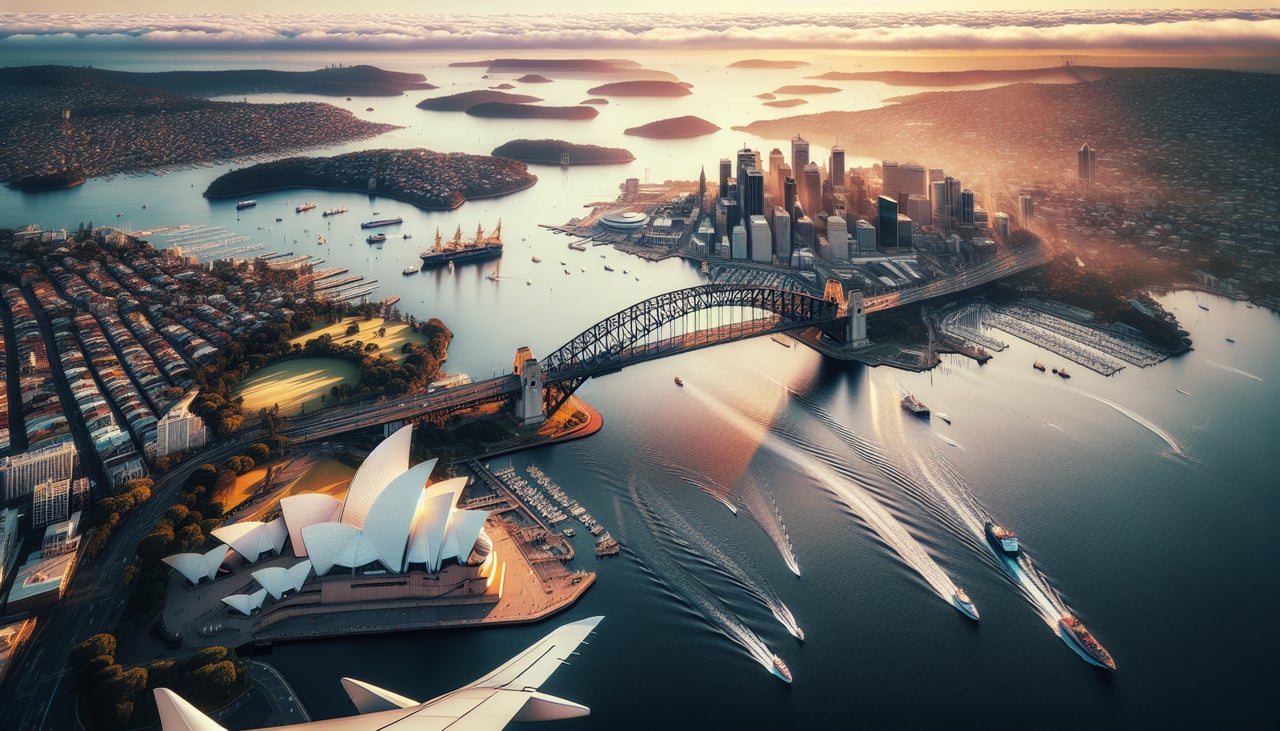
LEFTWestbound departures from Sydney typically use the north-south runways and bank toward the harbor side as they turn onto their outbound heading, giving left-side passengers a sweeping view of Sydney Harbour, the Opera House, and the CBD skyline before the Blue Mountains appear on the horizon. The right side mostly sees Botany Bay and open Tasman Sea during the same period.
Landing at JNB
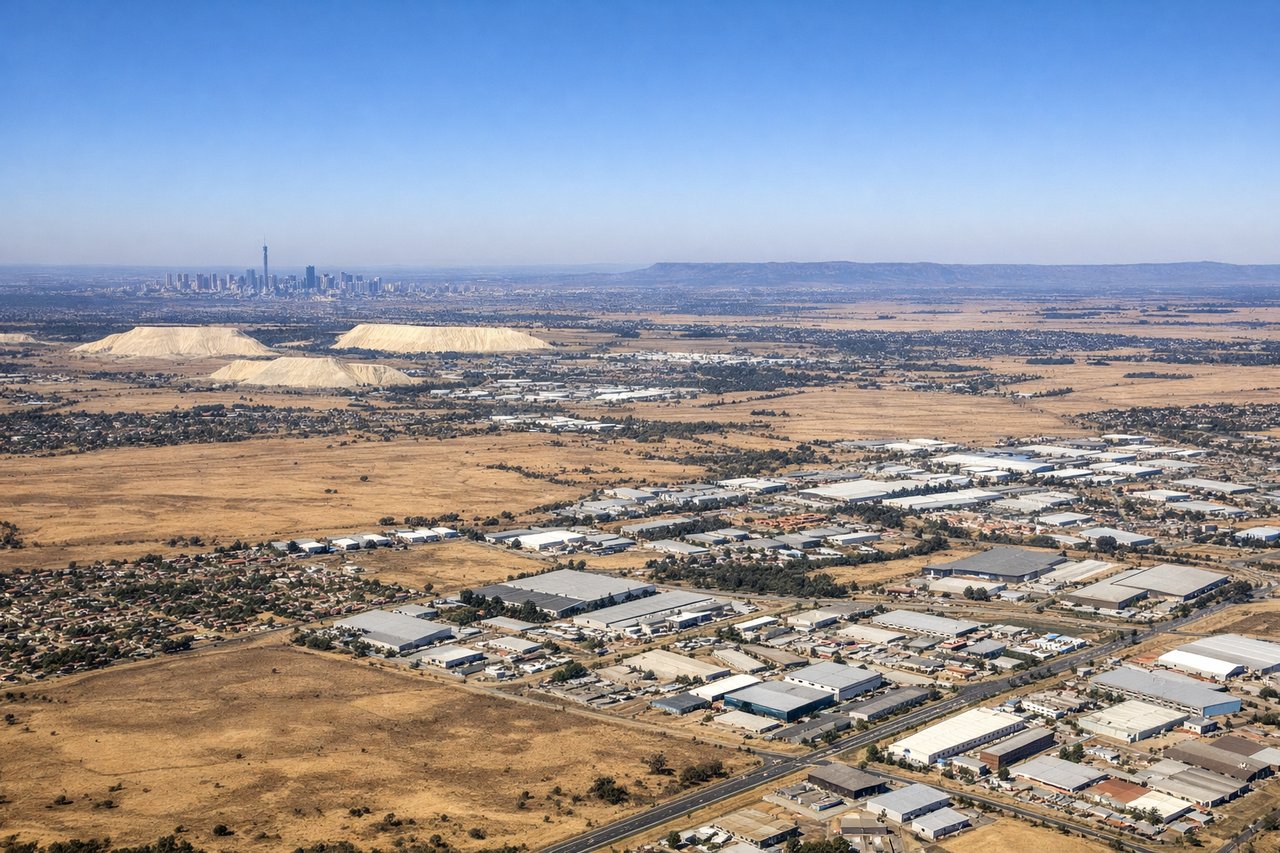
LEFTOn approach into Johannesburg from the east, the descent path swings over the southern edge of the city, revealing the distinctive golden mine tailings dumps and the sprawl of Soweto before the Johannesburg CBD skyline comes into view on the left side. The right side during this phase mostly shows flat, undifferentiated highveld farmland.
Landmarks on this routeAll landmarks →
Will your flight be in sunlight?
See exactly which side of the plane gets sun and shade at your departure time.
About This Route
Which side of the plane should I sit on flying from Kingsford Smith International Airport (SYD) to O.R. Tambo International Airport (JNB)?
Sit on the Left side of the plane for the best views on flights from Sydney to Johannesburg. The left side wins on the strength of two genuinely scenic bookends: Sydney's harbour and skyline at takeoff, and Johannesburg's mine dumps, Soweto, and city skyline on approach. The right side offers open ocean and Botany Bay at departure and flat highveld farmland at arrival, with little to distinguish it during the long oceanic cruise that dominates both sides equally.
What can I see during takeoff from Kingsford Smith International Airport in Sydney?
During takeoff from Kingsford Smith International Airport (SYD), sit on the Left side for the best views. Westbound departures from Sydney typically use the north-south runways and bank toward the harbor side as they turn onto their outbound heading, giving left-side passengers a sweeping view of Sydney Harbour, the Opera House, and the CBD skyline before the Blue Mountains appear on the horizon. The right side mostly sees Botany Bay and open Tasman Sea during the same period. Notable sights include: Sydney Harbour Bridge, Sydney Opera House, CBD skyline, Blue Mountains escarpment in the distance.
What can I see when landing at O.R. Tambo International Airport in Johannesburg?
When landing at O.R. Tambo International Airport (JNB), sit on the Left side for the best views. On approach into Johannesburg from the east, the descent path swings over the southern edge of the city, revealing the distinctive golden mine tailings dumps and the sprawl of Soweto before the Johannesburg CBD skyline comes into view on the left side. The right side during this phase mostly shows flat, undifferentiated highveld farmland. Notable sights include: Johannesburg CBD skyline, gold mine tailings dumps, Soweto township sprawl, Witwatersrand ridge.
How long is the flight from Sydney to Johannesburg?
The flight from Kingsford Smith International Airport (SYD) to O.R. Tambo International Airport (JNB) takes 13h 40m.
What does the Sydney to Johannesburg flight path pass over?
The great-circle route bows south of the direct line, taking the flight south of mainland Australia (possibly within sight of the Great Australian Bight shortly after departure) before crossing roughly 10 hours of open Southern and Indian Ocean well south of Madagascar, with no significant land visible for the bulk of the cruise phase.