While the takeoff offers Alpine scenery, the landing approach provides more dramatic and iconic views of the San Francisco Bay area. The left side captures the Golden Gate Bridge, bay geography, and coastal features that make this route visually memorable.
Flight Path
The flight path crosses the Atlantic Ocean with no significant visible landmarks for roughly 6-7 hours. Over Greenland and the Canadian Arctic, passengers may see ice sheets and glaciers (weather permitting). Approaching North America, the Rocky Mountains become visible—the Canadian Rockies near the Alberta-British Columbia border offer dramatic peaks. As the aircraft descends toward California, the Sierra Nevada range appears on the right side during the final approach phase, with Lake Tahoe potentially visible depending on exact flight path. The Great Plains and interior deserts of the western United States occupy the middle portion of the flight but offer limited distinctive features at cruise altitude.
Great circle distance and headings ›


.jpg?width=600)

Phase by phase
Takeoff from SZG
RIGHTRight side offers immediate views of the Northern Limestone Alps as the aircraft climbs northeastward from Salzburg. The Alps dominate the landscape on departure and provide dramatic relief against the Salzburg Basin.
Landing at SFO
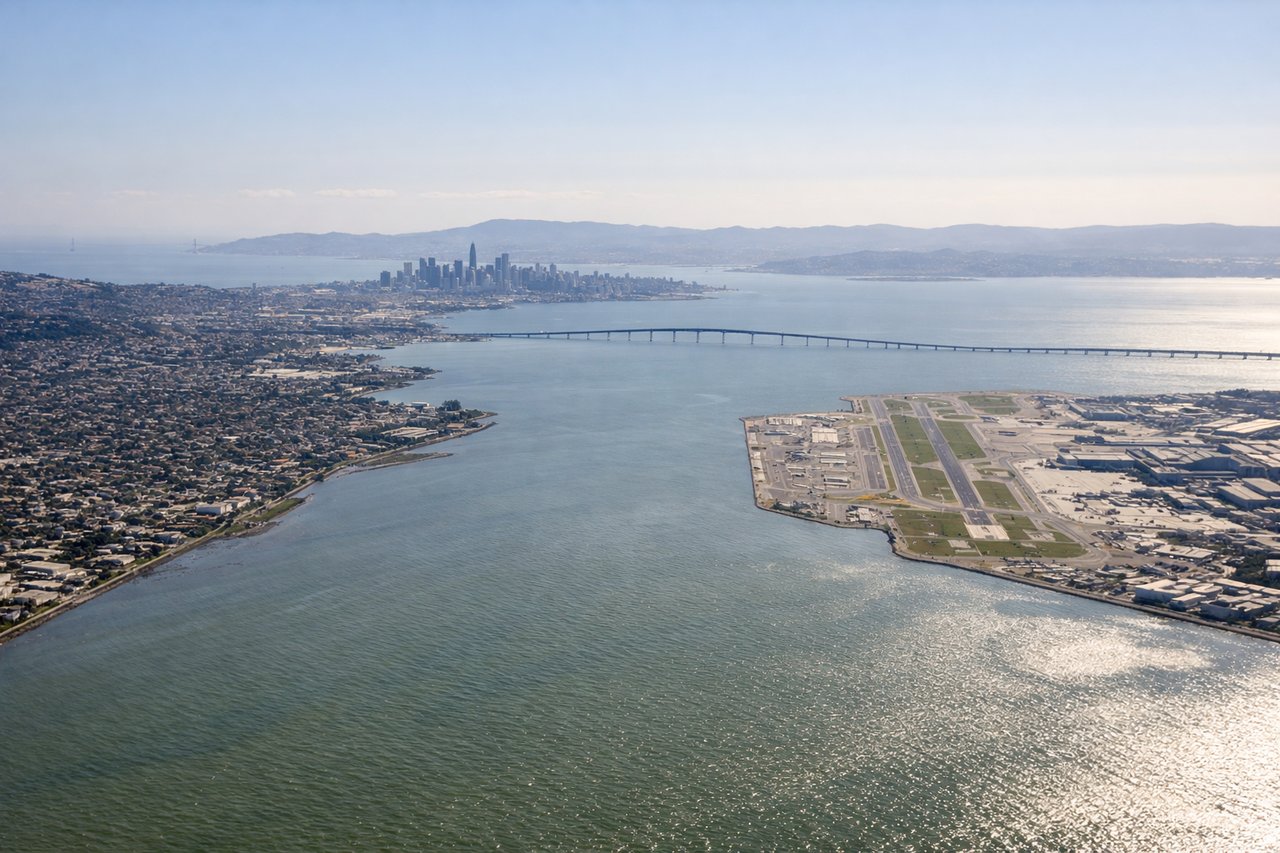
LEFTLeft side provides the best views during approach to SFO. The aircraft descends over the Pacific Ocean and San Francisco Bay, with the Golden Gate Bridge, Marin Headlands, and the San Francisco Peninsula visible on the left side during the final approach corridor.
Landmarks on this routeAll landmarks →
Will your flight be in sunlight?
See exactly which side of the plane gets sun and shade at your departure time.
About This Route
Which side of the plane should I sit on flying from Salzburg (SZG) to San Francisco International (SFO)?
Sit on the Left side of the plane for the best views on flights from Salzburg to San Francisco. While the takeoff offers Alpine scenery, the landing approach provides more dramatic and iconic views of the San Francisco Bay area. The left side captures the Golden Gate Bridge, bay geography, and coastal features that make this route visually memorable.
What can I see during takeoff from Salzburg in Salzburg?
During takeoff from Salzburg (SZG), sit on the Right side for the best views. Right side offers immediate views of the Northern Limestone Alps as the aircraft climbs northeastward from Salzburg. The Alps dominate the landscape on departure and provide dramatic relief against the Salzburg Basin. Notable sights include: Northern Limestone Alps, Salzburg Basin, Salzach River valley, Untersberg massif.
What can I see when landing at San Francisco International in San Francisco?
When landing at San Francisco International (SFO), sit on the Left side for the best views. Left side provides the best views during approach to SFO. The aircraft descends over the Pacific Ocean and San Francisco Bay, with the Golden Gate Bridge, Marin Headlands, and the San Francisco Peninsula visible on the left side during the final approach corridor. Notable sights include: San Francisco Bay, Golden Gate Bridge, Marin Headlands, San Francisco Peninsula.
How long is the flight from Salzburg to San Francisco?
The flight from Salzburg (SZG) to San Francisco International (SFO) takes Approximately 11-12 hours.
What does the Salzburg to San Francisco flight path pass over?
The flight path crosses the Atlantic Ocean with no significant visible landmarks for roughly 6-7 hours. Over Greenland and the Canadian Arctic, passengers may see ice sheets and glaciers (weather permitting). Approaching North America, the Rocky Mountains become visible—the Canadian Rockies near the Alberta-British Columbia border offer dramatic peaks. As the aircraft descends toward California, the Sierra Nevada range appears on the right side during the final approach phase, with Lake Tahoe potentially visible depending on exact flight path. The Great Plains and interior deserts of the western United States occupy the middle portion of the flight but offer limited distinctive features at cruise altitude.