While takeoff offers dramatic Taiwan scenery, the landing approach over the Netherlands provides more sustained visual interest across a longer descent. The polder landscape and delta system are visually distinctive and occupy a larger portion of the flight profile.
Flight Path
The flight path crosses the Himalayas (visible from altitude as a massive snow-capped ridge if routed via northern corridors), the Caspian Sea region, and the Caucasus Mountains. Over the Middle East, you may see the Persian Gulf, Tigris-Euphrates river valleys, and the Syrian Desert. Approaching Europe, the flight passes over the Black Sea region, the Carpathian Mountains, and the Danube River valley before descending into the Netherlands.
Great circle distance and headings ›


Phase by phase
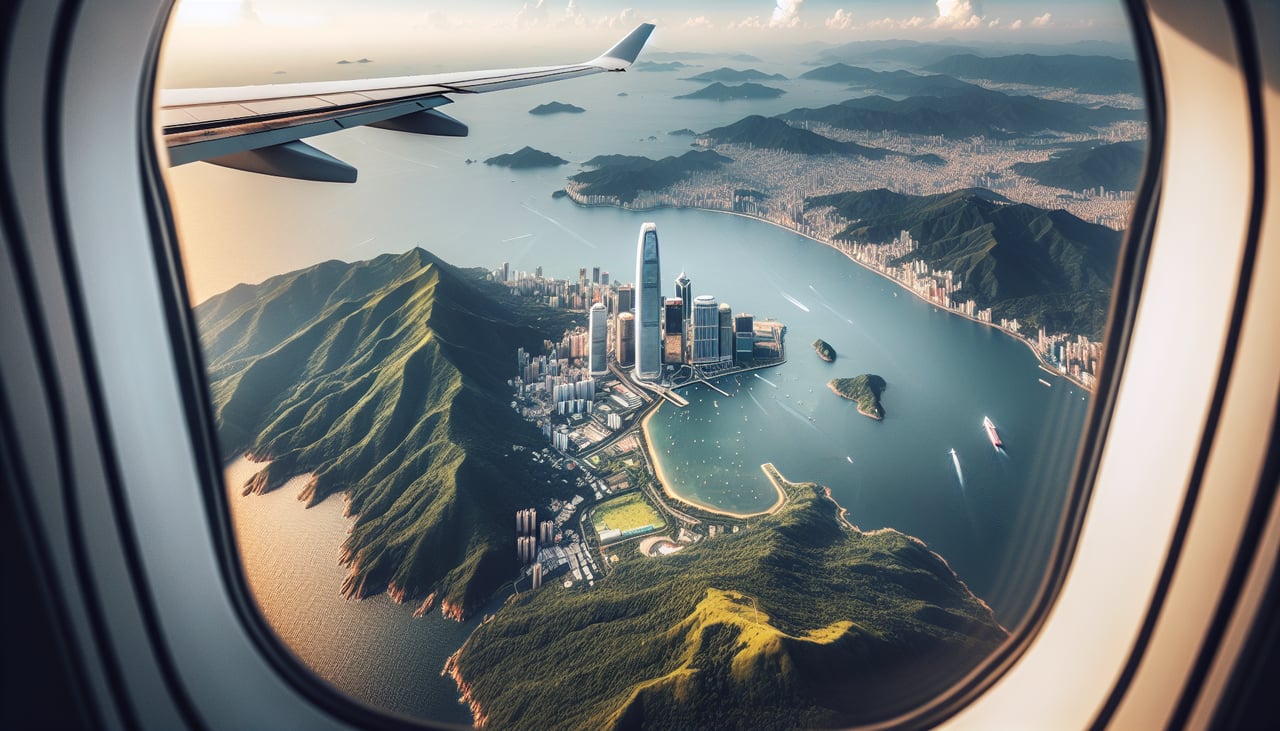
Takeoff from TPE
RIGHTRight-side seats capture the dramatic climb-out over the Taipei Basin and northern Taiwan coastline. You'll see the city grid expanding below and the sharp transition to the Taiwan Strait as the aircraft banks northwestward.
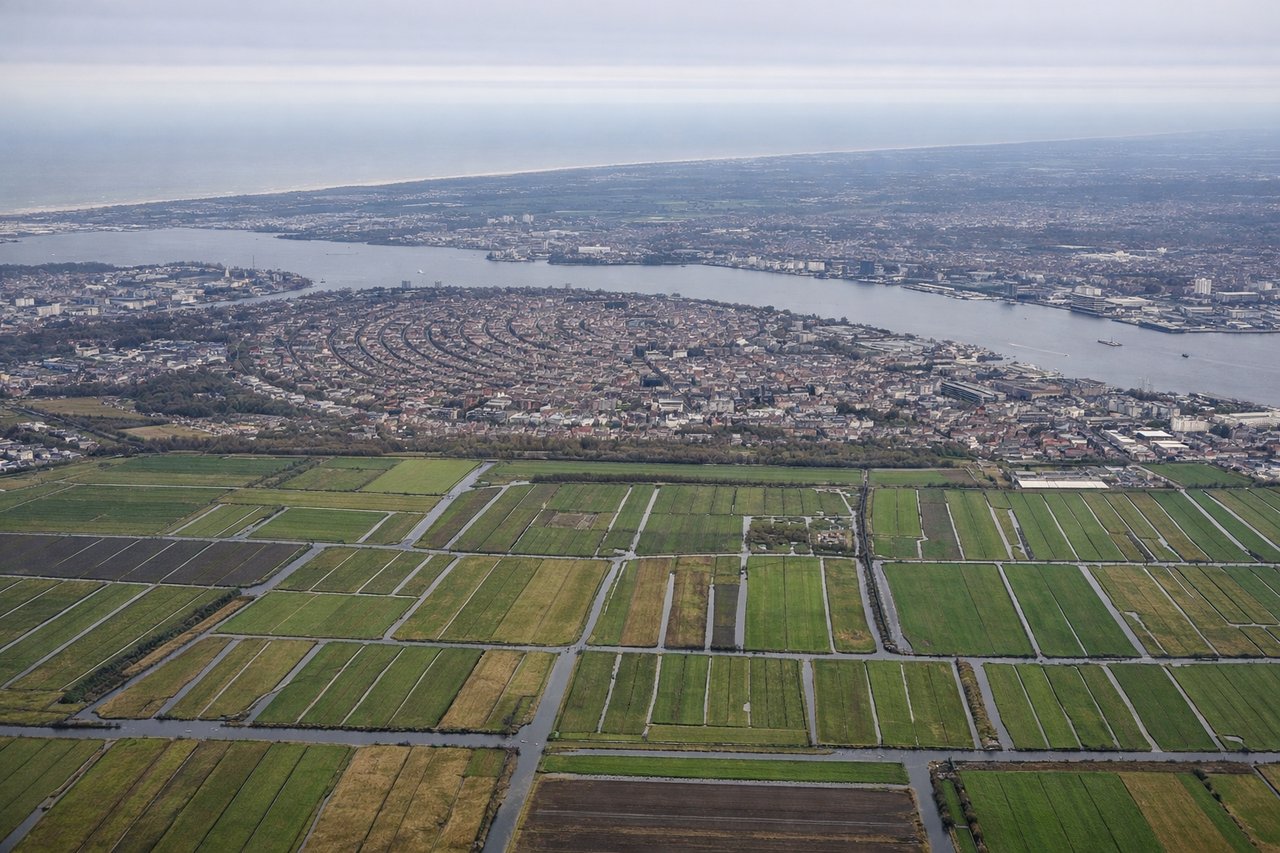
Landing at AMS
LEFTLeft-side seats offer the best approach views over the Netherlands. You'll see the Dutch polder landscape—geometric fields, canals, and waterways—plus the Rhine-Meuse delta system and Amsterdam's canal rings as you descend into Schiphol.
Landmarks on this routeAll landmarks →
Will your flight be in sunlight?
See exactly which side of the plane gets sun and shade at your departure time.
About This Route
Which side of the plane should I sit on flying from Chiang Kai Shek International (TPE) to Schiphol (AMS)?
Sit on the Left side of the plane for the best views on flights from Taipei to Amsterdam. While takeoff offers dramatic Taiwan scenery, the landing approach over the Netherlands provides more sustained visual interest across a longer descent. The polder landscape and delta system are visually distinctive and occupy a larger portion of the flight profile.
What can I see during takeoff from Chiang Kai Shek International in Taipei?
During takeoff from Chiang Kai Shek International (TPE), sit on the Right side for the best views. Right-side seats capture the dramatic climb-out over the Taipei Basin and northern Taiwan coastline. You'll see the city grid expanding below and the sharp transition to the Taiwan Strait as the aircraft banks northwestward. Notable sights include: Taipei city and Taipei 101, Tamsui River estuary, northern Taiwan coastline, Taiwan Strait.
What can I see when landing at Schiphol in Amsterdam?
When landing at Schiphol (AMS), sit on the Left side for the best views. Left-side seats offer the best approach views over the Netherlands. You'll see the Dutch polder landscape—geometric fields, canals, and waterways—plus the Rhine-Meuse delta system and Amsterdam's canal rings as you descend into Schiphol. Notable sights include: Rhine-Meuse delta, Dutch polder fields and canal network, Amsterdam city center with canal rings, North Sea coast.
How long is the flight from Taipei to Amsterdam?
The flight from Chiang Kai Shek International (TPE) to Schiphol (AMS) takes Approximately 16-17 hours (including one stop, typically in Middle East or South Asia).
What does the Taipei to Amsterdam flight path pass over?
The flight path crosses the Himalayas (visible from altitude as a massive snow-capped ridge if routed via northern corridors), the Caspian Sea region, and the Caucasus Mountains. Over the Middle East, you may see the Persian Gulf, Tigris-Euphrates river valleys, and the Syrian Desert. Approaching Europe, the flight passes over the Black Sea region, the Carpathian Mountains, and the Danube River valley before descending into the Netherlands.