While takeoff favors right seats for the Delaware River and Philadelphia views, the landing approach over Florida's lake system is more visually distinctive and geographically interesting. Left seats capture the unique wetland and lake landscape that defines central Florida's geography.
Flight Path
The flight path crosses the Appalachian foothills of Virginia and West Virginia (visible as low mountain ridges), then transitions over the Piedmont region of the Carolinas. The Atlantic Coastal Plain becomes increasingly evident as the aircraft moves south. Around the midpoint near South Carolina, the terrain flattens considerably. The Great Dismal Swamp area (Virginia-North Carolina border) may be visible as a dark, forested wetland region if flying the typical southern routing. As the aircraft approaches Florida, the landscape becomes progressively flatter with increasing water features and vegetation.
Great circle distance and headings ›Phase by phase
Takeoff from TTN
RIGHTTTN typically departs runway 6 (northeast) or 24 (southwest). Right seats offer views of the Delaware River valley and Philadelphia metro area during initial climb. The river corridor and urban sprawl provide clear geographic reference points.
Landing at MCO
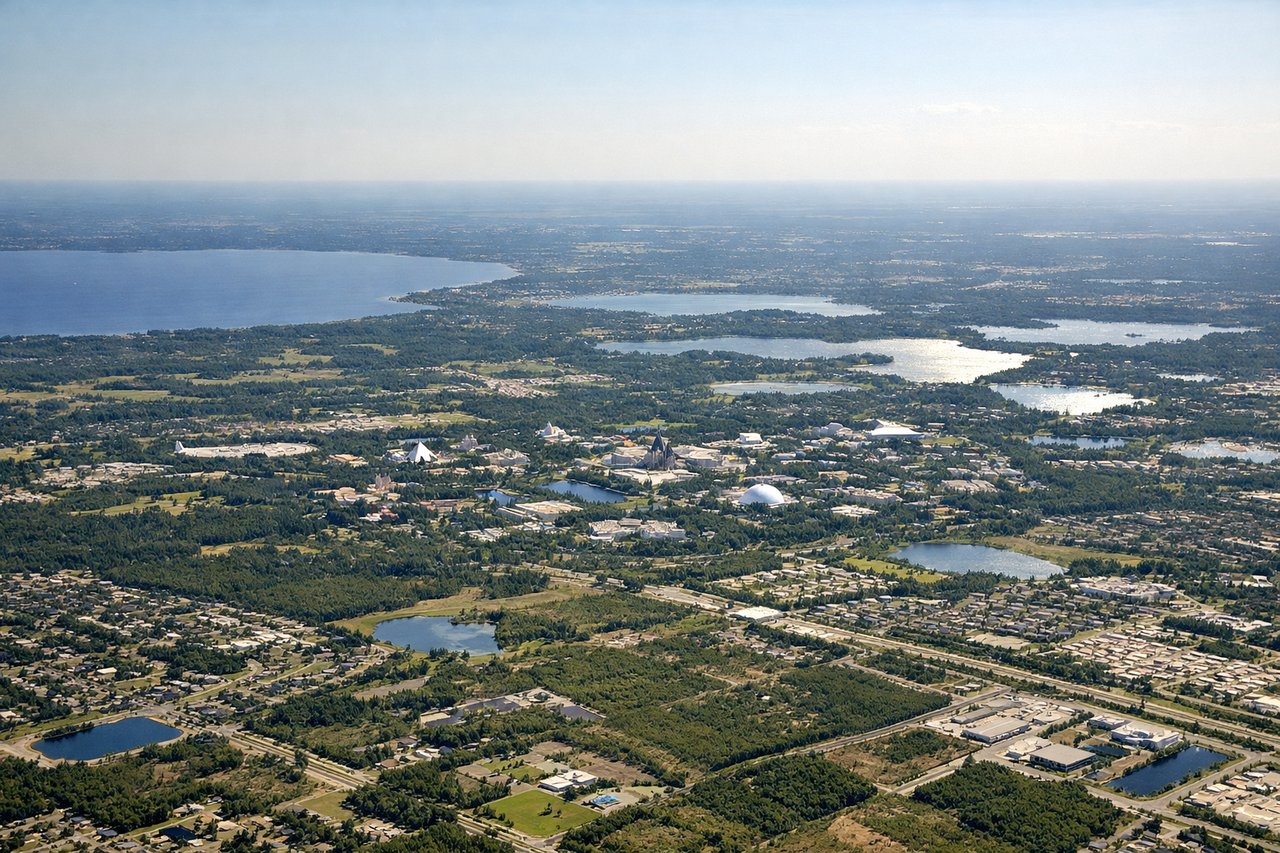
LEFTMCO typically lands runway 9L/9R (eastbound) or 27L/27R (westbound). Left seats during approach offer views of the lakes and wetlands surrounding Orlando, particularly the chain of lakes that dot central Florida. These water features are distinctive and clearly visible during descent.
Landmarks on this routeAll landmarks →
Will your flight be in sunlight?
See exactly which side of the plane gets sun and shade at your departure time.
About This Route
Which side of the plane should I sit on flying from Trenton Mercer (TTN) to Orlando International (MCO)?
Sit on the Left side of the plane for the best views on flights from Trenton to Orlando. While takeoff favors right seats for the Delaware River and Philadelphia views, the landing approach over Florida's lake system is more visually distinctive and geographically interesting. Left seats capture the unique wetland and lake landscape that defines central Florida's geography.
What can I see during takeoff from Trenton Mercer in Trenton?
During takeoff from Trenton Mercer (TTN), sit on the Right side for the best views. TTN typically departs runway 6 (northeast) or 24 (southwest). Right seats offer views of the Delaware River valley and Philadelphia metro area during initial climb. The river corridor and urban sprawl provide clear geographic reference points. Notable sights include: Delaware River, Philadelphia skyline (distant), New Jersey Pine Barrens (southern view), Appalachian foothills (western horizon).
What can I see when landing at Orlando International in Orlando?
When landing at Orlando International (MCO), sit on the Left side for the best views. MCO typically lands runway 9L/9R (eastbound) or 27L/27R (westbound). Left seats during approach offer views of the lakes and wetlands surrounding Orlando, particularly the chain of lakes that dot central Florida. These water features are distinctive and clearly visible during descent. Notable sights include: Lake Apopka, East-Central Florida lake chain, Orlando urban area, Shingle Creek (headwaters of Kissimmee River).
How long is the flight from Trenton to Orlando?
The flight from Trenton Mercer (TTN) to Orlando International (MCO) takes Approximately 3 hours 15 minutes.
What does the Trenton to Orlando flight path pass over?
The flight path crosses the Appalachian foothills of Virginia and West Virginia (visible as low mountain ridges), then transitions over the Piedmont region of the Carolinas. The Atlantic Coastal Plain becomes increasingly evident as the aircraft moves south. Around the midpoint near South Carolina, the terrain flattens considerably. The Great Dismal Swamp area (Virginia-North Carolina border) may be visible as a dark, forested wetland region if flying the typical southern routing. As the aircraft approaches Florida, the landscape becomes progressively flatter with increasing water features and vegetation.