Tunis to Paris is 924 miles (1,487 km), a flight of about 2 hours 40 minutes.
Left wins at takeoff for the Gulf of Tunis and Carthage coastline, but right wins the more dramatic landing into Paris with the Seine, Eiffel Tower, and La Défense. The Paris approach view is the highlight of the flight, and right side also captures the Mediterranean coastline of southern France during cruise if you are awake for it.
Flight Path
The flight tracks northwest over northern Tunisia, then crosses the central Mediterranean Sea for a long overwater segment. It crosses the French coastline near the Golfe du Lion or Provence coast, then flies over the Rhône valley and the rolling terrain of Burgundy and the Île-de-France before descending into CDG. The Alps are well to the east and not typically visible unless the routing deviates significantly.
Great circle distance and headings ›

.jpg?width=600)
Phase by phase
Takeoff from TUN
LEFTTunis-Carthage typically departs on runway 01 (northbound) or 29 (westbound). On a northbound departure, the left side gives you the Gulf of Tunis, the ancient ruins of Carthage along the shoreline, and the Lake of Tunis lagoon. On a westbound departure, left still captures the city of Tunis and the lake system.
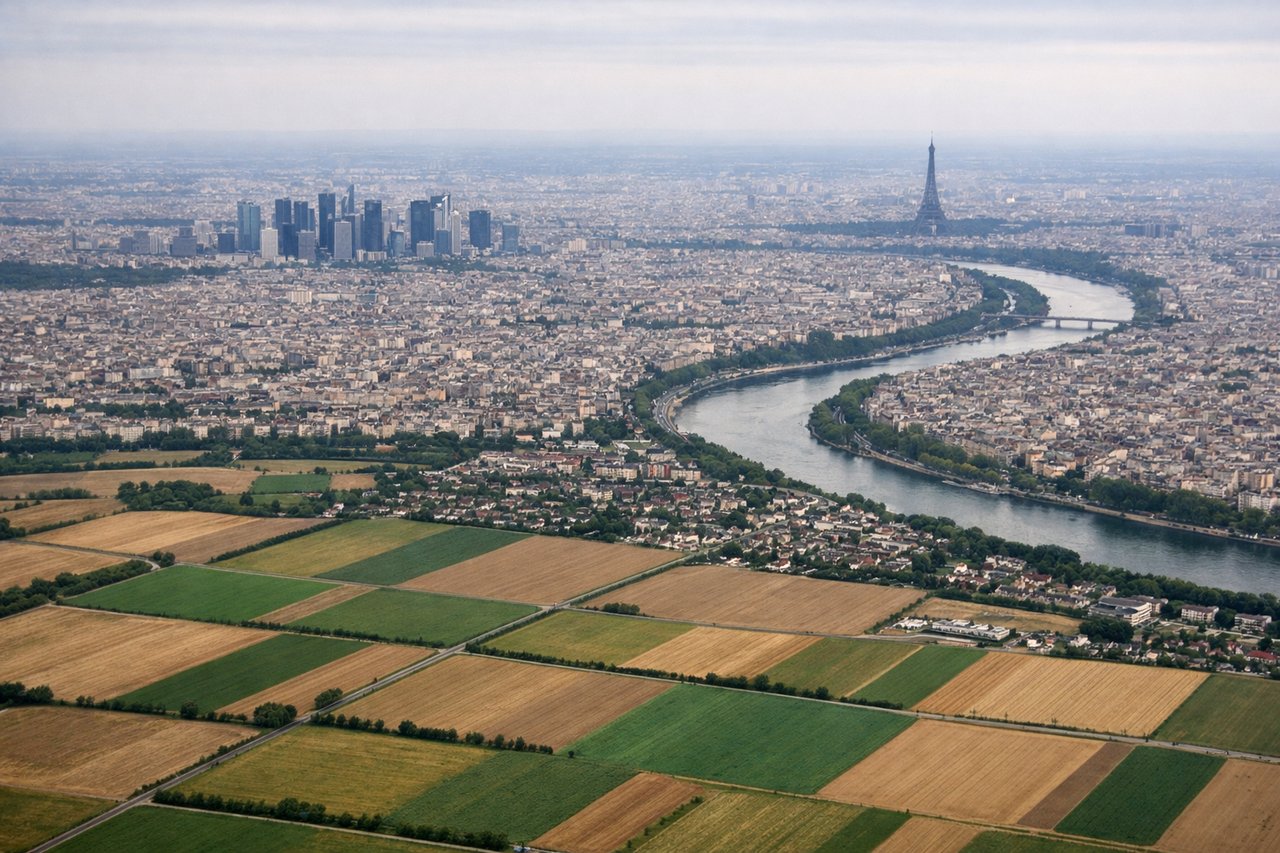
Landing at CDG
RIGHTCDG typically lands on runways 27L/27R (westbound approach) or 09L/09R (eastbound). On the common westbound approach from the east, the right side faces south and gives you the Paris city skyline including the Eiffel Tower, the Seine river bends, and the dense urban sprawl of the Île-de-France. The left side on this approach faces north toward less distinctive suburban terrain.
Landmarks on this routeAll landmarks →
Will your flight be in sunlight?
Pick a date and time in the Sun Map to watch the sun move across your whole flight.
About This Route
Which side of the plane should I sit on flying from Carthage (TUN) to Charles De Gaulle (CDG)?
Sit on the Right side of the plane for the best views on flights from Tunis to Paris. Left wins at takeoff for the Gulf of Tunis and Carthage coastline, but right wins the more dramatic landing into Paris with the Seine, Eiffel Tower, and La Défense. The Paris approach view is the highlight of the flight, and right side also captures the Mediterranean coastline of southern France during cruise if you are awake for it.
What can I see during takeoff from Carthage in Tunis?
During takeoff from Carthage (TUN), sit on the Left side for the best views. Tunis-Carthage typically departs on runway 01 (northbound) or 29 (westbound). On a northbound departure, the left side gives you the Gulf of Tunis, the ancient ruins of Carthage along the shoreline, and the Lake of Tunis lagoon. On a westbound departure, left still captures the city of Tunis and the lake system. Notable sights include: Gulf of Tunis, Lake of Tunis (Lac de Tunis), ancient Carthage ruins on the coastal promontory, Tunis medina and city center.
What can I see when landing at Charles De Gaulle in Paris?
When landing at Charles De Gaulle (CDG), sit on the Right side for the best views. CDG typically lands on runways 27L/27R (westbound approach) or 09L/09R (eastbound). On the common westbound approach from the east, the right side faces south and gives you the Paris city skyline including the Eiffel Tower, the Seine river bends, and the dense urban sprawl of the Île-de-France. The left side on this approach faces north toward less distinctive suburban terrain. Notable sights include: Paris city center and Eiffel Tower silhouette, Seine river meanders through the urban fabric, La Défense business district towers, Stade de France visible near Saint-Denis.
How long is the flight from Tunis to Paris?
The flight from Carthage (TUN) to Charles De Gaulle (CDG) takes about 2 hours 40 minutes. The shortest flight path between them is 924 miles (1,487 km); winds and air traffic control usually add a few percent.
What does the Tunis to Paris flight path pass over?
The flight tracks northwest over northern Tunisia, then crosses the central Mediterranean Sea for a long overwater segment. It crosses the French coastline near the Golfe du Lion or Provence coast, then flies over the Rhône valley and the rolling terrain of Burgundy and the Île-de-France before descending into CDG. The Alps are well to the east and not typically visible unless the routing deviates significantly.