Tunis to Doha is 2,554 miles (4,110 km), a flight of about 4 hours 30 minutes.
The left side captures the dramatic Tunisian coastal departure with Carthage and the Gulf of Tunis, and during the cruise the left side also looks toward the Mediterranean, the Libyan coast, and eventually the Saudi Arabian coastline on descent. The right side at landing is compelling but brief, making left the better overall seat for the full journey.
Flight Path
The route tracks southeast over Libya, crossing the Libyan Desert and the Fezzan region — vast, visually striking sand seas including parts of the Sahara's erg systems. The flight then crosses northwestern Egypt near the Libyan border before entering Saudi Arabian airspace over the Hejaz region, then descending over the Arabian Gulf toward Qatar. The Mediterranean is visible early in the flight, and the Nile Delta may be visible on the northern horizon depending on exact routing.
Great circle distance and headings ›


Phase by phase
Takeoff from TUN
LEFTTunis-Carthage airport sits right on the coast, and departures heading east or northeast put the left side over the Gulf of Tunis, with the ancient ruins of Carthage and the medina of Tunis clearly visible below. The right side faces inland toward scrubby hills with little of interest.
Landing at DOH
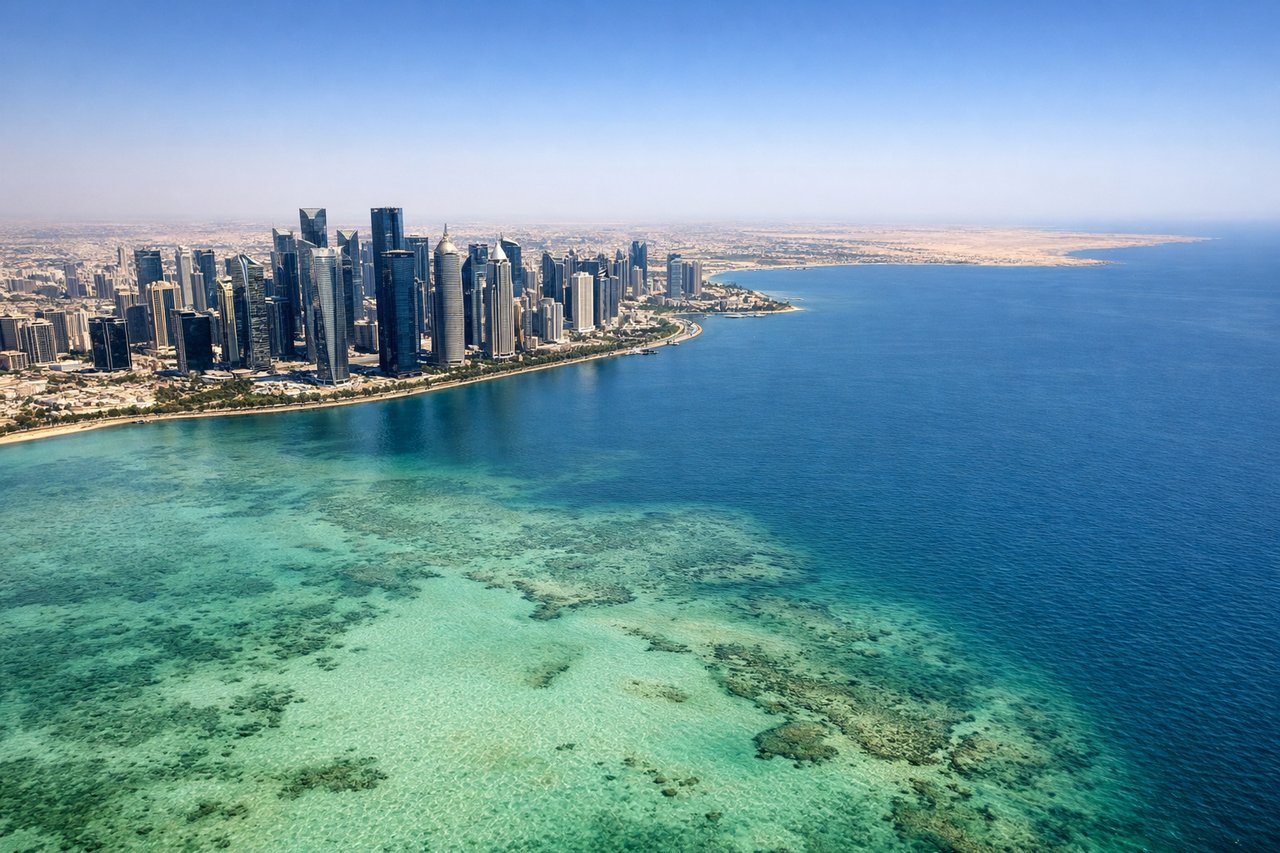
RIGHTDoha International Airport (now largely replaced by Hamad, but still used) sits on the western shore of the Qatar peninsula. Approaches from the west or northwest put the right side over Doha Bay and the distinctive West Bay skyline cluster, which is one of the most recognizable urban silhouettes in the Gulf region.
Landmarks on this routeAll landmarks →
Will your flight be in sunlight?
Pick a date and time in the Sun Map to watch the sun move across your whole flight.
About This Route
Which side of the plane should I sit on flying from Carthage (TUN) to Hamad International Airport (DOH)?
Sit on the Left side of the plane for the best views on flights from Tunis to Doha. The left side captures the dramatic Tunisian coastal departure with Carthage and the Gulf of Tunis, and during the cruise the left side also looks toward the Mediterranean, the Libyan coast, and eventually the Saudi Arabian coastline on descent. The right side at landing is compelling but brief, making left the better overall seat for the full journey.
What can I see during takeoff from Carthage in Tunis?
During takeoff from Carthage (TUN), sit on the Left side for the best views. Tunis-Carthage airport sits right on the coast, and departures heading east or northeast put the left side over the Gulf of Tunis, with the ancient ruins of Carthage and the medina of Tunis clearly visible below. The right side faces inland toward scrubby hills with little of interest. Notable sights include: Gulf of Tunis shoreline, ancient Carthage ruins and harbor outline, Tunis medina and city center, Lake of Tunis lagoon.
What can I see when landing at Hamad International Airport in Doha?
When landing at Hamad International Airport (DOH), sit on the Right side for the best views. Doha International Airport (now largely replaced by Hamad, but still used) sits on the western shore of the Qatar peninsula. Approaches from the west or northwest put the right side over Doha Bay and the distinctive West Bay skyline cluster, which is one of the most recognizable urban silhouettes in the Gulf region. Notable sights include: Doha Bay, West Bay skyscraper cluster, Qatar peninsula coastline, shallow turquoise Gulf waters.
How long is the flight from Tunis to Doha?
The flight from Carthage (TUN) to Hamad International Airport (DOH) takes about 4 hours 30 minutes. The shortest flight path between them is 2,554 miles (4,110 km); winds and air traffic control usually add a few percent.
What does the Tunis to Doha flight path pass over?
The route tracks southeast over Libya, crossing the Libyan Desert and the Fezzan region — vast, visually striking sand seas including parts of the Sahara's erg systems. The flight then crosses northwestern Egypt near the Libyan border before entering Saudi Arabian airspace over the Hejaz region, then descending over the Arabian Gulf toward Qatar. The Mediterranean is visible early in the flight, and the Nile Delta may be visible on the northern horizon depending on exact routing.