Tucson to Denver is 639 miles (1,029 km), a flight of about 2 hours 10 minutes.
The left side offers the Santa Catalina Mountains at departure and the Front Range of the Rockies during the Denver approach, bookending the flight with genuine mountain scenery, while the right side faces the comparatively flat high desert and plains for most of the route.
Flight Path
Route crosses the high desert of eastern Arizona and western New Mexico near the Rio Grande valley, passing within sight of the Sandia and Sangre de Cristo Mountains before descending onto Colorado's eastern plains toward Denver.
Great circle distance and headings ›
.jpg?width=600)
Phase by phase
Takeoff from TUS
LEFTDeparting Tucson northbound, the Santa Catalina Mountains rise dramatically just north of the airport and dominate the left-side view during initial climb and the turn onto course toward Denver. The right side mostly shows the flatter Rincon Mountains foothills and open desert basin, less immediately striking.
Landing at DEN
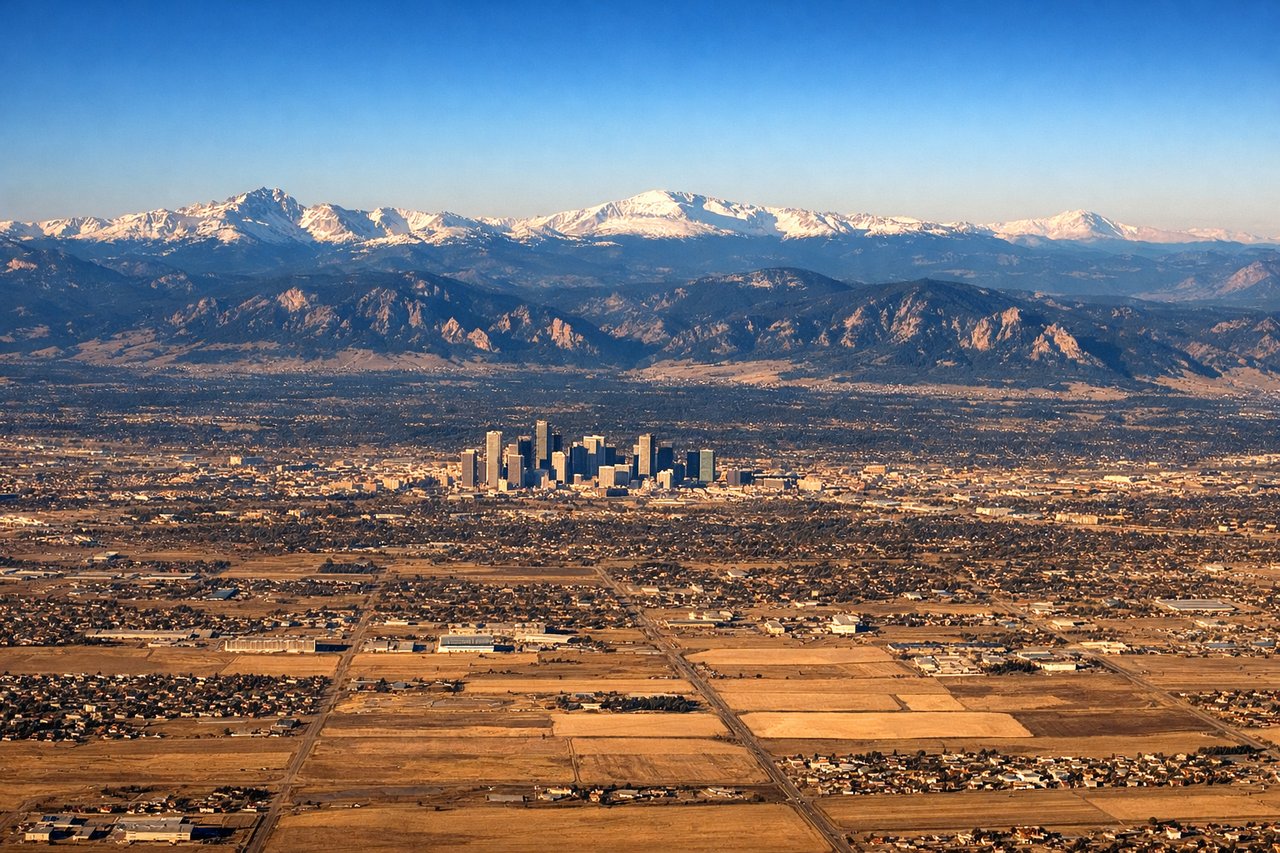
LEFTOn approach into Denver from the south, the Front Range of the Rocky Mountains is clearly visible off the left side, providing a dramatic mountain backdrop as the plane descends over the plains. The right side faces east toward the flat, featureless High Plains with no comparable landmarks.
Landmarks on this routeAll landmarks →
Will your flight be in sunlight?
Pick a date and time in the Sun Map to watch the sun move across your whole flight.
About This Route
Which side of the plane should I sit on flying from Tucson International (TUS) to Denver International (DEN)?
Sit on the Left side of the plane for the best views on flights from Tucson to Denver. The left side offers the Santa Catalina Mountains at departure and the Front Range of the Rockies during the Denver approach, bookending the flight with genuine mountain scenery, while the right side faces the comparatively flat high desert and plains for most of the route.
What can I see during takeoff from Tucson International in Tucson?
During takeoff from Tucson International (TUS), sit on the Left side for the best views. Departing Tucson northbound, the Santa Catalina Mountains rise dramatically just north of the airport and dominate the left-side view during initial climb and the turn onto course toward Denver. The right side mostly shows the flatter Rincon Mountains foothills and open desert basin, less immediately striking. Notable sights include: Santa Catalina Mountains, Tucson basin, Rincon Mountains foothills.
What can I see when landing at Denver International in Denver?
When landing at Denver International (DEN), sit on the Left side for the best views. On approach into Denver from the south, the Front Range of the Rocky Mountains is clearly visible off the left side, providing a dramatic mountain backdrop as the plane descends over the plains. The right side faces east toward the flat, featureless High Plains with no comparable landmarks. Notable sights include: Front Range of the Rockies, Pikes Peak area, Denver metro skyline, South Platte River valley.
How long is the flight from Tucson to Denver?
The flight from Tucson International (TUS) to Denver International (DEN) takes about 2 hours 10 minutes. The shortest flight path between them is 639 miles (1,029 km); winds and air traffic control usually add a few percent.
What does the Tucson to Denver flight path pass over?
Route crosses the high desert of eastern Arizona and western New Mexico near the Rio Grande valley, passing within sight of the Sandia and Sangre de Cristo Mountains before descending onto Colorado's eastern plains toward Denver.