While the takeoff offers excellent Adriatic and Alpine views, the landing provides more dramatic and visually distinctive scenery. The Persian Gulf's turquoise waters and Qatar's unique coastal geography create a more memorable final impression than the departure over the Adriatic.
Flown VCE to DOH? Did we get it right?
Flight Path
Venice to Doha is 2,578 miles (4,150 km), a flight of about 5 hours 15 minutes.
The flight path crosses the Alps (visible from altitude as a snow-capped ridge if traveling in winter months), then traverses the Balkans and Greece, passes over the Ionian Sea and Aegean Sea, crosses southern Greece and the eastern Mediterranean, and approaches the Middle East over Syria and Iraq before descending into Qatar. Notable midpoint landmarks include the Peloponnese peninsula, Crete, and the Syrian Desert.
Great circle distance and headings ›


Phase by phase
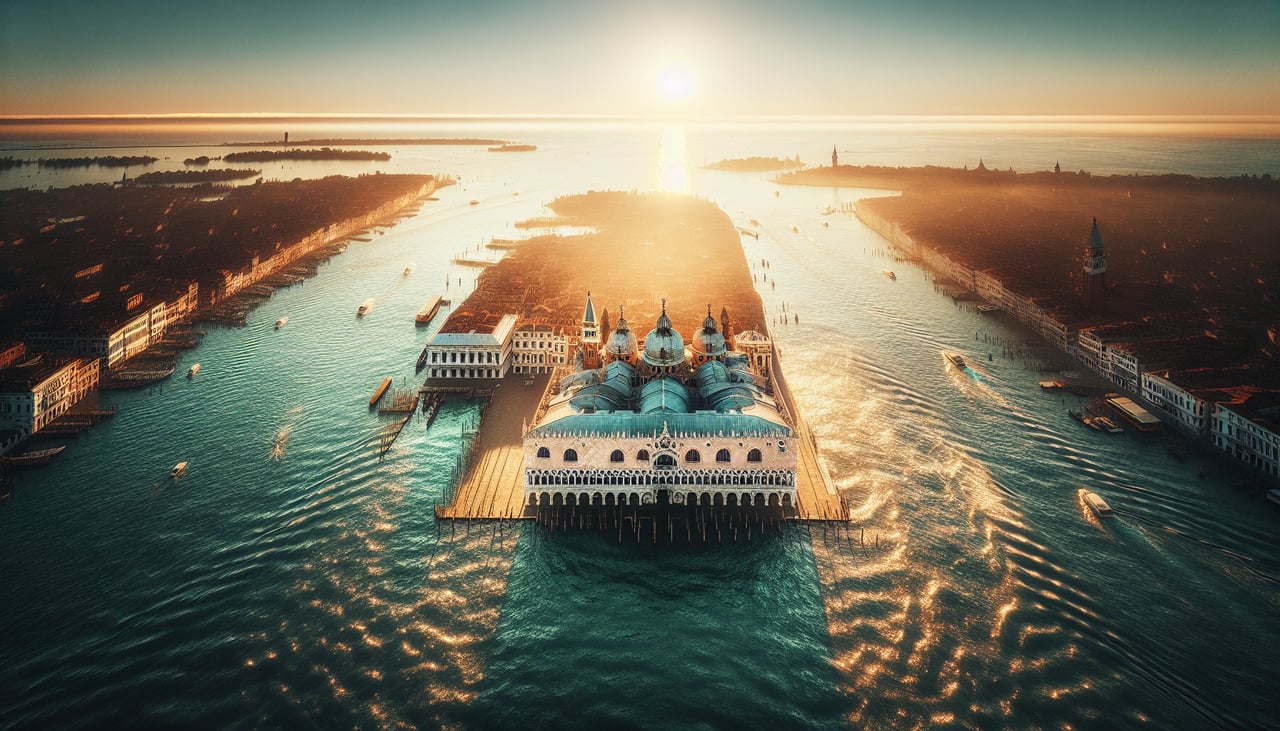
Takeoff from VCE
LEFTLeft side captures the Adriatic Sea immediately after departure, with the Venetian lagoon visible below during initial climb. The Italian coastline and Dolomite foothills are also positioned on the left as the aircraft climbs northwestward before turning southeast toward the Middle East.
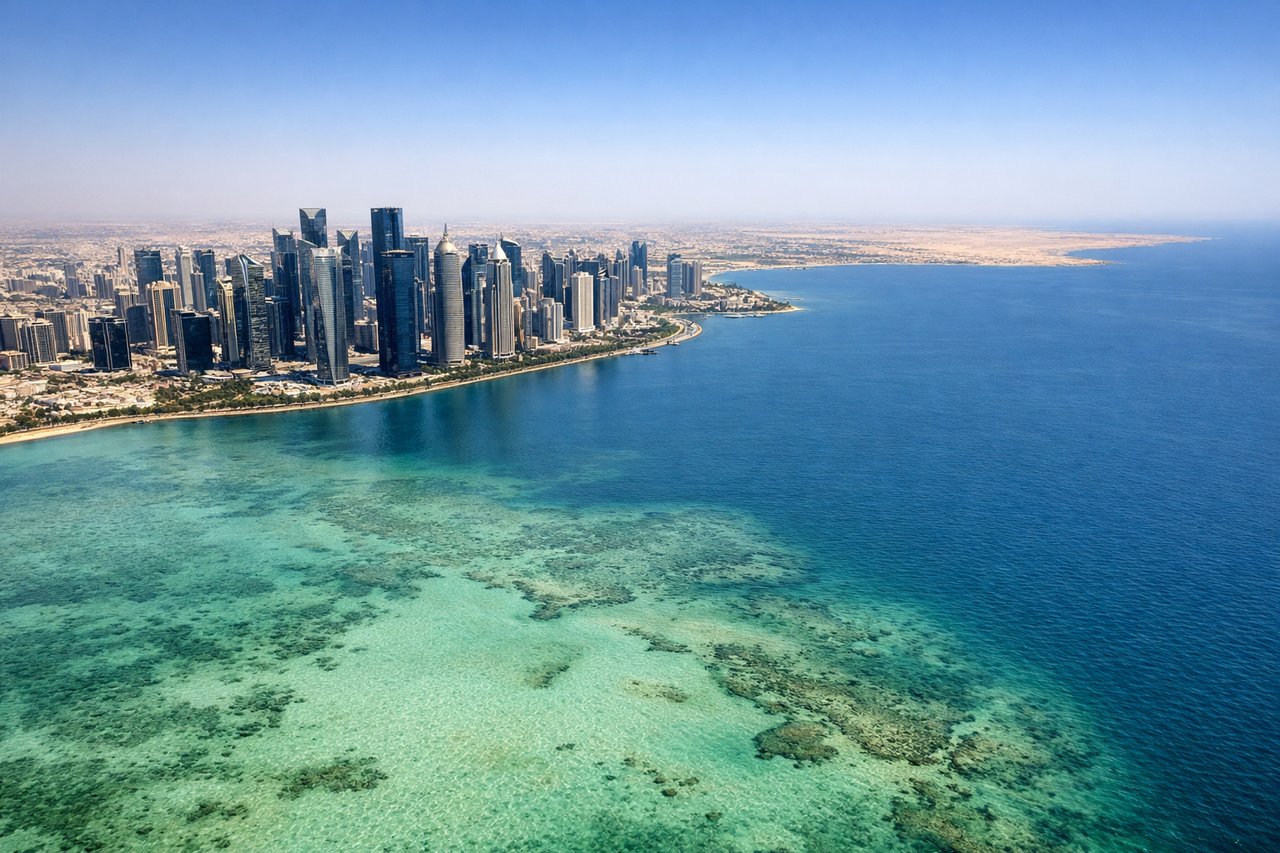
Landing at DOH
RIGHTRight side provides the best views during descent into Doha. The Persian Gulf's turquoise waters and Qatar's distinctive coastline with its peninsulas and shallow bays are visible on the right. The flat desert interior and the city of Doha's urban sprawl also appear on the right side during the final approach from the northeast.
Will your flight be in sunlight?
Pick a date and time in the Sun Map to watch the sun move across your whole flight.
About This Route
Which side of the plane should I sit on flying from Venezia Tessera (VCE) to Hamad International Airport (DOH)?
Sit on the Right side of the plane for the best views on flights from Venice to Doha. While the takeoff offers excellent Adriatic and Alpine views, the landing provides more dramatic and visually distinctive scenery. The Persian Gulf's turquoise waters and Qatar's unique coastal geography create a more memorable final impression than the departure over the Adriatic.
What can I see during takeoff from Venezia Tessera in Venice?
During takeoff from Venezia Tessera (VCE), sit on the Left side for the best views. Left side captures the Adriatic Sea immediately after departure, with the Venetian lagoon visible below during initial climb. The Italian coastline and Dolomite foothills are also positioned on the left as the aircraft climbs northwestward before turning southeast toward the Middle East. Notable sights include: Venetian Lagoon (directly below at low altitude), Adriatic Sea (extending to the horizon), Dolomite Mountains (distant peaks to the northwest), Po River Delta (visible as brown sediment plume in shallow water to the north).
What can I see when landing at Hamad International Airport in Doha?
When landing at Hamad International Airport (DOH), sit on the Right side for the best views. Right side provides the best views during descent into Doha. The Persian Gulf's turquoise waters and Qatar's distinctive coastline with its peninsulas and shallow bays are visible on the right. The flat desert interior and the city of Doha's urban sprawl also appear on the right side during the final approach from the northeast. Notable sights include: Persian Gulf (shallow turquoise waters with visible sandbars), Qatar Peninsula (distinctive curved landform), Doha Skyline (modern high-rises visible from 8,000-10,000 feet), Inland Desert (flat, tan-colored terrain extending inland).
How long is the flight from Venice to Doha?
The flight from Venezia Tessera (VCE) to Hamad International Airport (DOH) takes about 5 hours 15 minutes. The shortest flight path between them is 2,578 miles (4,150 km); winds and air traffic control usually add a few percent.
What does the Venice to Doha flight path pass over?
The flight path crosses the Alps (visible from altitude as a snow-capped ridge if traveling in winter months), then traverses the Balkans and Greece, passes over the Ionian Sea and Aegean Sea, crosses southern Greece and the eastern Mediterranean, and approaches the Middle East over Syria and Iraq before descending into Qatar. Notable midpoint landmarks include the Peloponnese peninsula, Crete, and the Syrian Desert.