While takeoff favors the right, the landing view from the left is more dramatic and geographically informative, showing the Brussels metropolitan approach and the Senne River corridor. Left seats capture the more interesting final descent.
Flown VIE to BRU? Did we get it right?
Flight Path
Vienna to Brussels is 575 miles (925 km), a flight of about 1 hour 15 minutes.
The flight path crosses the Moravia region (Czech Republic) with the Moravian Highlands visible to the south around 45 minutes into flight, then transitions into the flat Bohemian plain. The Rhine-Meuse Delta becomes visible on approach to Belgium, with the Meuse River distinguishable as a major watercourse. The Ardennes plateau remains south of the direct routing but may be visible on the southern horizon depending on atmospheric clarity.
Great circle distance and headings ›Phase by phase
Takeoff from VIE
RIGHTVIE typically departs eastbound (Runways 11L/11R). Right-side seats face north toward the Danube River valley and the Little Carpathian foothills, offering immediate geographic context. Left seats see only the flat Marchfeld plain extending monotonously westward.
Landing at BRU
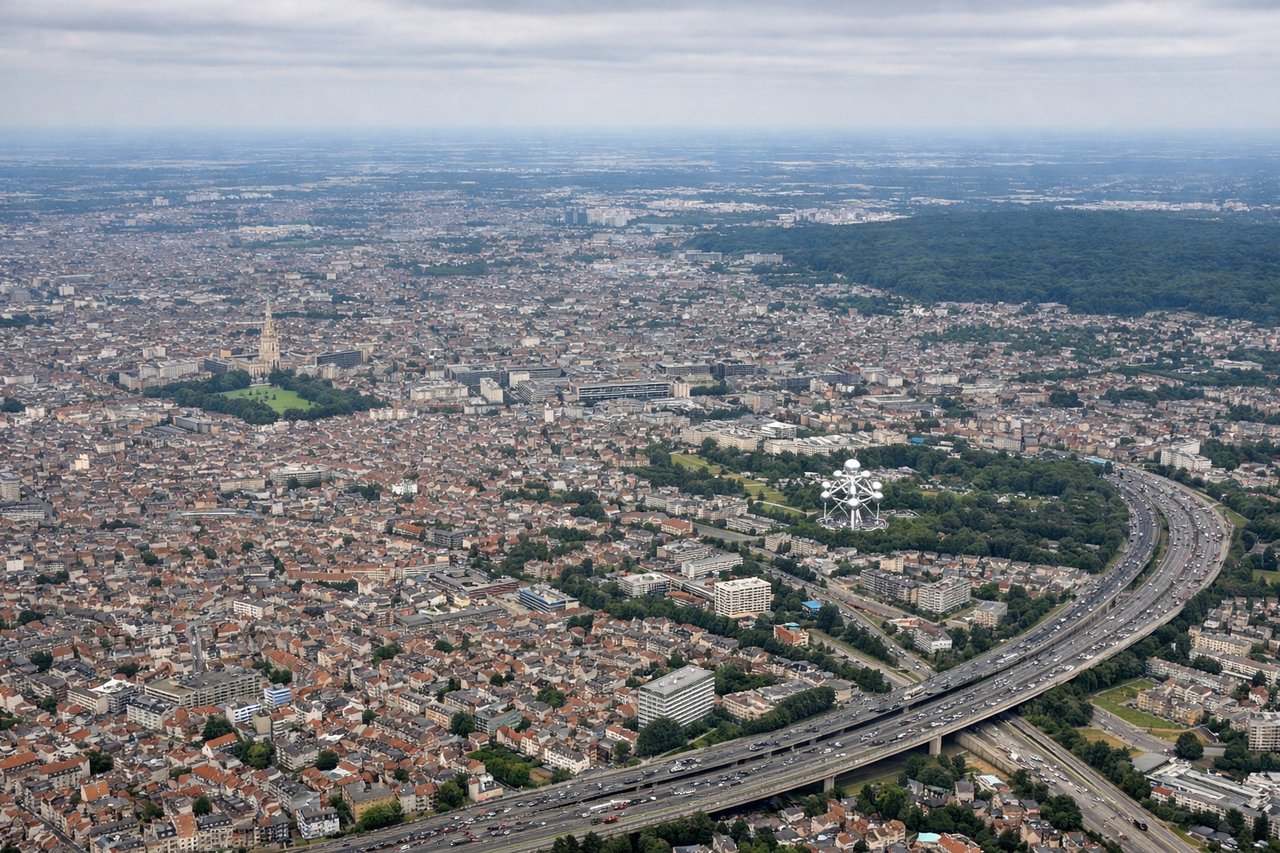
LEFTBRU typically lands westbound (Runways 25L/25R). Left-side seats on approach face south toward the Senne River valley and the suburban Brussels sprawl, providing views of the approach corridor and the city's southern districts. Right seats see only the flat Flemish countryside to the north.
Will your flight be in sunlight?
Pick a date and time in the Sun Map to watch the sun move across your whole flight.
About This Route
Which side of the plane should I sit on flying from Schwechat (VIE) to Brussels Natl (BRU)?
Sit on the Left side of the plane for the best views on flights from Vienna to Brussels. While takeoff favors the right, the landing view from the left is more dramatic and geographically informative, showing the Brussels metropolitan approach and the Senne River corridor. Left seats capture the more interesting final descent.
What can I see during takeoff from Schwechat in Vienna?
During takeoff from Schwechat (VIE), sit on the Right side for the best views. VIE typically departs eastbound (Runways 11L/11R). Right-side seats face north toward the Danube River valley and the Little Carpathian foothills, offering immediate geographic context. Left seats see only the flat Marchfeld plain extending monotonously westward. Notable sights include: Danube River (visible as a silvery ribbon threading northeast), Little Carpathian Mountains (low, forested ridgeline on the northern horizon), Vienna city center (urban sprawl to the northwest), Schwechat industrial zone (immediately below during climb-out).
What can I see when landing at Brussels Natl in Brussels?
When landing at Brussels Natl (BRU), sit on the Left side for the best views. BRU typically lands westbound (Runways 25L/25R). Left-side seats on approach face south toward the Senne River valley and the suburban Brussels sprawl, providing views of the approach corridor and the city's southern districts. Right seats see only the flat Flemish countryside to the north. Notable sights include: Senne River (narrow watercourse threading through suburban Brussels), Brussels-Zaventem airport complex (visible from 2,000 feet with parallel runways and taxiway grid), Vilvoorde industrial zone (south of the airport), Flemish countryside (flat agricultural land with scattered villages).
How long is the flight from Vienna to Brussels?
The flight from Schwechat (VIE) to Brussels Natl (BRU) takes about 1 hour 15 minutes. The shortest flight path between them is 575 miles (925 km); winds and air traffic control usually add a few percent.
What does the Vienna to Brussels flight path pass over?
The flight path crosses the Moravia region (Czech Republic) with the Moravian Highlands visible to the south around 45 minutes into flight, then transitions into the flat Bohemian plain. The Rhine-Meuse Delta becomes visible on approach to Belgium, with the Meuse River distinguishable as a major watercourse. The Ardennes plateau remains south of the direct routing but may be visible on the southern horizon depending on atmospheric clarity.