Right side scores higher due to the dramatic Rocky Mountain Front Range during descent and landing, which provides exceptional terrain variety and visual impact. While Vienna's Danube departure is scenic, the cruise phase over the Great Plains and Midwest offers minimal landmarks for most of the 9+ hour flight. The Denver landing sequence—with the mountains rising from the plains—creates a memorable finale that outweighs Vienna's urban takeoff.
Flown VIE to DEN? Did we get it right?
Flight Path
Vienna to Denver is 5,376 miles (8,651 km), a flight of about 9 hours 25 minutes.
The flight path crosses the Atlantic at roughly 51°N latitude, passing south of Iceland and Greenland (not visible). Over North America, the route crosses the Canadian Maritimes, then the Great Lakes region (Lake Michigan, Lake Huron visible on clear days), the flat Midwest (Illinois, Iowa, Missouri plains), and finally the Great Plains of Kansas and Colorado before the Rocky Mountain approach. The Appalachian Mountains are visible during the eastern North American segment, roughly 4-5 hours into the flight. The transition from flat Midwest to the High Plains occurs around 2-3 hours before landing.
Great circle distance and headings ›Phase by phase
Takeoff from VIE
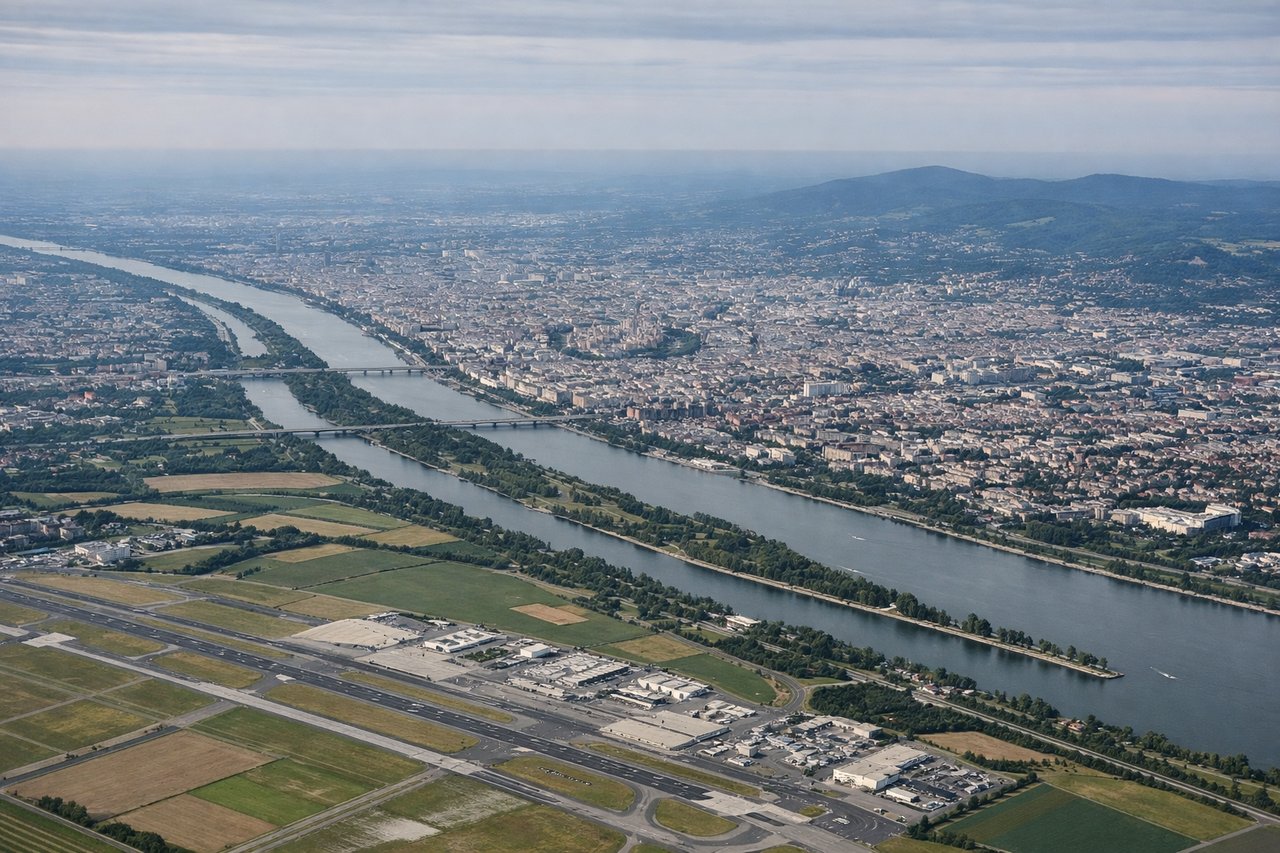
LEFTLeft side captures Vienna's urban sprawl and the Danube River valley during initial climb. The city's distinctive layout along the Danube and surrounding flat plains provide immediate geographic context. Right side faces open Austrian countryside with minimal landmarks during departure.

Landing at DEN
RIGHTRight side offers superior views during Denver's approach and landing. The Rocky Mountains dominate the western approach, with the Front Range rising dramatically as the aircraft descends. The South Platte River valley and Denver's urban sprawl provide clear geographic reference. Left side faces the flat eastern plains with minimal terrain variation.
Will your flight be in sunlight?
Pick a date and time in the Sun Map to watch the sun move across your whole flight.
About This Route
Which side of the plane should I sit on flying from Schwechat (VIE) to Denver International (DEN)?
Sit on the Right side of the plane for the best views on flights from Vienna to Denver. Right side scores higher due to the dramatic Rocky Mountain Front Range during descent and landing, which provides exceptional terrain variety and visual impact. While Vienna's Danube departure is scenic, the cruise phase over the Great Plains and Midwest offers minimal landmarks for most of the 9+ hour flight. The Denver landing sequence—with the mountains rising from the plains—creates a memorable finale that outweighs Vienna's urban takeoff.
What can I see during takeoff from Schwechat in Vienna?
During takeoff from Schwechat (VIE), sit on the Left side for the best views. Left side captures Vienna's urban sprawl and the Danube River valley during initial climb. The city's distinctive layout along the Danube and surrounding flat plains provide immediate geographic context. Right side faces open Austrian countryside with minimal landmarks during departure. Notable sights include: Danube River (visible as a meandering ribbon through Vienna), Vienna city center and Stephansdom district, Carpathian foothills to the northeast, flat Pannonian Plain extending south.
What can I see when landing at Denver International in Denver?
When landing at Denver International (DEN), sit on the Right side for the best views. Right side offers superior views during Denver's approach and landing. The Rocky Mountains dominate the western approach, with the Front Range rising dramatically as the aircraft descends. The South Platte River valley and Denver's urban sprawl provide clear geographic reference. Left side faces the flat eastern plains with minimal terrain variation. Notable sights include: Rocky Mountain Front Range (including peaks near Boulder and Colorado Springs visible on clear days), South Platte River valley cutting through Denver, Denver International Airport's distinctive peaked terminal roof, High Plains extending eastward.
How long is the flight from Vienna to Denver?
The flight from Schwechat (VIE) to Denver International (DEN) takes about 9 hours 25 minutes. The shortest flight path between them is 5,376 miles (8,651 km); winds and air traffic control usually add a few percent.
What does the Vienna to Denver flight path pass over?
The flight path crosses the Atlantic at roughly 51°N latitude, passing south of Iceland and Greenland (not visible). Over North America, the route crosses the Canadian Maritimes, then the Great Lakes region (Lake Michigan, Lake Huron visible on clear days), the flat Midwest (Illinois, Iowa, Missouri plains), and finally the Great Plains of Kansas and Colorado before the Rocky Mountain approach. The Appalachian Mountains are visible during the eastern North American segment, roughly 4-5 hours into the flight. The transition from flat Midwest to the High Plains occurs around 2-3 hours before landing.