While takeoff favors left for the Danube views, the landing approach on runway 09 gives right seats a superior experience of the Río de la Plata estuary and Buenos Aires' approach geography. The landing view is more dramatic and geographically distinctive than the takeoff.
Flown VIE to EZE? Did we get it right?
Flight Path
Vienna to Buenos Aires is 7,359 miles (11,843 km), a flight of about 14 hours.
The flight path crosses the Atlantic Ocean for roughly 10 hours. Notable geographic transitions include: departure over the Pannonian Plain and Carpathians; crossing the Alps' southern edge (visible on northbound routing); Mediterranean coast near southern France or Spain (depending on exact routing); then open Atlantic. The South American approach descends over the Paraná Delta and Buenos Aires province. No major landmasses are visible during the mid-Atlantic cruise phase—only ocean, cloud formations, and occasionally the curvature of Earth at altitude.
Great circle distance and headings ›


Phase by phase
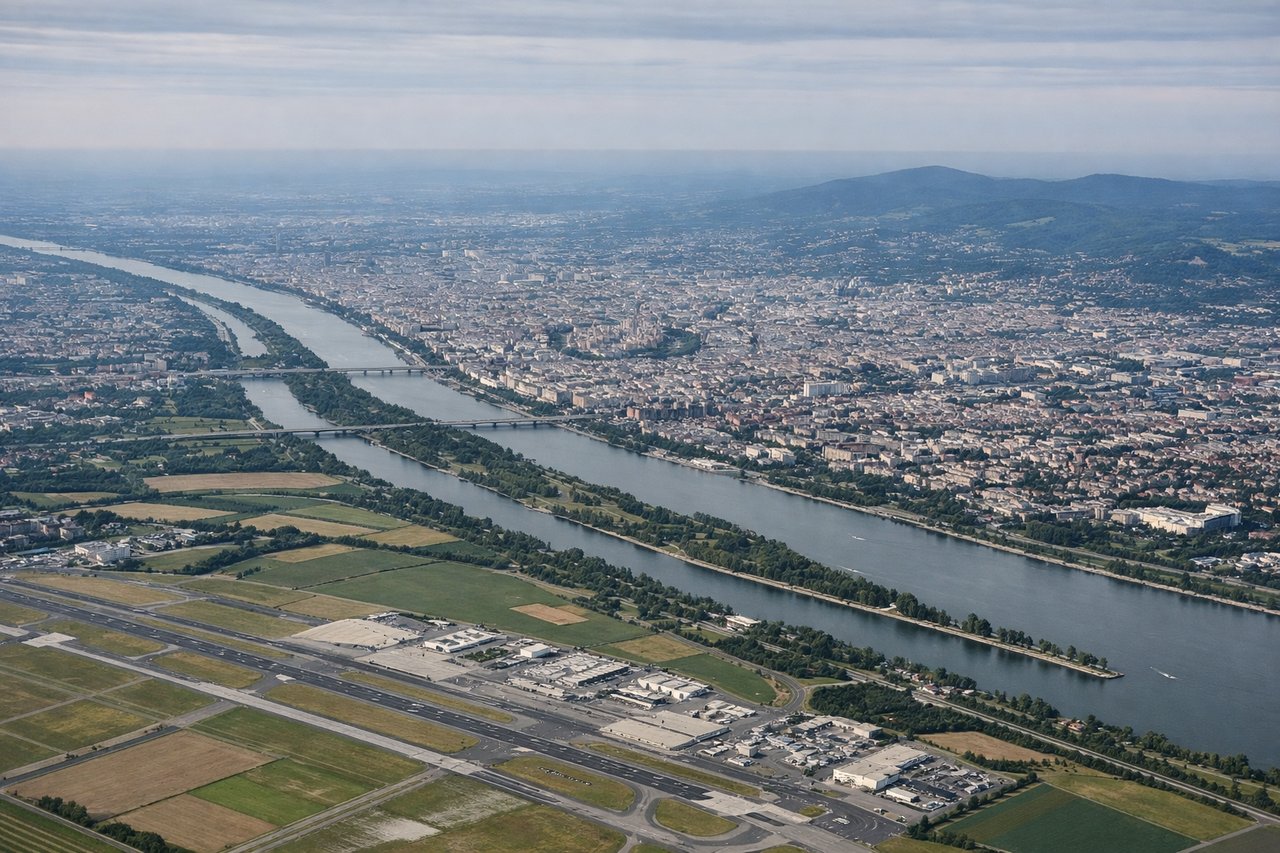
Takeoff from VIE
LEFTVIE typically departs eastbound on runways 11L/11R. Left seats face north initially, giving views of the Danube River's northern loops and the Vienna Basin terrain. Right seats see the southern suburbs and flat agricultural land—less distinctive.
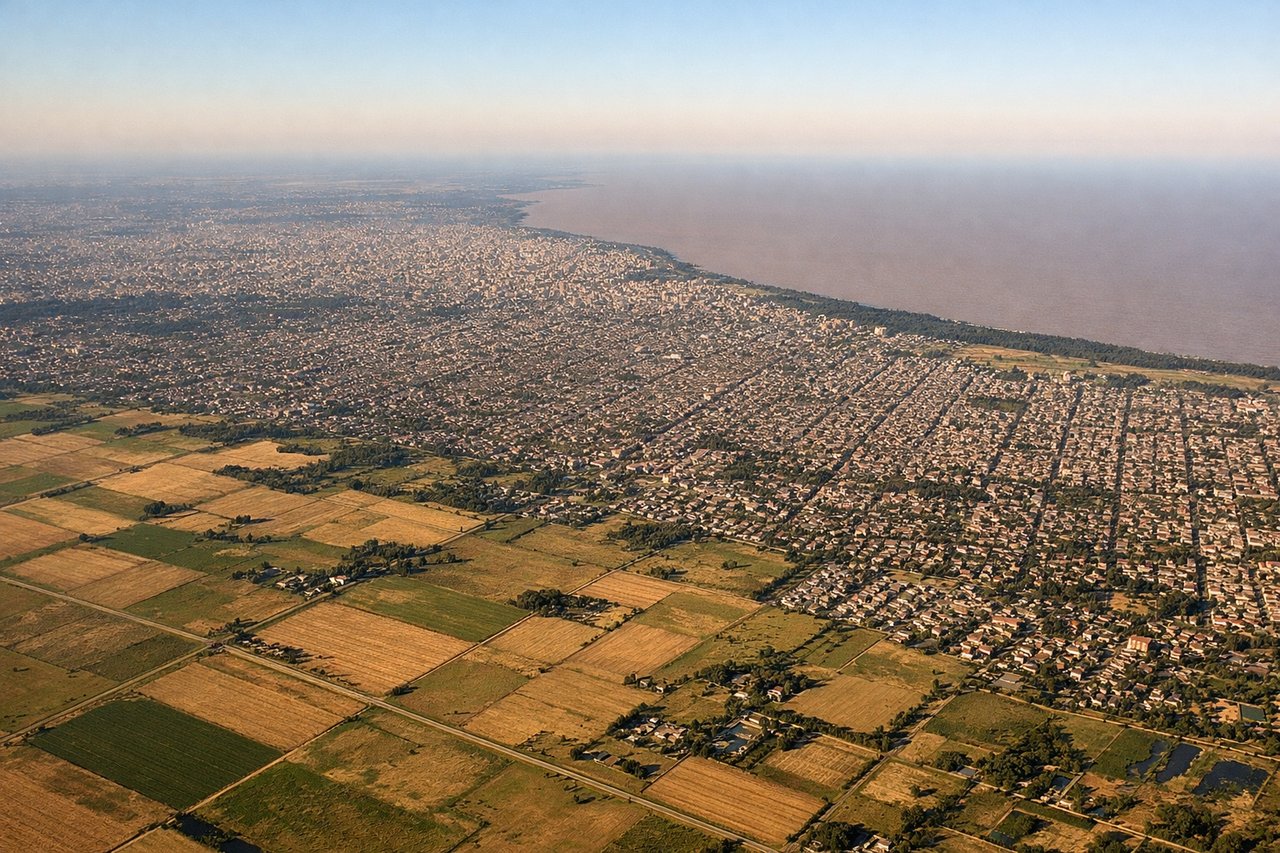
Landing at EZE
RIGHTEZE approaches from the east on runway 09 (westbound). Right seats face south during descent, revealing the Río de la Plata's western shore, the Paraná Delta's intricate waterways, and Buenos Aires' southern districts. Left seats see the open river and distant city—less geographic detail.
Will your flight be in sunlight?
Pick a date and time in the Sun Map to watch the sun move across your whole flight.
About This Route
Which side of the plane should I sit on flying from Schwechat (VIE) to Ezeiza Ministro Pistarini (EZE)?
Sit on the Right side of the plane for the best views on flights from Vienna to Buenos Aires. While takeoff favors left for the Danube views, the landing approach on runway 09 gives right seats a superior experience of the Río de la Plata estuary and Buenos Aires' approach geography. The landing view is more dramatic and geographically distinctive than the takeoff.
What can I see during takeoff from Schwechat in Vienna?
During takeoff from Schwechat (VIE), sit on the Left side for the best views. VIE typically departs eastbound on runways 11L/11R. Left seats face north initially, giving views of the Danube River's northern loops and the Vienna Basin terrain. Right seats see the southern suburbs and flat agricultural land—less distinctive. Notable sights include: Danube River (multiple meanders visible), Vienna city center and Stephansdom district to the northwest, flat Pannonian Plain extending east, Carpathian foothills on distant horizon.
What can I see when landing at Ezeiza Ministro Pistarini in Buenos Aires?
When landing at Ezeiza Ministro Pistarini (EZE), sit on the Right side for the best views. EZE approaches from the east on runway 09 (westbound). Right seats face south during descent, revealing the Río de la Plata's western shore, the Paraná Delta's intricate waterways, and Buenos Aires' southern districts. Left seats see the open river and distant city—less geographic detail. Notable sights include: Río de la Plata (massive estuary), Paraná Delta's braided channels and islands, Buenos Aires southern suburbs and industrial zones, flat pampas extending inland.
How long is the flight from Vienna to Buenos Aires?
The flight from Schwechat (VIE) to Ezeiza Ministro Pistarini (EZE) takes about 14 hours. The shortest flight path between them is 7,359 miles (11,843 km); winds and air traffic control usually add a few percent.
What does the Vienna to Buenos Aires flight path pass over?
The flight path crosses the Atlantic Ocean for roughly 10 hours. Notable geographic transitions include: departure over the Pannonian Plain and Carpathians; crossing the Alps' southern edge (visible on northbound routing); Mediterranean coast near southern France or Spain (depending on exact routing); then open Atlantic. The South American approach descends over the Paraná Delta and Buenos Aires province. No major landmasses are visible during the mid-Atlantic cruise phase—only ocean, cloud formations, and occasionally the curvature of Earth at altitude.