Vienna to San Francisco is 5,998 miles (9,653 km), a flight of about 12 hours.
While takeoff offers interesting Danube views from the right, the landing approach from the left provides far more dramatic and iconic scenery: the Golden Gate Bridge, San Francisco Bay, and the Sierra Nevada create a more memorable final impression than Vienna's river and plains.
Flight Path
The flight path crosses the Atlantic Ocean (no landmarks), then passes over Greenland's ice sheet and Canadian Arctic archipelago (ice, barren terrain), descends over the Canadian prairies and Rocky Mountains (visible as a major north-south mountain chain), then crosses the Great Basin and Sierra Nevada before reaching California. The Rocky Mountains and Sierra Nevada are the only significant terrain features visible during the transatlantic and transcontinental portions of the flight.
Great circle distance and headings ›.jpg?width=600)


.jpg?width=600)

Phase by phase
Takeoff from VIE
RIGHTRight-side seats offer views of the Danube River as it curves through Vienna's suburbs during northeastward climb-out. The river's distinctive meanders and the surrounding flat Pannonian Plain provide clear geographic context immediately after departure.
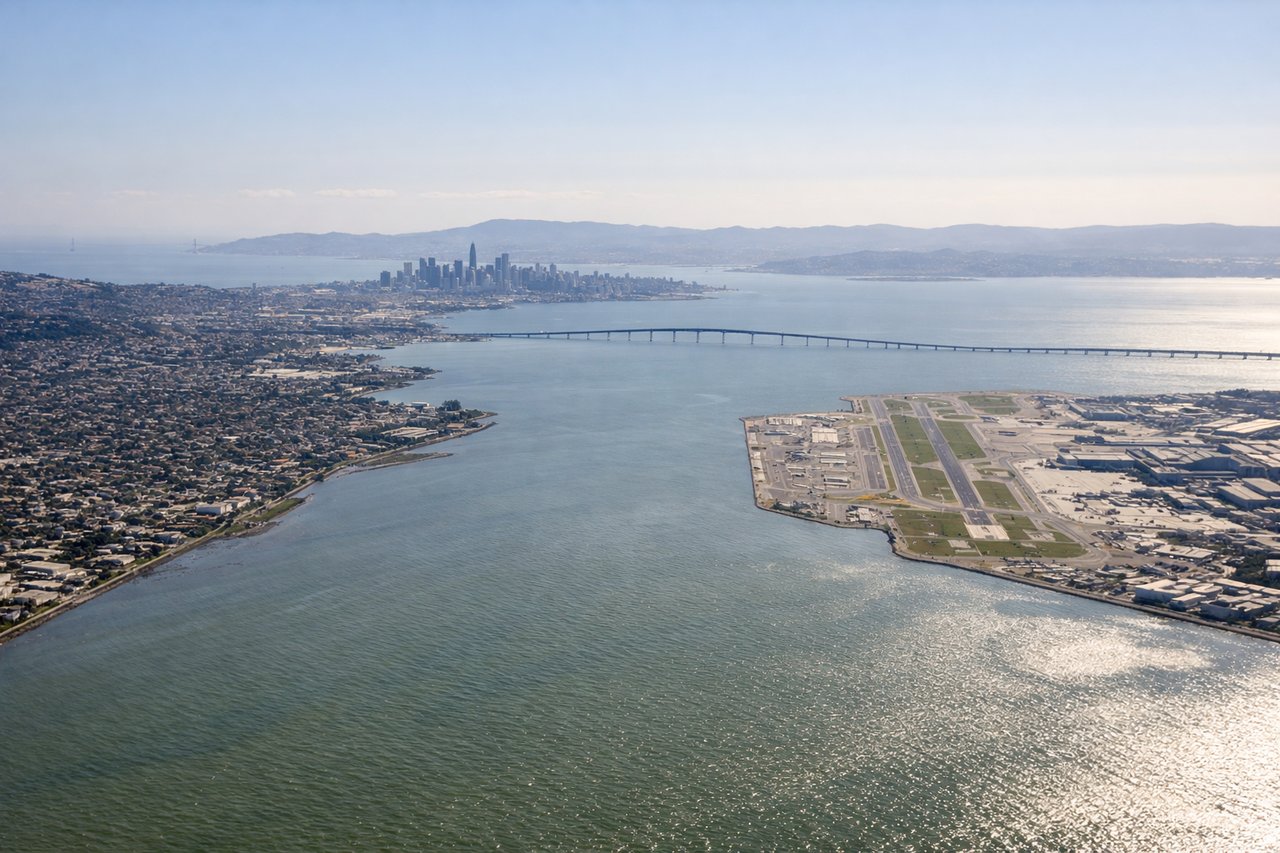
Landing at SFO
LEFTLeft-side seats provide excellent views during the descent approach to SFO. You'll see the San Francisco Bay, the Golden Gate Bridge, and the Sierra Nevada mountains to the east—all major visual landmarks during the westbound approach and descent.
Landmarks on this routeAll landmarks →
Will your flight be in sunlight?
Pick a date and time in the Sun Map to watch the sun move across your whole flight.
About This Route
Which side of the plane should I sit on flying from Schwechat (VIE) to San Francisco International (SFO)?
Sit on the Left side of the plane for the best views on flights from Vienna to San Francisco. While takeoff offers interesting Danube views from the right, the landing approach from the left provides far more dramatic and iconic scenery: the Golden Gate Bridge, San Francisco Bay, and the Sierra Nevada create a more memorable final impression than Vienna's river and plains.
What can I see during takeoff from Schwechat in Vienna?
During takeoff from Schwechat (VIE), sit on the Right side for the best views. Right-side seats offer views of the Danube River as it curves through Vienna's suburbs during northeastward climb-out. The river's distinctive meanders and the surrounding flat Pannonian Plain provide clear geographic context immediately after departure. Notable sights include: Danube River (multiple loops visible), Vienna city center and Stephansdom spire area, flat Pannonian Plain extending to the horizon, Carpathian foothills faintly visible to the northeast at distance.
What can I see when landing at San Francisco International in San Francisco?
When landing at San Francisco International (SFO), sit on the Left side for the best views. Left-side seats provide excellent views during the descent approach to SFO. You'll see the San Francisco Bay, the Golden Gate Bridge, and the Sierra Nevada mountains to the east—all major visual landmarks during the westbound approach and descent. Notable sights include: San Francisco Bay (with Oakland and Berkeley visible on eastern shore), Golden Gate Bridge spanning the Golden Gate strait, Marin Headlands north of the bridge, Sierra Nevada mountains on the distant eastern horizon.
How long is the flight from Vienna to San Francisco?
The flight from Schwechat (VIE) to San Francisco International (SFO) takes about 12 hours. The shortest flight path between them is 5,998 miles (9,653 km); winds and air traffic control usually add a few percent.
What does the Vienna to San Francisco flight path pass over?
The flight path crosses the Atlantic Ocean (no landmarks), then passes over Greenland's ice sheet and Canadian Arctic archipelago (ice, barren terrain), descends over the Canadian prairies and Rocky Mountains (visible as a major north-south mountain chain), then crosses the Great Basin and Sierra Nevada before reaching California. The Rocky Mountains and Sierra Nevada are the only significant terrain features visible during the transatlantic and transcontinental portions of the flight.