The left side misses the best of the Vero Beach departure but wins decisively on the JFK arrival with the Manhattan skyline and Jamaica Bay approach. Along the mid-flight cruise, the left side also tracks closer to the Carolina and Virginia coastline features. The JFK arrival view is simply one of the most iconic urban approaches in aviation and tips the balance.
Flight Path
The flight tracks up the Florida east coast past Cape Canaveral and the Kennedy Space Center launch complexes, then over the Georgia and South Carolina coastal plain and barrier islands including the Sea Islands. Over North Carolina the route passes near Cape Hatteras and the Outer Banks. Continuing north over Virginia and Maryland, the Chesapeake Bay becomes visible as a broad estuary. The Delaware Bay and the New Jersey Pine Barrens precede the final descent into JFK.
Great circle distance and headings ›
.jpg?width=600)
Phase by phase
Takeoff from VRB
RIGHTVero Beach runways 11L/11R have departures heading east-southeast, then aircraft typically turn northward. A right-side seat gives you the Atlantic coastline and Indian River Lagoon as you climb out and bank north. The barrier islands and the broad lagoon system are clearly visible from the right side during the initial climb.
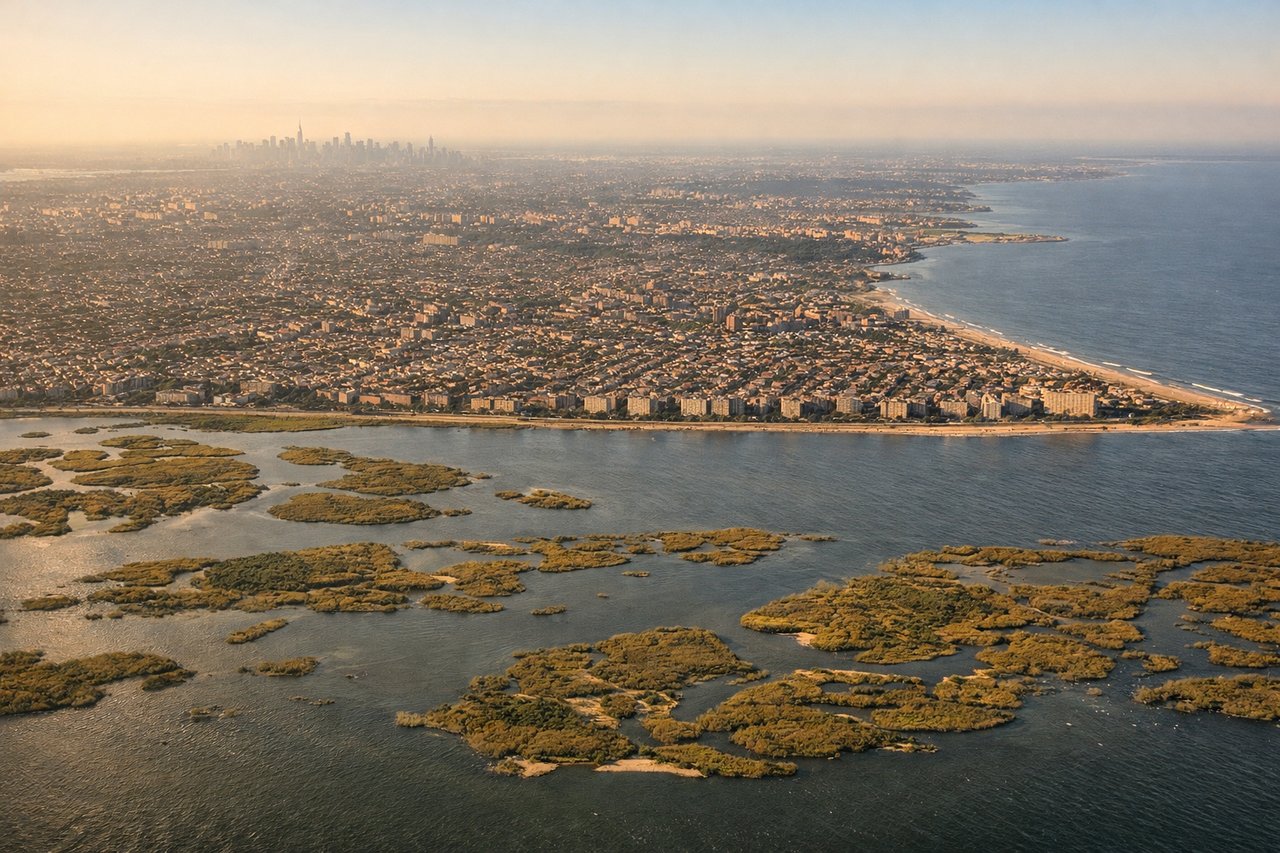
Landing at JFK
LEFTJFK typically uses runways 31L/31R for arrivals from the south, meaning aircraft approach from the southeast over Jamaica Bay. The left side gives you the Manhattan skyline, Brooklyn, and the approach over Jamaica Bay. The right side faces toward the Atlantic and Long Island's south shore, which is far less dramatic.
Landmarks on this routeAll landmarks →
Will your flight be in sunlight?
See exactly which side of the plane gets sun and shade at your departure time.
About This Route
Which side of the plane should I sit on flying from Vero Beach Muni (VRB) to John F Kennedy International (JFK)?
Sit on the Left side of the plane for the best views on flights from Vero Beach to New York. The left side misses the best of the Vero Beach departure but wins decisively on the JFK arrival with the Manhattan skyline and Jamaica Bay approach. Along the mid-flight cruise, the left side also tracks closer to the Carolina and Virginia coastline features. The JFK arrival view is simply one of the most iconic urban approaches in aviation and tips the balance.
What can I see during takeoff from Vero Beach Muni in Vero Beach?
During takeoff from Vero Beach Muni (VRB), sit on the Right side for the best views. Vero Beach runways 11L/11R have departures heading east-southeast, then aircraft typically turn northward. A right-side seat gives you the Atlantic coastline and Indian River Lagoon as you climb out and bank north. The barrier islands and the broad lagoon system are clearly visible from the right side during the initial climb. Notable sights include: Indian River Lagoon, Atlantic Ocean barrier islands, Vero Beach coastline, Sebastian Inlet State Park.
What can I see when landing at John F Kennedy International in New York?
When landing at John F Kennedy International (JFK), sit on the Left side for the best views. JFK typically uses runways 31L/31R for arrivals from the south, meaning aircraft approach from the southeast over Jamaica Bay. The left side gives you the Manhattan skyline, Brooklyn, and the approach over Jamaica Bay. The right side faces toward the Atlantic and Long Island's south shore, which is far less dramatic. Notable sights include: Manhattan skyline, Jamaica Bay, Brooklyn waterfront, Verrazano-Narrows Bridge.
How long is the flight from Vero Beach to New York?
The flight from Vero Beach Muni (VRB) to John F Kennedy International (JFK) takes Approximately 2 hours 20 minutes to 2 hours 45 minutes.
What does the Vero Beach to New York flight path pass over?
The flight tracks up the Florida east coast past Cape Canaveral and the Kennedy Space Center launch complexes, then over the Georgia and South Carolina coastal plain and barrier islands including the Sea Islands. Over North Carolina the route passes near Cape Hatteras and the Outer Banks. Continuing north over Virginia and Maryland, the Chesapeake Bay becomes visible as a broad estuary. The Delaware Bay and the New Jersey Pine Barrens precede the final descent into JFK.