The right side (southeast approach) scores higher due to the dramatic transition from the North Downs' rolling chalk hills through the Weald's varied woodland and agricultural landscape to the Thames Valley and London's urban sprawl. The left side (Verona departure) offers only moderate scenery—the Adige valley and Alpine foothills are pleasant but lack the visual variety and landmark density of the English approach. The landing sequence on the right provides significantly more scenic interest than the takeoff on the left.
Flown VRN to LGW? Did we get it right?
Flight Path
Villafranca to London is 645 miles (1,038 km), a flight of about 2 hours 15 minutes.
The flight crosses the Alps (Mont Blanc massif visible to the north on clear days), then descends over the Jura Mountains, crosses the English Channel near the Strait of Dover, and approaches via the North Downs and Weald. The Channel crossing itself offers limited scenery—mostly open water—but the Alpine crossing and English countryside approach provide the route's primary scenic value.
Great circle distance and headings ›


Phase by phase
Takeoff from VRN
LEFTVerona departure offers views of the Adige River valley and the foothills of the Alps to the north. The city itself and surrounding Veneto plains provide moderate urban and agricultural scenery during climb-out.
Landing at LGW
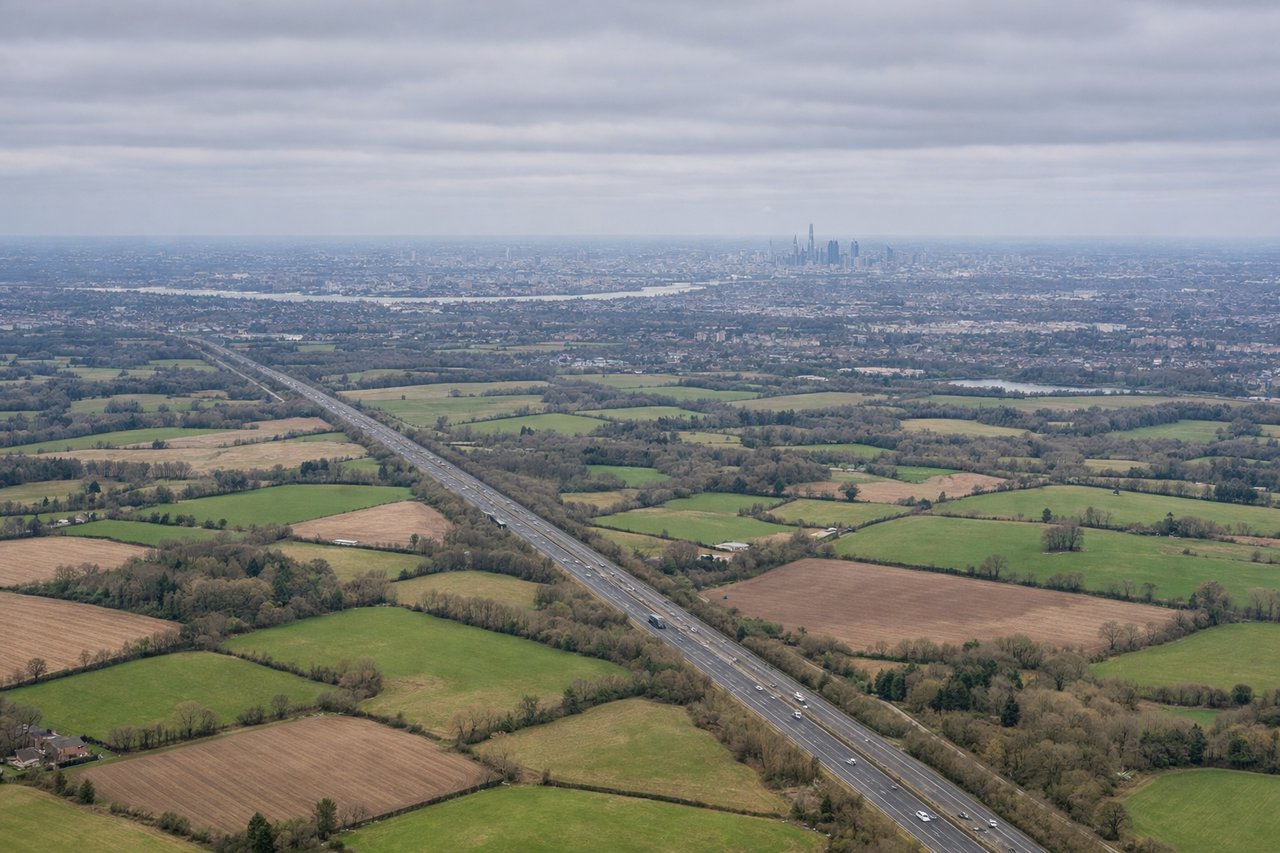
RIGHTThe approach to Gatwick from the southeast crosses the North Downs, the Weald, and the Thames Valley, offering rolling chalk hills and the distinctive patchwork of English countryside. The final descent provides views of London's sprawl and suburban development, with occasional glimpses of the Thames.
Will your flight be in sunlight?
Pick a date and time in the Sun Map to watch the sun move across your whole flight.
About This Route
Which side of the plane should I sit on flying from Villafranca (VRN) to Gatwick (LGW)?
Sit on the Right side of the plane for the best views on flights from Villafranca to London. The right side (southeast approach) scores higher due to the dramatic transition from the North Downs' rolling chalk hills through the Weald's varied woodland and agricultural landscape to the Thames Valley and London's urban sprawl. The left side (Verona departure) offers only moderate scenery—the Adige valley and Alpine foothills are pleasant but lack the visual variety and landmark density of the English approach. The landing sequence on the right provides significantly more scenic interest than the takeoff on the left.
What can I see during takeoff from Villafranca in Villafranca?
During takeoff from Villafranca (VRN), sit on the Left side for the best views. Verona departure offers views of the Adige River valley and the foothills of the Alps to the north. The city itself and surrounding Veneto plains provide moderate urban and agricultural scenery during climb-out. Notable sights include: Verona city center, Adige River, Alpine foothills to the north, Lake Garda (visible on clear days to the west).
What can I see when landing at Gatwick in London?
When landing at Gatwick (LGW), sit on the Right side for the best views. The approach to Gatwick from the southeast crosses the North Downs, the Weald, and the Thames Valley, offering rolling chalk hills and the distinctive patchwork of English countryside. The final descent provides views of London's sprawl and suburban development, with occasional glimpses of the Thames. Notable sights include: North Downs ridge, the Weald's forested valleys, Thames Valley, London suburban sprawl.
How long is the flight from Villafranca to London?
The flight from Villafranca (VRN) to Gatwick (LGW) takes about 2 hours 15 minutes. The shortest flight path between them is 645 miles (1,038 km); winds and air traffic control usually add a few percent.
What does the Villafranca to London flight path pass over?
The flight crosses the Alps (Mont Blanc massif visible to the north on clear days), then descends over the Jura Mountains, crosses the English Channel near the Strait of Dover, and approaches via the North Downs and Weald. The Channel crossing itself offers limited scenery—mostly open water—but the Alpine crossing and English countryside approach provide the route's primary scenic value.