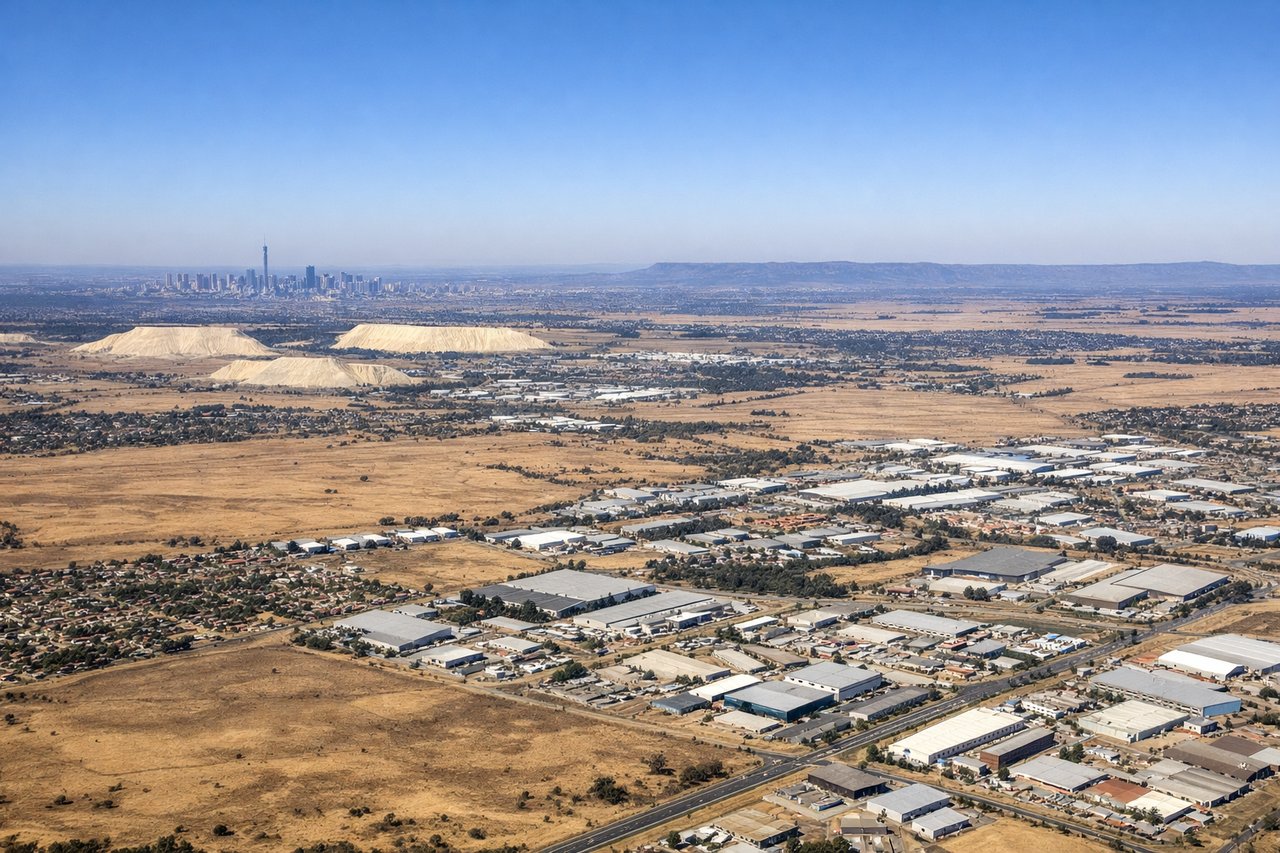
While takeoff on the right offers the escarpment views, the landing approach on the left provides more dramatic and distinctive scenery—the Witwatersrand ridge, Johannesburg's skyline, and the historic mining landscape are far more visually compelling than the plateau departure.
Flown WDH to JNB? Did we get it right?
Flight Path
Windhoek to Johannesburg is 724 miles (1,165 km), a flight of about 2 hours 15 minutes.
The flight crosses the central Kalahari plateau and the transition zone between Namibia's high plateau and South Africa's highveld. Notable features include the sparse, semi-arid landscape of the Kalahari with scattered acacia woodland, and the gradual elevation change as the aircraft approaches the Witwatersrand escarpment. No major rivers or lakes are visible along this direct route, but the terrain transitions from Namibia's reddish soils to South Africa's grassland and mining-altered landscape.
Great circle distance and headings ›Phase by phase
Takeoff from WDH
RIGHTWindhoek sits on a plateau, and climbing eastbound toward Johannesburg on the right side offers views of the escarpment edge and the transition from high plateau to lower terrain. The left side faces back toward the city and western plateau with less dramatic relief.
Landing at JNB
LEFTDescending into Johannesburg from the west, the left side provides views of the Witwatersrand ridge and the city's northern suburbs and mining areas. The right side faces toward the southern highveld with fewer distinctive features during final approach.
Will your flight be in sunlight?
Pick a date and time in the Sun Map to watch the sun move across your whole flight.
About This Route
Which side of the plane should I sit on flying from Hosea Kutako International Airport (WDH) to O.R. Tambo International Airport (JNB)?
Sit on the Left side of the plane for the best views on flights from Windhoek to Johannesburg. While takeoff on the right offers the escarpment views, the landing approach on the left provides more dramatic and distinctive scenery—the Witwatersrand ridge, Johannesburg's skyline, and the historic mining landscape are far more visually compelling than the plateau departure.
What can I see during takeoff from Hosea Kutako International Airport in Windhoek?
During takeoff from Hosea Kutako International Airport (WDH), sit on the Right side for the best views. Windhoek sits on a plateau, and climbing eastbound toward Johannesburg on the right side offers views of the escarpment edge and the transition from high plateau to lower terrain. The left side faces back toward the city and western plateau with less dramatic relief. Notable sights include: Windhoek city grid, Khomas Hochland plateau edge, Auas Mountains to the southeast.
What can I see when landing at O.R. Tambo International Airport in Johannesburg?
When landing at O.R. Tambo International Airport (JNB), sit on the Left side for the best views. Descending into Johannesburg from the west, the left side provides views of the Witwatersrand ridge and the city's northern suburbs and mining areas. The right side faces toward the southern highveld with fewer distinctive features during final approach. Notable sights include: Witwatersrand ridge, Johannesburg northern suburbs and CBD skyline, mining dumps and tailings visible as pale mounds.
How long is the flight from Windhoek to Johannesburg?
The flight from Hosea Kutako International Airport (WDH) to O.R. Tambo International Airport (JNB) takes about 2 hours 15 minutes. The shortest flight path between them is 724 miles (1,165 km); winds and air traffic control usually add a few percent.
What does the Windhoek to Johannesburg flight path pass over?
The flight crosses the central Kalahari plateau and the transition zone between Namibia's high plateau and South Africa's highveld. Notable features include the sparse, semi-arid landscape of the Kalahari with scattered acacia woodland, and the gradual elevation change as the aircraft approaches the Witwatersrand escarpment. No major rivers or lakes are visible along this direct route, but the terrain transitions from Namibia's reddish soils to South Africa's grassland and mining-altered landscape.