The right side offers the strongest visual bookends of the flight — Singapore's skyline and strait at departure, and the Golden Gate Bridge with the San Francisco Bay Area at arrival — while the long Pacific crossing itself is largely featureless ocean regardless of side.
Flight Path
Extended open-ocean crossing of the Philippine Sea and North Pacific, passing well east of Taiwan and south of Japan before curving northeast toward the California coast; no significant landmasses are visible for the majority of the cruise phase.
Great circle distance and headings ›

Phase by phase
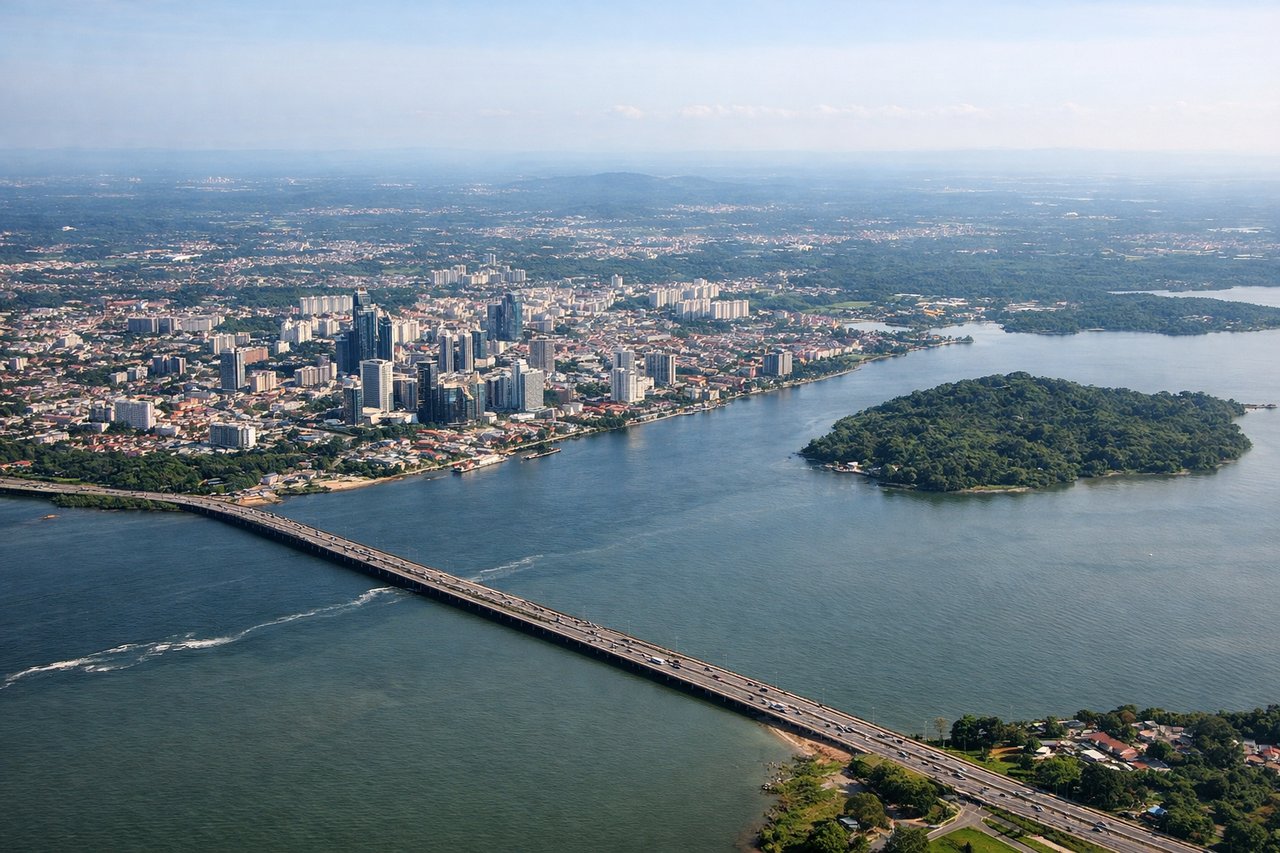
Takeoff from XSP
RIGHTDeparting Seletar on runway 03 (northbound climb), the right side faces east over the Johor Strait and Singapore's skyline, including the Marina Bay area and offshore container ports, before the aircraft turns onto its oceanic routing. The left side mainly shows the flatter Malaysian mainland with less distinctive scenery.

Landing at SFO
RIGHTOn the descent into SFO from the northwest Pacific, the approach typically curves down past the Marin Headlands and Golden Gate before lining up over the bay, giving right-side passengers a clear view of the bridge, the city skyline, and the hills of the peninsula. The left side mostly faces open bay water and the flatter East Bay shoreline.
Landmarks on this routeAll landmarks →
Will your flight be in sunlight?
See exactly which side of the plane gets sun and shade at your departure time.
About This Route
Which side of the plane should I sit on flying from Seletar (XSP) to San Francisco International (SFO)?
Sit on the Right side of the plane for the best views on flights from Singapore to San Francisco. The right side offers the strongest visual bookends of the flight — Singapore's skyline and strait at departure, and the Golden Gate Bridge with the San Francisco Bay Area at arrival — while the long Pacific crossing itself is largely featureless ocean regardless of side.
What can I see during takeoff from Seletar in Singapore?
During takeoff from Seletar (XSP), sit on the Right side for the best views. Departing Seletar on runway 03 (northbound climb), the right side faces east over the Johor Strait and Singapore's skyline, including the Marina Bay area and offshore container ports, before the aircraft turns onto its oceanic routing. The left side mainly shows the flatter Malaysian mainland with less distinctive scenery. Notable sights include: Singapore skyline and Marina Bay, Johor Strait, Pulau Ubin and eastern islands, Straits of Singapore shipping lanes.
What can I see when landing at San Francisco International in San Francisco?
When landing at San Francisco International (SFO), sit on the Right side for the best views. On the descent into SFO from the northwest Pacific, the approach typically curves down past the Marin Headlands and Golden Gate before lining up over the bay, giving right-side passengers a clear view of the bridge, the city skyline, and the hills of the peninsula. The left side mostly faces open bay water and the flatter East Bay shoreline. Notable sights include: Golden Gate Bridge, Marin Headlands, San Francisco skyline, San Francisco Bay shoreline.
How long is the flight from Singapore to San Francisco?
The flight from Seletar (XSP) to San Francisco International (SFO) takes 16h 05m.
What does the Singapore to San Francisco flight path pass over?
Extended open-ocean crossing of the Philippine Sea and North Pacific, passing well east of Taiwan and south of Japan before curving northeast toward the California coast; no significant landmasses are visible for the majority of the cruise phase.