Sydney to Kingsford Smith International Airport is 10,599 miles (17,057 km), a flight of about 15 hours.
While takeoff from Sydney, Nova Scotia favors the right side, the landing into Sydney, Australia on the left side is far more visually rewarding—the Harbour, Opera House, and Harbour Bridge are iconic and unmissable. The landing view outweighs the takeoff advantage.
Flight Path
This ultra-long-haul route crosses the Pacific Ocean for roughly 8,000 nautical miles. Midpoint occurs over the central Pacific, typically around the International Date Line. No significant land features are visible during the 8–10 hour oceanic cruise phase. Pilots may route via waypoints near Hawaii or other Pacific island groups depending on winds, but these are not visible from cruise altitude (typically 35,000–43,000 feet). The route passes south of the Aleutian Islands and north of French Polynesia, but neither is on the direct great-circle path. Sunrise/sunset effects over open ocean dominate the midpoint experience rather than geographic landmarks.
Great circle distance and headings ›.jpeg?width=600)

.jpg?width=600)
.jpg?width=600)


.jpg?width=600)
Phase by phase
Takeoff from YQY
RIGHTSydney, Nova Scotia typically departs runway 10/28. Departing eastbound (runway 28) on a right-side seat gives views of the Atlantic coastline and St. Peters Bay immediately after liftoff. Westbound departures (runway 10) offer less dramatic scenery over inland terrain.
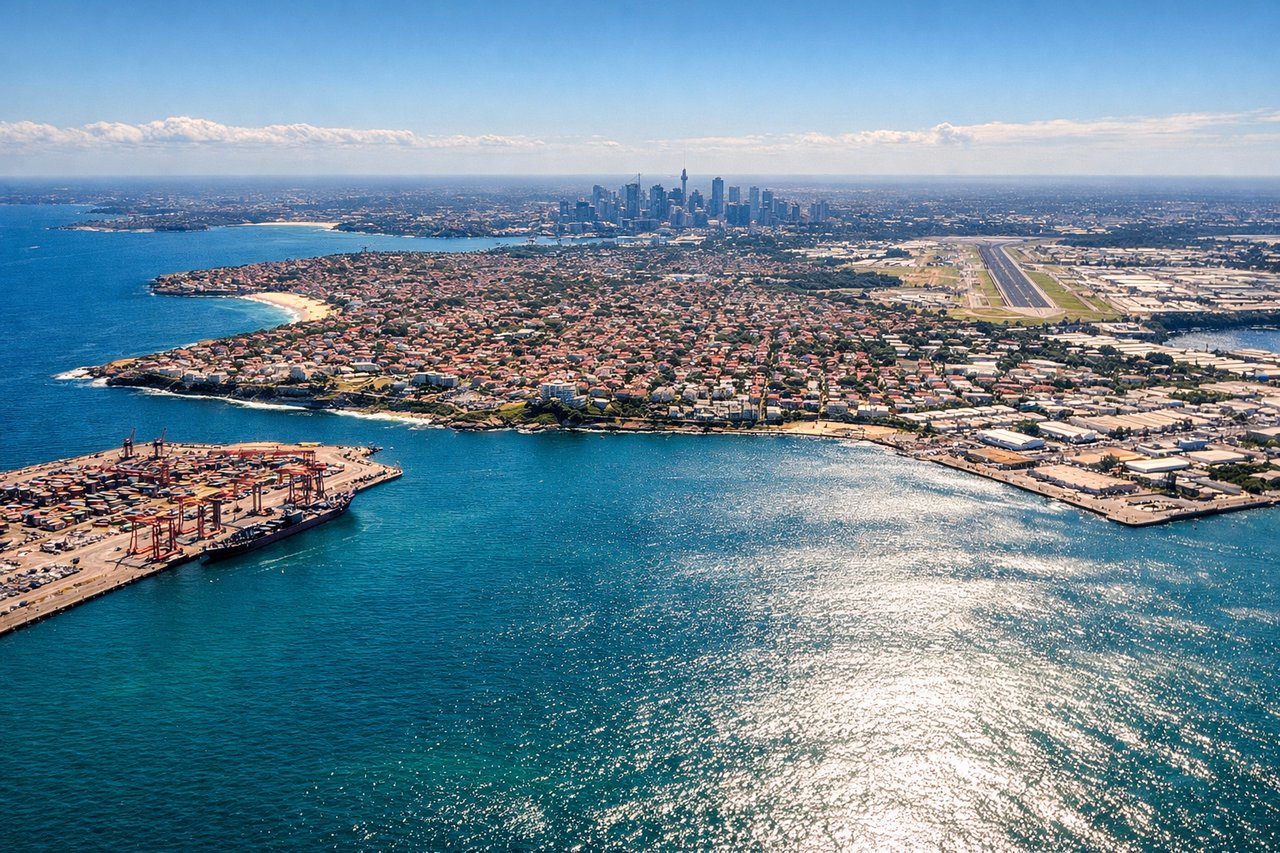
Landing at SYD
LEFTSydney Airport (SYD) typically uses runways 07L/25R and 07R/25L. Approaching from the north or east on runway 07 (eastbound approach), left-side seats offer unobstructed views of Sydney Harbour, the Opera House, and the city skyline during final descent. Right-side seats face inland over western suburbs.
Landmarks on this routeAll landmarks →
Will your flight be in sunlight?
Pick a date and time in the Sun Map to watch the sun move across your whole flight.
About This Route
Which side of the plane should I sit on flying from Sydney (YQY) to Kingsford Smith International Airport (SYD)?
Sit on the Left side of the plane for the best views on flights from Sydney to Sydney. While takeoff from Sydney, Nova Scotia favors the right side, the landing into Sydney, Australia on the left side is far more visually rewarding—the Harbour, Opera House, and Harbour Bridge are iconic and unmissable. The landing view outweighs the takeoff advantage.
What can I see during takeoff from Sydney in Sydney?
During takeoff from Sydney (YQY), sit on the Right side for the best views. Sydney, Nova Scotia typically departs runway 10/28. Departing eastbound (runway 28) on a right-side seat gives views of the Atlantic coastline and St. Peters Bay immediately after liftoff. Westbound departures (runway 10) offer less dramatic scenery over inland terrain. Notable sights include: St. Peters Bay, Atlantic Ocean coastline, Cape Breton Island forested terrain, Bras d'Or Lakes system in distance.
What can I see when landing at Kingsford Smith International Airport in Sydney?
When landing at Kingsford Smith International Airport (SYD), sit on the Left side for the best views. Sydney Airport (SYD) typically uses runways 07L/25R and 07R/25L. Approaching from the north or east on runway 07 (eastbound approach), left-side seats offer unobstructed views of Sydney Harbour, the Opera House, and the city skyline during final descent. Right-side seats face inland over western suburbs. Notable sights include: Sydney Harbour, Sydney Opera House, Harbour Bridge, Blue Mountains (distant western horizon).
How long is the flight from Sydney to Sydney?
The flight from Sydney (YQY) to Kingsford Smith International Airport (SYD) takes about 15 hours. The shortest flight path between them is 10,599 miles (17,057 km); winds and air traffic control usually add a few percent.
What does the Sydney to Sydney flight path pass over?
This ultra-long-haul route crosses the Pacific Ocean for roughly 8,000 nautical miles. Midpoint occurs over the central Pacific, typically around the International Date Line. No significant land features are visible during the 8–10 hour oceanic cruise phase. Pilots may route via waypoints near Hawaii or other Pacific island groups depending on winds, but these are not visible from cruise altitude (typically 35,000–43,000 feet). The route passes south of the Aleutian Islands and north of French Polynesia, but neither is on the direct great-circle path. Sunrise/sunset effects over open ocean dominate the midpoint experience rather than geographic landmarks.