Right-side seats capture the most dramatic scenery: the St. Lawrence River and Montreal's geography during departure, and reasonable views of the Detroit River approach. The flight path generally moves southwest, favoring right-side views of major water features.
Flown YUL to DET? Did we get it right?
Flight Path
Montreal to Detroit is 507 miles (816 km), a flight of about 1 hour 15 minutes.
Lake Ontario (visible to the left/north during cruise if flying the typical southern routing), the Niagara Escarpment region, and the transition from the Canadian Shield terrain near Montreal to the flatter Great Lakes basin. Most of the cruise altitude flight occurs over relatively flat terrain with scattered lakes and forests between the two cities.
Great circle distance and headings ›
Phase by phase
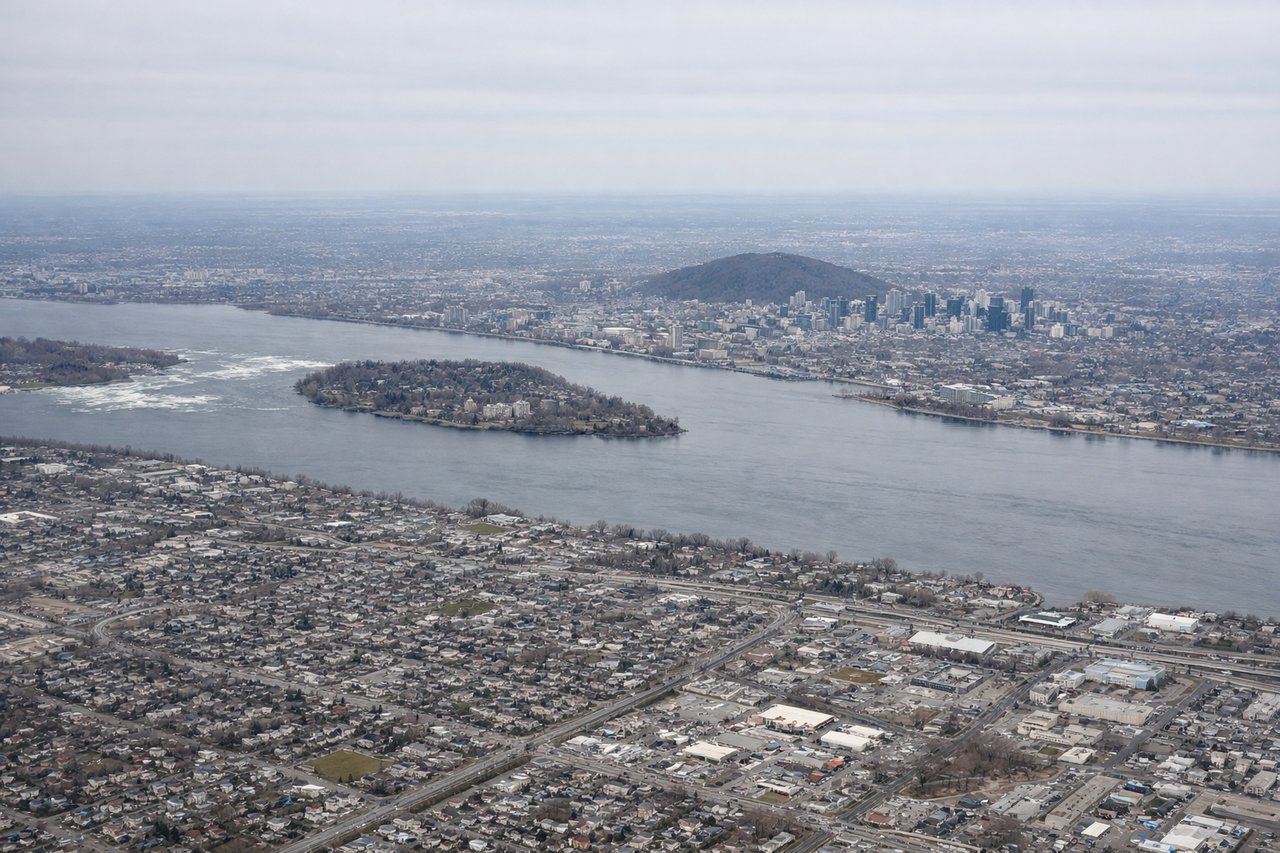
Takeoff from YUL
RIGHTRight-side seats offer views of the St. Lawrence River and Montreal's urban sprawl as the aircraft climbs southwestward. You'll see the river's distinctive curves and the city grid spreading below before heading toward Detroit.
Landing at DET
LEFTLeft-side seats provide views of the Detroit River and Windsor, Ontario as you descend toward Coleman Young International Airport. The river's distinctive course and the international border crossing are clearly visible during final approach.
Will your flight be in sunlight?
Pick a date and time in the Sun Map to watch the sun move across your whole flight.
About This Route
Which side of the plane should I sit on flying from Montreal International Dorval (YUL) to Detroit City (DET)?
Sit on the Right side of the plane for the best views on flights from Montreal to Detroit. Right-side seats capture the most dramatic scenery: the St. Lawrence River and Montreal's geography during departure, and reasonable views of the Detroit River approach. The flight path generally moves southwest, favoring right-side views of major water features.
What can I see during takeoff from Montreal International Dorval in Montreal?
During takeoff from Montreal International Dorval (YUL), sit on the Right side for the best views. Right-side seats offer views of the St. Lawrence River and Montreal's urban sprawl as the aircraft climbs southwestward. You'll see the river's distinctive curves and the city grid spreading below before heading toward Detroit. Notable sights include: St. Lawrence River, Montreal city center and surrounding suburbs, Laurentian Mountains (distant northern horizon).
What can I see when landing at Detroit City in Detroit?
When landing at Detroit City (DET), sit on the Left side for the best views. Left-side seats provide views of the Detroit River and Windsor, Ontario as you descend toward Coleman Young International Airport. The river's distinctive course and the international border crossing are clearly visible during final approach. Notable sights include: Detroit River, Windsor Ontario waterfront, Lake St. Clair (northern distance), Detroit city skyline.
How long is the flight from Montreal to Detroit?
The flight from Montreal International Dorval (YUL) to Detroit City (DET) takes about 1 hour 15 minutes. The shortest flight path between them is 507 miles (816 km); winds and air traffic control usually add a few percent.
What does the Montreal to Detroit flight path pass over?
Lake Ontario (visible to the left/north during cruise if flying the typical southern routing), the Niagara Escarpment region, and the transition from the Canadian Shield terrain near Montreal to the flatter Great Lakes basin. Most of the cruise altitude flight occurs over relatively flat terrain with scattered lakes and forests between the two cities.