Right-side seats win overall because the takeoff views of the Canadian Rockies are more dramatic and distinctive than landing views. While Atlanta's approach offers good piedmont and foothills scenery, the Rocky Mountains visible immediately after departure from Calgary are the flight's most visually striking geographic feature.
Flight Path
The flight path crosses the Great Plains of Montana and Wyoming, passing east of the Northern Rockies. Notable features along the route include the Missouri River valley (visible in eastern Montana), the transition from high plains to lower elevation terrain in Wyoming and Nebraska, and the Mississippi River valley as you approach the eastern United States. The Ozark Plateau becomes visible in Missouri/Arkansas before descent into Atlanta. Most of the midpoint flight occurs over relatively flat to gently rolling terrain with limited dramatic landmarks.
Great circle distance and headings ›
.jpeg?width=600)
Phase by phase
Takeoff from YYC
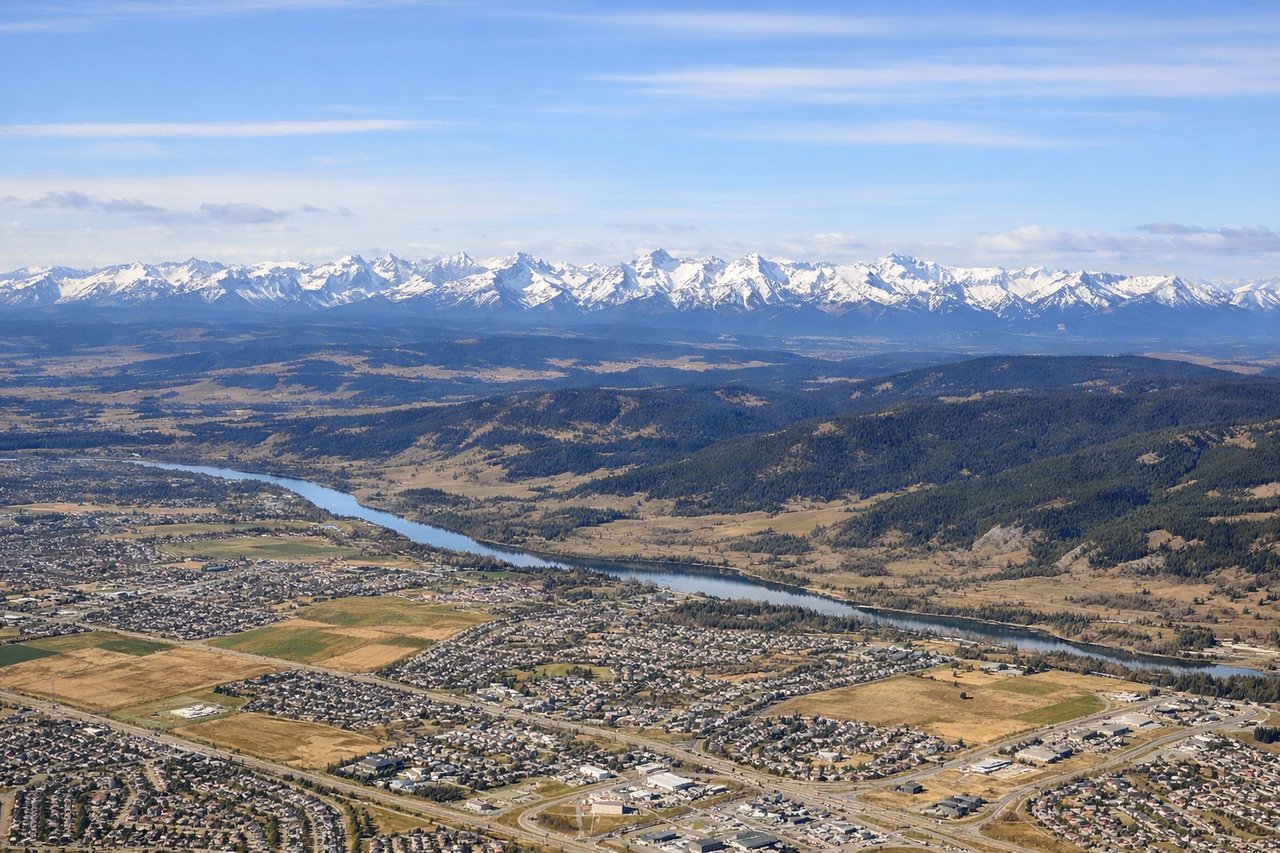
RIGHTRight-side seats offer the best views during the initial climb-out from Calgary. You'll see the Canadian Rockies to the west and southwest, which dominate the landscape immediately after departure. The Rocky Mountain front is the most dramatic feature visible from YYC's runway orientation.

Landing at ATL
LEFTLeft-side seats provide superior views during approach to Atlanta. You'll see the Appalachian foothills and the transition from piedmont to coastal plain as you descend into Georgia. The Atlanta metropolitan area sprawl becomes visible in the final descent, with the city's urban grid and surrounding lakes.
Landmarks on this routeAll landmarks →
Will your flight be in sunlight?
See exactly which side of the plane gets sun and shade at your departure time.
About This Route
Which side of the plane should I sit on flying from Calgary International (YYC) to The William B Hartsfield Atlanta International (ATL)?
Sit on the Right side of the plane for the best views on flights from Calgary to Atlanta. Right-side seats win overall because the takeoff views of the Canadian Rockies are more dramatic and distinctive than landing views. While Atlanta's approach offers good piedmont and foothills scenery, the Rocky Mountains visible immediately after departure from Calgary are the flight's most visually striking geographic feature.
What can I see during takeoff from Calgary International in Calgary?
During takeoff from Calgary International (YYC), sit on the Right side for the best views. Right-side seats offer the best views during the initial climb-out from Calgary. You'll see the Canadian Rockies to the west and southwest, which dominate the landscape immediately after departure. The Rocky Mountain front is the most dramatic feature visible from YYC's runway orientation. Notable sights include: Canadian Rocky Mountains (especially Mount Robson and the Front Ranges to the southwest), Bow River valley running north-south through Calgary, Foothills transition zone between plains and mountains, Lake Louise area in the distance (weather permitting).
What can I see when landing at The William B Hartsfield Atlanta International in Atlanta?
When landing at The William B Hartsfield Atlanta International (ATL), sit on the Left side for the best views. Left-side seats provide superior views during approach to Atlanta. You'll see the Appalachian foothills and the transition from piedmont to coastal plain as you descend into Georgia. The Atlanta metropolitan area sprawl becomes visible in the final descent, with the city's urban grid and surrounding lakes. Notable sights include: Appalachian foothills (Blue Ridge Mountains in distance to the north), Chattahoochee River and its reservoirs (Lake Lanier visible north of Atlanta), Atlanta's urban sprawl and downtown skyline, piedmont terrain with mixed forest and suburban development.
How long is the flight from Calgary to Atlanta?
The flight from Calgary International (YYC) to The William B Hartsfield Atlanta International (ATL) takes Approximately 3 hours 45 minutes to 4 hours 15 minutes.
What does the Calgary to Atlanta flight path pass over?
The flight path crosses the Great Plains of Montana and Wyoming, passing east of the Northern Rockies. Notable features along the route include the Missouri River valley (visible in eastern Montana), the transition from high plains to lower elevation terrain in Wyoming and Nebraska, and the Mississippi River valley as you approach the eastern United States. The Ozark Plateau becomes visible in Missouri/Arkansas before descent into Atlanta. Most of the midpoint flight occurs over relatively flat to gently rolling terrain with limited dramatic landmarks.