Left side wins at both ends. Over the Atlantic and Hudson Bay the views are similar on both sides, but the Rockies on departure and Amsterdam on arrival both favor the left. If you sleep through the ocean crossing, left is still the better choice for the bookend moments.
Flown YYC to AMS? Did we get it right?
Flight Path
Calgary to Amsterdam is 4,453 miles (7,167 km), a flight of about 9 hours 30 minutes.
The route tracks northeast over Hudson Bay (visible as a vast grey inland sea in summer, frozen white in winter), then crosses southern Greenland's ice sheet with outlet glaciers visible, before crossing Iceland or just south of it over the North Atlantic. Over the UK the route passes near Scotland and northern England before descending into the Netherlands. The Greenland ice cap crossing is the single most dramatic visual feature of the entire flight, visible on both sides.
Great circle distance and headings ›


Phase by phase

Takeoff from YYC
LEFTYYC typically departs on runway 35L/35R heading north, then routes northwest. The left (west) side gives you a direct broadside view of the Canadian Rockies as the aircraft climbs and turns. The entire front range from Banff to Kananaskis is laid out clearly against the foothills.
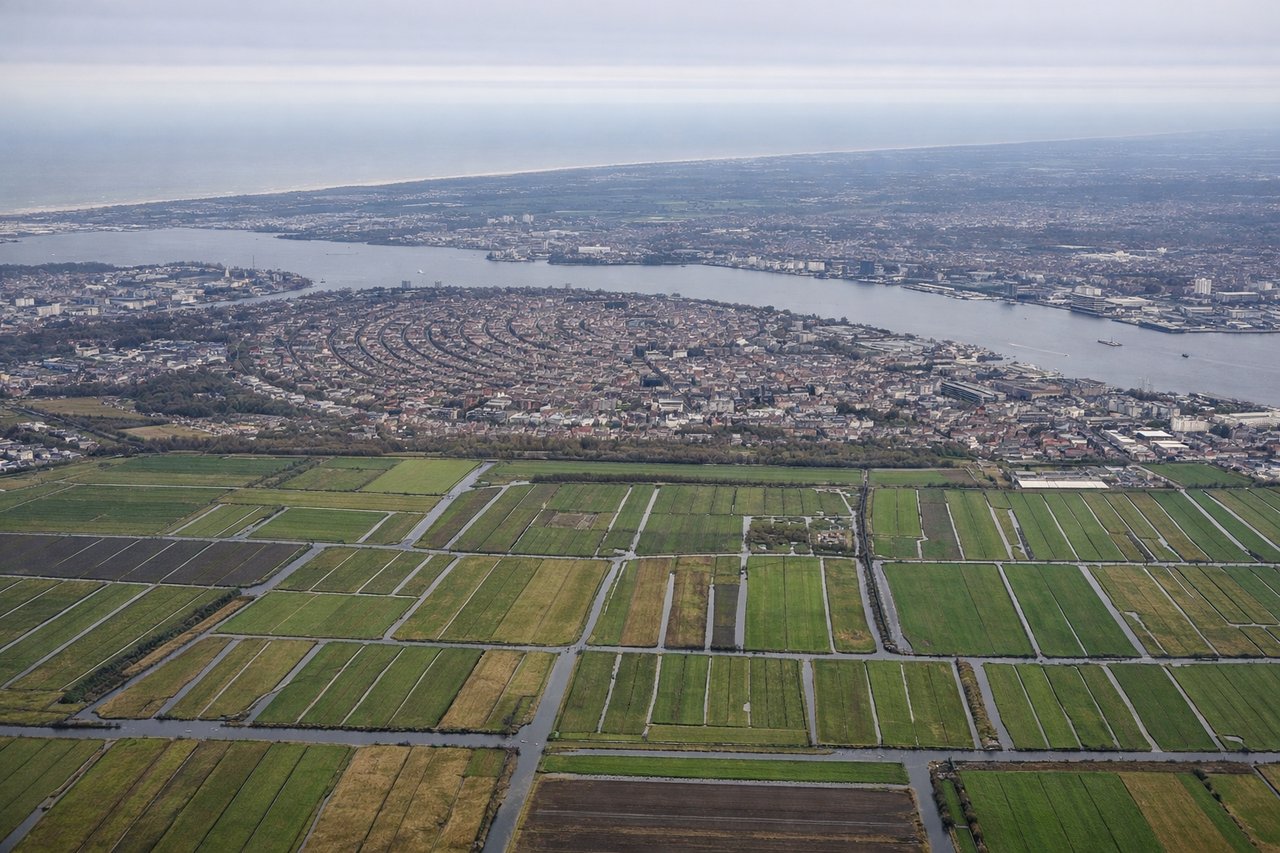
Landing at AMS
LEFTSchiphol predominantly uses runways oriented northeast-southwest. Arriving from the west on approach to runway 18R/18C, the left side faces east over Amsterdam city center, the IJ waterway, and the distinctive canal ring. The right side sees mostly flat polder farmland.
Will your flight be in sunlight?
Pick a date and time in the Sun Map to watch the sun move across your whole flight.
About This Route
Which side of the plane should I sit on flying from Calgary International (YYC) to Schiphol (AMS)?
Sit on the Left side of the plane for the best views on flights from Calgary to Amsterdam. Left side wins at both ends. Over the Atlantic and Hudson Bay the views are similar on both sides, but the Rockies on departure and Amsterdam on arrival both favor the left. If you sleep through the ocean crossing, left is still the better choice for the bookend moments.
What can I see during takeoff from Calgary International in Calgary?
During takeoff from Calgary International (YYC), sit on the Left side for the best views. YYC typically departs on runway 35L/35R heading north, then routes northwest. The left (west) side gives you a direct broadside view of the Canadian Rockies as the aircraft climbs and turns. The entire front range from Banff to Kananaskis is laid out clearly against the foothills. Notable sights include: Canadian Rockies front range (Banff/Kananaskis peaks), Bow River valley cutting through Calgary, Nose Hill Park and the city grid below, Cochrane foothills to the northwest.
What can I see when landing at Schiphol in Amsterdam?
When landing at Schiphol (AMS), sit on the Left side for the best views. Schiphol predominantly uses runways oriented northeast-southwest. Arriving from the west on approach to runway 18R/18C, the left side faces east over Amsterdam city center, the IJ waterway, and the distinctive canal ring. The right side sees mostly flat polder farmland. Notable sights include: Amsterdam canal ring (UNESCO World Heritage grachtengordel), IJ waterway and Amsterdam Centraal station area, Westpoort industrial harbor district, flat green polder fields of North Holland.
How long is the flight from Calgary to Amsterdam?
The flight from Calgary International (YYC) to Schiphol (AMS) takes about 9 hours 30 minutes. The shortest flight path between them is 4,453 miles (7,167 km); winds and air traffic control usually add a few percent.
What does the Calgary to Amsterdam flight path pass over?
The route tracks northeast over Hudson Bay (visible as a vast grey inland sea in summer, frozen white in winter), then crosses southern Greenland's ice sheet with outlet glaciers visible, before crossing Iceland or just south of it over the North Atlantic. Over the UK the route passes near Scotland and northern England before descending into the Netherlands. The Greenland ice cap crossing is the single most dramatic visual feature of the entire flight, visible on both sides.