The left side wins on the strength of the dramatic Rocky Mountain departure from Calgary combined with likely glimpses of Alaska's coastal ranges during the climb toward the great-circle route, giving sustained mountain drama early in the flight. The right side's rewards — Kamchatka's volcanoes and a distant Fuji — are real but briefer and weather-dependent, while much of its cruise time is spent over open Bering Sea and North Pacific water.
Flight Path
The great-circle route bows far north of the straight-line path, crossing the Yukon, southern Alaska, and the Alaska Peninsula before the midpoint over the Bering Sea near the Aleutian Islands chain, then continuing over Kamchatka's volcanic peninsula and the Kuril Islands before descending toward Japan.
Great circle distance and headings ›

.jpg?width=600)


Phase by phase
Takeoff from YYC
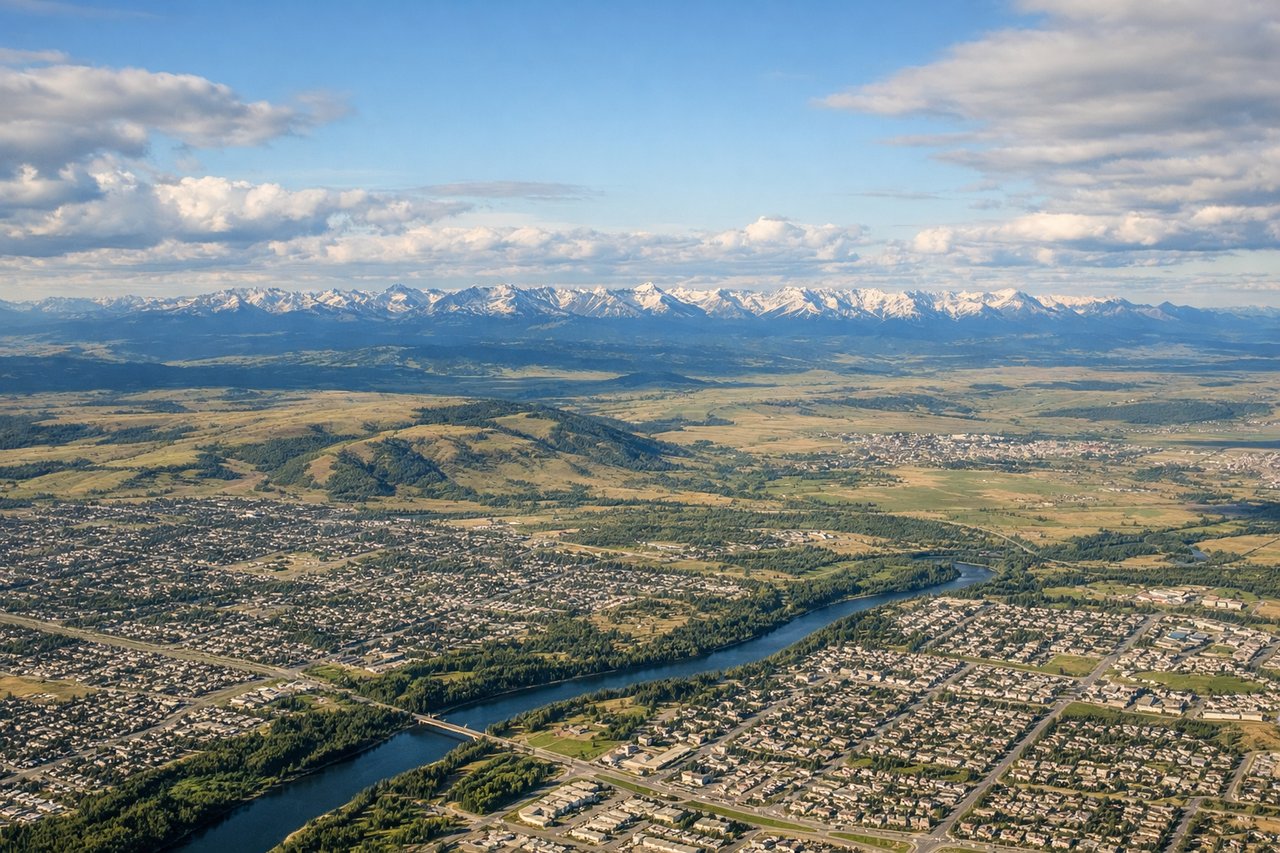
LEFTYYC departures head north on runway 35 before turning toward the northwest routing, putting Calgary's western horizon — the Rocky Mountain front ranges — directly on the left side during the climb. This is a strong, immediate scenic payoff rarely matched on the flat prairie side.
Landing at NRT
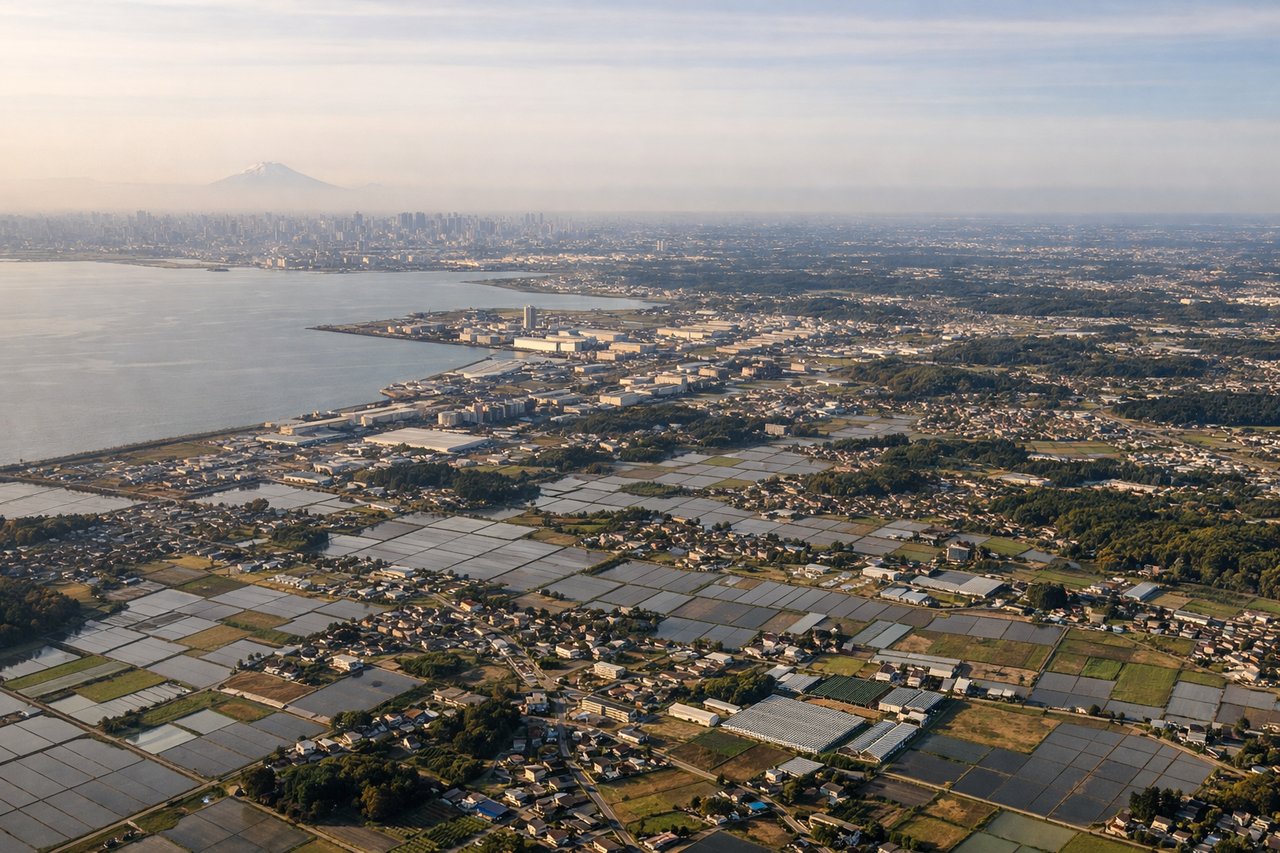
RIGHTArrivals into Narita from the north/northeast typically get vectored south before turning back for final approach, and depending on runway direction this puts Tokyo Bay, the Boso Peninsula coastline, and on clear days Mount Fuji's silhouette on the right side of the aircraft during descent.
Landmarks on this routeAll landmarks →
Will your flight be in sunlight?
See exactly which side of the plane gets sun and shade at your departure time.
About This Route
Which side of the plane should I sit on flying from Calgary International (YYC) to New Tokyo International (NRT)?
Sit on the Left side of the plane for the best views on flights from Calgary to Tokyo. The left side wins on the strength of the dramatic Rocky Mountain departure from Calgary combined with likely glimpses of Alaska's coastal ranges during the climb toward the great-circle route, giving sustained mountain drama early in the flight. The right side's rewards — Kamchatka's volcanoes and a distant Fuji — are real but briefer and weather-dependent, while much of its cruise time is spent over open Bering Sea and North Pacific water.
What can I see during takeoff from Calgary International in Calgary?
During takeoff from Calgary International (YYC), sit on the Left side for the best views. YYC departures head north on runway 35 before turning toward the northwest routing, putting Calgary's western horizon — the Rocky Mountain front ranges — directly on the left side during the climb. This is a strong, immediate scenic payoff rarely matched on the flat prairie side. Notable sights include: Rocky Mountain front ranges near Banff, Mount Rundle, Bow Valley foothills, Kananaskis peaks.
What can I see when landing at New Tokyo International in Tokyo?
When landing at New Tokyo International (NRT), sit on the Right side for the best views. Arrivals into Narita from the north/northeast typically get vectored south before turning back for final approach, and depending on runway direction this puts Tokyo Bay, the Boso Peninsula coastline, and on clear days Mount Fuji's silhouette on the right side of the aircraft during descent. Notable sights include: Mount Fuji (distant silhouette), Tokyo Bay, Boso Peninsula coastline, Chiba waterfront.
How long is the flight from Calgary to Tokyo?
The flight from Calgary International (YYC) to New Tokyo International (NRT) takes 11h 50m.
What does the Calgary to Tokyo flight path pass over?
The great-circle route bows far north of the straight-line path, crossing the Yukon, southern Alaska, and the Alaska Peninsula before the midpoint over the Bering Sea near the Aleutian Islands chain, then continuing over Kamchatka's volcanic peninsula and the Kuril Islands before descending toward Japan.