While the Queenstown departure gives the right side a strong mountain view, the left side's payoff on arrival — a low pass over Sydney Harbour with the Opera House and Harbour Bridge in clear view — is the single most iconic moment of this flight, edging out the takeoff advantage.
Flight Path
The cruise phase crosses the open Tasman Sea with no land visible for roughly two hours, until the Australian coastline near Sydney comes into view during descent.
Great circle distance and headings ›.JPG?width=600)

.jpg?width=600)

Phase by phase
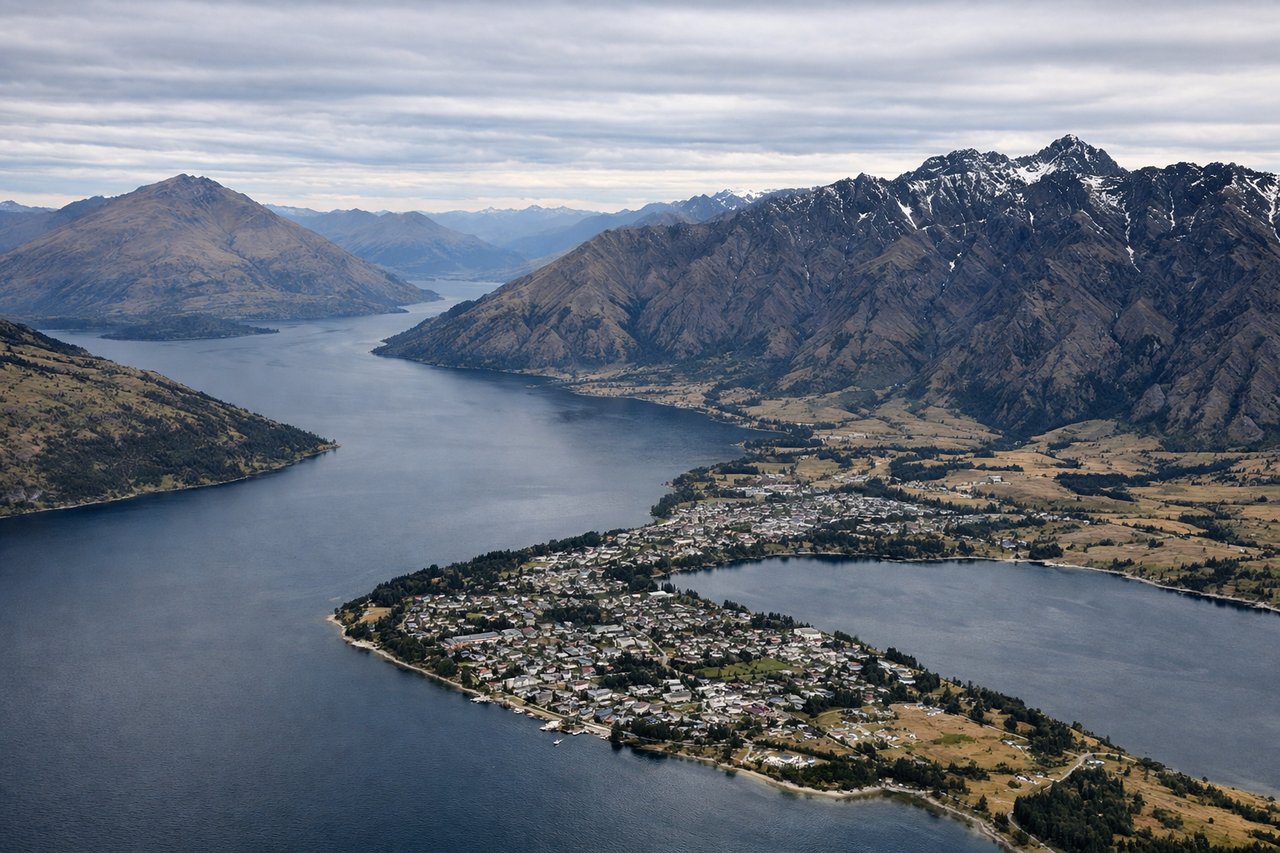
Takeoff from ZQN
RIGHTQueenstown's climb-out is framed by The Remarkables rising directly beside the airport, with Lake Wakatipu curving below — this dramatic alpine terrain is best seen from the right side as the aircraft banks away from the mountains toward open sky.
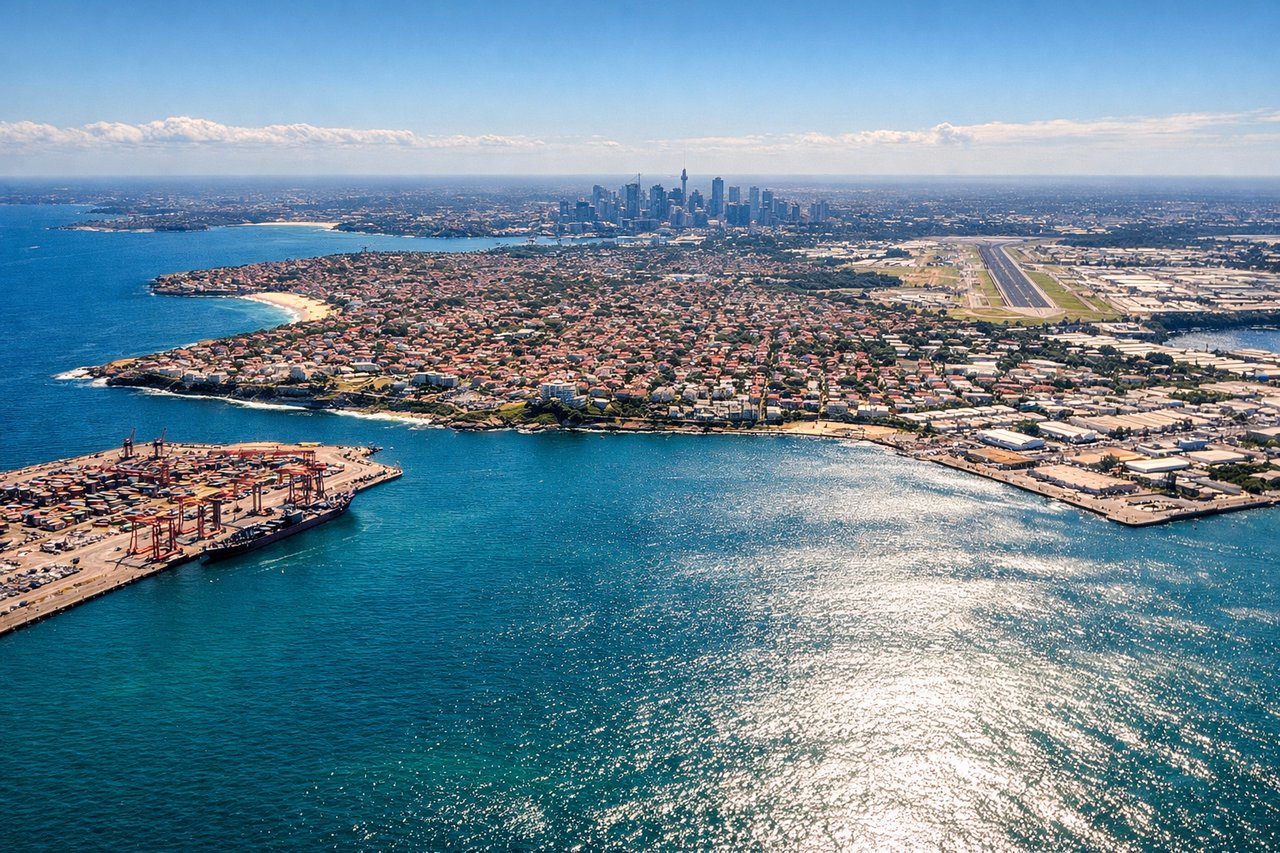
Landing at SYD
LEFTOn the approach into Sydney, flights arriving from the northeast typically track down over the harbour before turning onto final for the north-south runways, putting the Opera House, Harbour Bridge, and CBD skyline squarely on the left side.
Landmarks on this routeAll landmarks →
Will your flight be in sunlight?
See exactly which side of the plane gets sun and shade at your departure time.
About This Route
Which side of the plane should I sit on flying from Queenstown (ZQN) to Kingsford Smith International Airport (SYD)?
Sit on the Left side of the plane for the best views on flights from Queenstown International to Sydney. While the Queenstown departure gives the right side a strong mountain view, the left side's payoff on arrival — a low pass over Sydney Harbour with the Opera House and Harbour Bridge in clear view — is the single most iconic moment of this flight, edging out the takeoff advantage.
What can I see during takeoff from Queenstown in Queenstown International?
During takeoff from Queenstown (ZQN), sit on the Right side for the best views. Queenstown's climb-out is framed by The Remarkables rising directly beside the airport, with Lake Wakatipu curving below — this dramatic alpine terrain is best seen from the right side as the aircraft banks away from the mountains toward open sky. Notable sights include: The Remarkables, Lake Wakatipu, Coronet Peak, Southern Alps foothills.
What can I see when landing at Kingsford Smith International Airport in Sydney?
When landing at Kingsford Smith International Airport (SYD), sit on the Left side for the best views. On the approach into Sydney, flights arriving from the northeast typically track down over the harbour before turning onto final for the north-south runways, putting the Opera House, Harbour Bridge, and CBD skyline squarely on the left side. Notable sights include: Sydney Opera House, Sydney Harbour Bridge, Sydney CBD skyline, Botany Bay coastline.
How long is the flight from Queenstown International to Sydney?
The flight from Queenstown (ZQN) to Kingsford Smith International Airport (SYD) takes 3h05m.
What does the Queenstown International to Sydney flight path pass over?
The cruise phase crosses the open Tasman Sea with no land visible for roughly two hours, until the Australian coastline near Sydney comes into view during descent.