New Providence Island northern shore, Paradise Island, turquoise shallow water banks
🛬 Landing at Nassau (NAS)
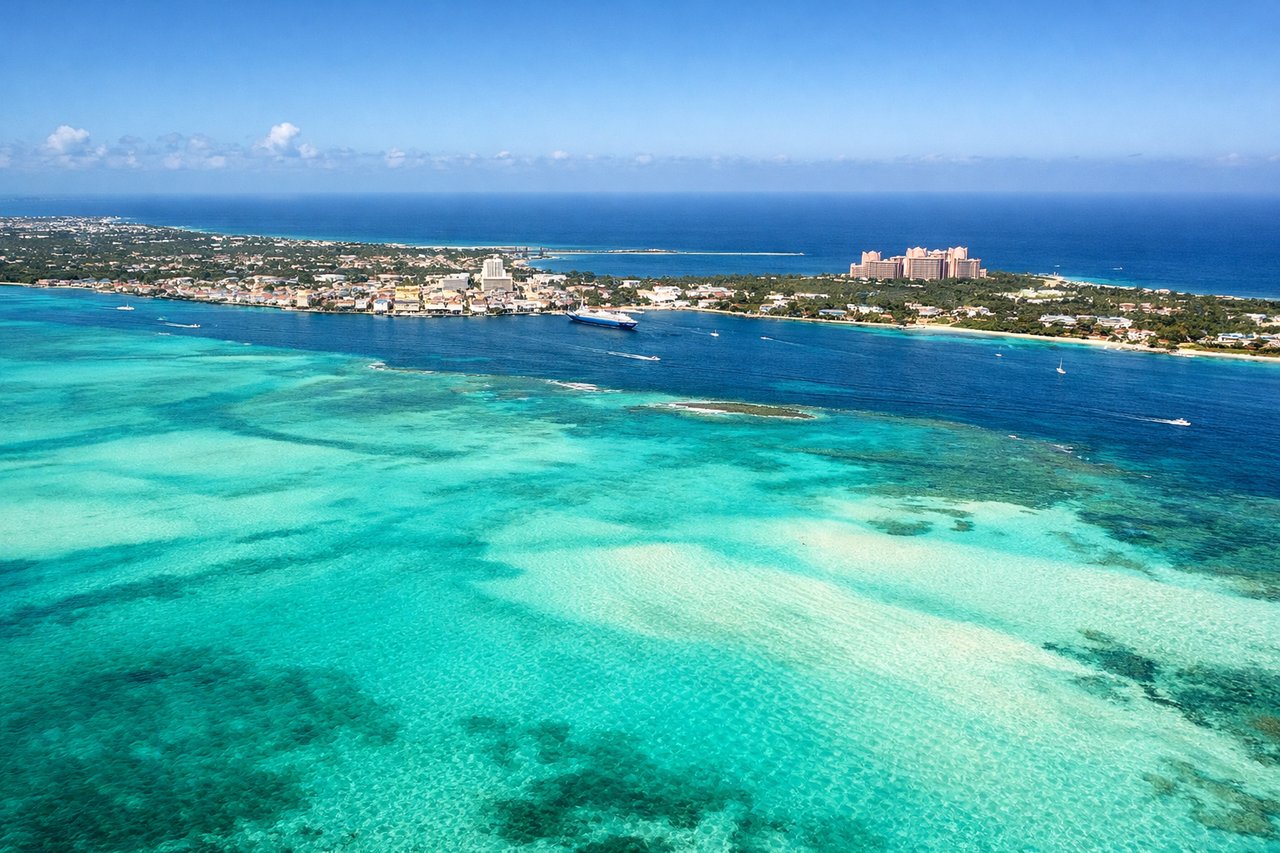 Left Side
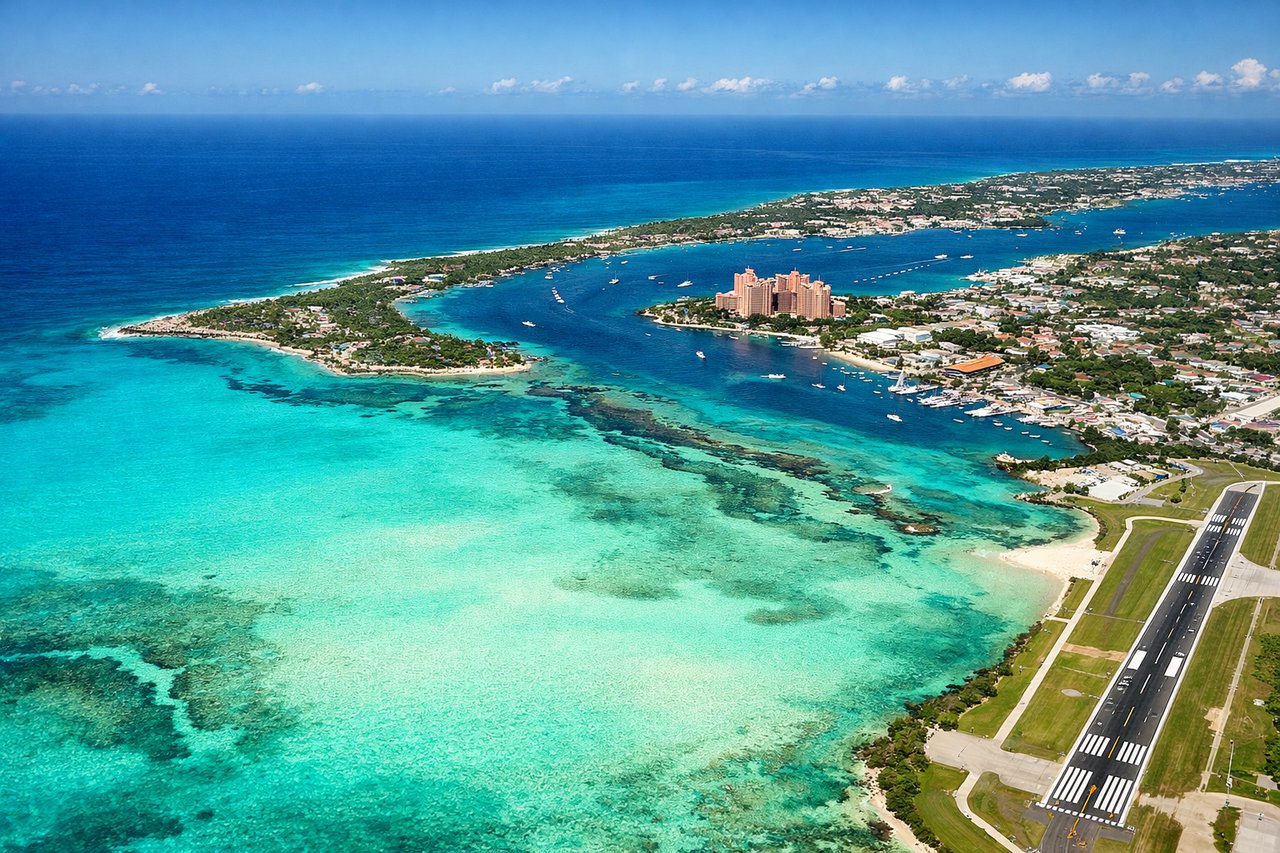 Right Side
NAS is the busiest airport in the Bahamas, with a single passenger terminal split into domestic and international sections; the international side has US-style pre-clearance for arriving flights to the United States. It handles significant traffic from both the US East Coast and Caribbean/regional carriers alongside general aviation and private jet traffic.
Landmarks on routes to NassauAll landmarks →
Connecting at NAS?
Find out if your layover is long enough at Nassau International.
Check layover times →Popular Routes to Nassau International (NAS)
About This Airport
Which side of the plane has the best views landing at Nassau International (NAS)?
When landing at Nassau International (NAS), sit on the Left side for the best views. Runway 14 approaches from the northeast, placing New Providence Island and Nassau's developed areas on the left side during descent. You'll see the island's northern coastline, Paradise Island, and the turquoise shallow banks that define the Bahamas' geography as you descend toward touchdown. Notable sights include: New Providence Island northern shore, Paradise Island (northeast of Nassau), turquoise shallow water banks, Nassau Harbor.
What can I see when arriving at Nassau?
Arriving at Nassau International in Nassau, passengers on the Left side enjoy views of New Providence Island northern shore, Paradise Island (northeast of Nassau), turquoise shallow water banks, Nassau Harbor. Runway 14 approaches from the northeast, placing New Providence Island and Nassau's developed areas on the left side during descent. You'll see the island's northern coastline, Paradise Island, and the turquoise shallow banks that define the Bahamas' geography as you descend toward touchdown.
What factors affect the best window seat landing at Nassau International?
The best window seat landing at Nassau International (NAS) depends on several factors: the approach path and runway in use, geographic features around Nassau (mountains, coastlines, city skylines), weather conditions, and time of day. Morning and evening arrivals often offer the best lighting.