Kodiak to Anchorage is 253 miles (407 km), a flight of about 40 minutes.
While landing favors the right, the takeoff and climb-out on the left provide superior views of Kodiak Island's dramatic coastline and the transition from island terrain to open water. The left side captures the geographic context of departure more effectively.
Flight Path
The flight path crosses the Shelikof Strait (open water between Kodiak Island and the Alaska Peninsula). At midpoint, you'll be over open water with no major landmarks visible—the strait is roughly 40 miles wide at this latitude. The Alaska Peninsula appears as a distant low coastline to the west. As you approach Anchorage, the Chugach Mountains become visible on the eastern horizon, with Cook Inlet appearing as a broad water body to the west.
Great circle distance and headings ›Phase by phase
Takeoff from ADQ
LEFTKodiak typically departs runway 10 (northwesterly). Left seats face toward the Kodiak Island coastline and Chiniak Bay, offering immediate views of the rugged terrain you're leaving behind. Right seats face inland over forested terrain with less visual interest.
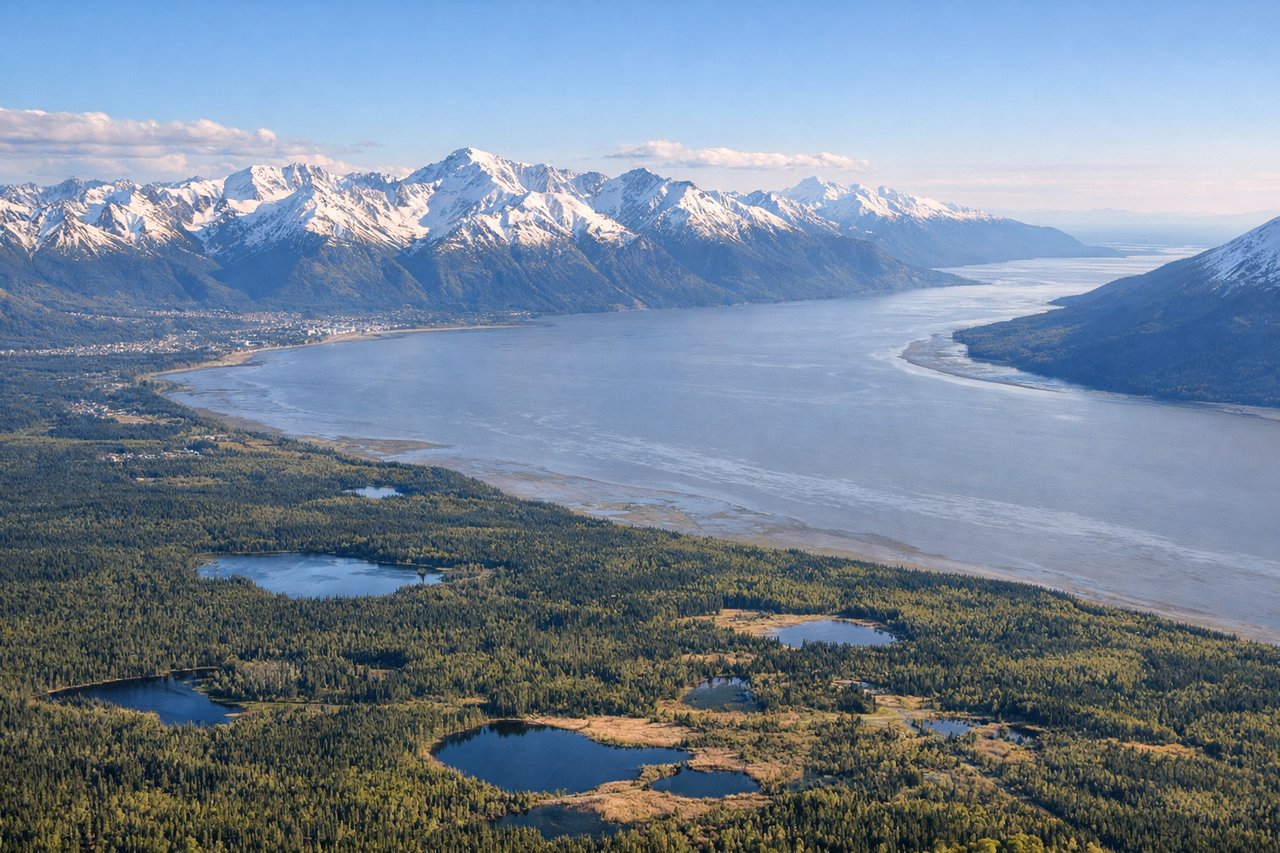
Landing at ANC
RIGHTKodiak typically lands runway 28 (southeasterly). Right seats face toward the approach path over Chiniak Bay and the southern Kodiak Island terrain. You'll see the final descent over water and the airport's immediate surroundings more directly than left-side passengers.
Landmarks on this routeAll landmarks →
Will your flight be in sunlight?
Pick a date and time in the Sun Map to watch the sun move across your whole flight.
About This Route
Which side of the plane should I sit on flying from Kodiak (ADQ) to Ted Stevens Anchorage International (ANC)?
Sit on the Left side of the plane for the best views on flights from Kodiak to Anchorage. While landing favors the right, the takeoff and climb-out on the left provide superior views of Kodiak Island's dramatic coastline and the transition from island terrain to open water. The left side captures the geographic context of departure more effectively.
What can I see during takeoff from Kodiak in Kodiak?
During takeoff from Kodiak (ADQ), sit on the Left side for the best views. Kodiak typically departs runway 10 (northwesterly). Left seats face toward the Kodiak Island coastline and Chiniak Bay, offering immediate views of the rugged terrain you're leaving behind. Right seats face inland over forested terrain with less visual interest. Notable sights include: Chiniak Bay (immediate offshore waters), Kodiak Island's eastern coastline, Barometer Mountain (visible as terrain rises inland), Monashka Bay to the south.
What can I see when landing at Ted Stevens Anchorage International in Anchorage?
When landing at Ted Stevens Anchorage International (ANC), sit on the Right side for the best views. Kodiak typically lands runway 28 (southeasterly). Right seats face toward the approach path over Chiniak Bay and the southern Kodiak Island terrain. You'll see the final descent over water and the airport's immediate surroundings more directly than left-side passengers. Notable sights include: Chiniak Bay (approach corridor), Kodiak Island's southern coastline, Barometer Mountain (visible to the left during descent), Monashka Bay and Cape Chiniak.
How long is the flight from Kodiak to Anchorage?
The flight from Kodiak (ADQ) to Ted Stevens Anchorage International (ANC) takes about 40 minutes. The shortest flight path between them is 253 miles (407 km); winds and air traffic control usually add a few percent.
What does the Kodiak to Anchorage flight path pass over?
The flight path crosses the Shelikof Strait (open water between Kodiak Island and the Alaska Peninsula). At midpoint, you'll be over open water with no major landmarks visible—the strait is roughly 40 miles wide at this latitude. The Alaska Peninsula appears as a distant low coastline to the west. As you approach Anchorage, the Chugach Mountains become visible on the eastern horizon, with Cook Inlet appearing as a broad water body to the west.