Anchorage to Kodiak is 253 miles (407 km), a flight of about 55 minutes.
The right side offers a longer, more consistent scenic payoff — the Aleutian Range volcanoes (Redoubt, Iliamna, and later Augustine) remain visible for much of the short cruise as the flight tracks down Cook Inlet, complementing the strong volcanic view at takeoff, while the left side's best scenery is concentrated mainly in the final approach into Kodiak.
Flight Path
Lower Cook Inlet, Kamishak Bay, Augustine Volcano, Shelikof Strait, Kodiak Island's northern coastline
Great circle distance and headings ›Phase by phase
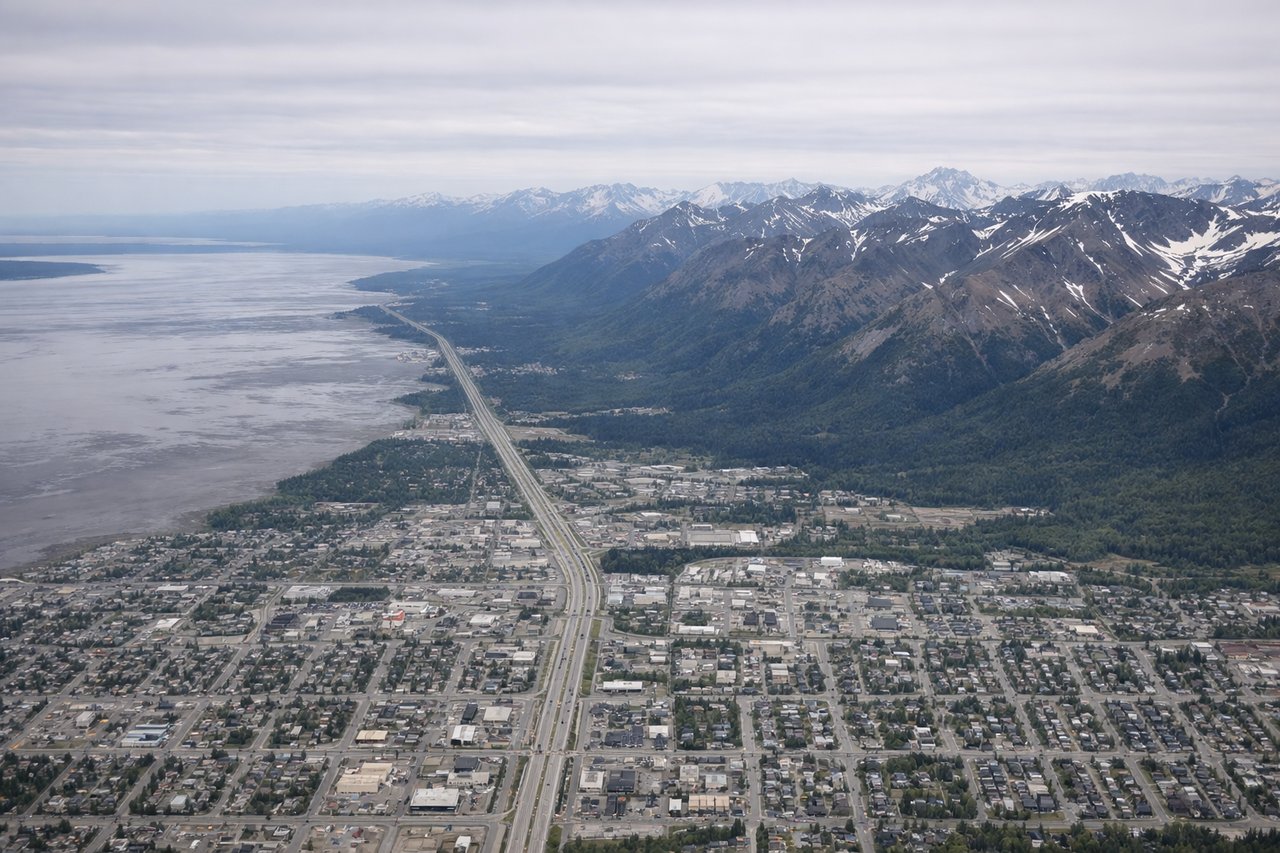
Takeoff from ANC
RIGHTAs the aircraft climbs south out of Anchorage and turns toward Kodiak, the right side faces west across Cook Inlet, where Mount Susitna and the snow-capped volcanoes of the Aleutian Range come into view almost immediately. The left side shows the Chugach Mountains close to the city, but they're less varied than the volcanic skyline unfolding on the right.
Landing at ADQ
LEFTOn approach into Kodiak, the aircraft descends past the island's steep, glacier-carved peaks, with Barometer Mountain and the ridgelines above Womens Bay visible close to the runway threshold on the left. The right side mostly shows open water in Chiniak Bay, which is scenic but less dramatic than the mountain flank sliding past on the left.
Landmarks on this routeAll landmarks →
Will your flight be in sunlight?
Pick a date and time in the Sun Map to watch the sun move across your whole flight.
About This Route
Which side of the plane should I sit on flying from Ted Stevens Anchorage International (ANC) to Kodiak (ADQ)?
Sit on the Right side of the plane for the best views on flights from Anchorage to Kodiak. The right side offers a longer, more consistent scenic payoff — the Aleutian Range volcanoes (Redoubt, Iliamna, and later Augustine) remain visible for much of the short cruise as the flight tracks down Cook Inlet, complementing the strong volcanic view at takeoff, while the left side's best scenery is concentrated mainly in the final approach into Kodiak.
What can I see during takeoff from Ted Stevens Anchorage International in Anchorage?
During takeoff from Ted Stevens Anchorage International (ANC), sit on the Right side for the best views. As the aircraft climbs south out of Anchorage and turns toward Kodiak, the right side faces west across Cook Inlet, where Mount Susitna and the snow-capped volcanoes of the Aleutian Range come into view almost immediately. The left side shows the Chugach Mountains close to the city, but they're less varied than the volcanic skyline unfolding on the right. Notable sights include: Mount Susitna, Cook Inlet mudflats, Mount Redoubt, Mount Iliamna.
What can I see when landing at Kodiak in Kodiak?
When landing at Kodiak (ADQ), sit on the Left side for the best views. On approach into Kodiak, the aircraft descends past the island's steep, glacier-carved peaks, with Barometer Mountain and the ridgelines above Womens Bay visible close to the runway threshold on the left. The right side mostly shows open water in Chiniak Bay, which is scenic but less dramatic than the mountain flank sliding past on the left. Notable sights include: Barometer Mountain, Womens Bay ridgelines, Chiniak Bay, Kodiak town harbor.
How long is the flight from Anchorage to Kodiak?
The flight from Ted Stevens Anchorage International (ANC) to Kodiak (ADQ) takes about 55 minutes. The shortest flight path between them is 253 miles (407 km); winds and air traffic control usually add a few percent.
What does the Anchorage to Kodiak flight path pass over?
Lower Cook Inlet, Kamishak Bay, Augustine Volcano, Shelikof Strait, Kodiak Island's northern coastline