The left side delivers the most dramatic scenery of the entire flight during departure — the Chugach Mountains are one of the most visually striking urban-adjacent mountain ranges in North America. The landing right-side view of Dallas is interesting but relatively modest compared to the Alaskan scenery. Left wins overall for the departure alone.
Flown ANC to DFW? Did we get it right?
Flight Path
Anchorage to Dallas-Fort Worth is 3,038 miles (4,889 km), a flight of about 6 hours 45 minutes.
The route tracks southeast across interior Alaska over the Alaska Range (including the Denali massif visible to the west on clear days), then crosses the Canadian Rockies and the broad interior plains of British Columbia and Alberta, transitions over the flat agricultural expanse of the Great Plains through Montana, Wyoming, Colorado, and Oklahoma before descending into North Texas. The Canadian Rockies crossing over Alberta offers dramatic terrain visible from both sides around the midpoint of the flight.
Great circle distance and headings ›


Phase by phase
Takeoff from ANC
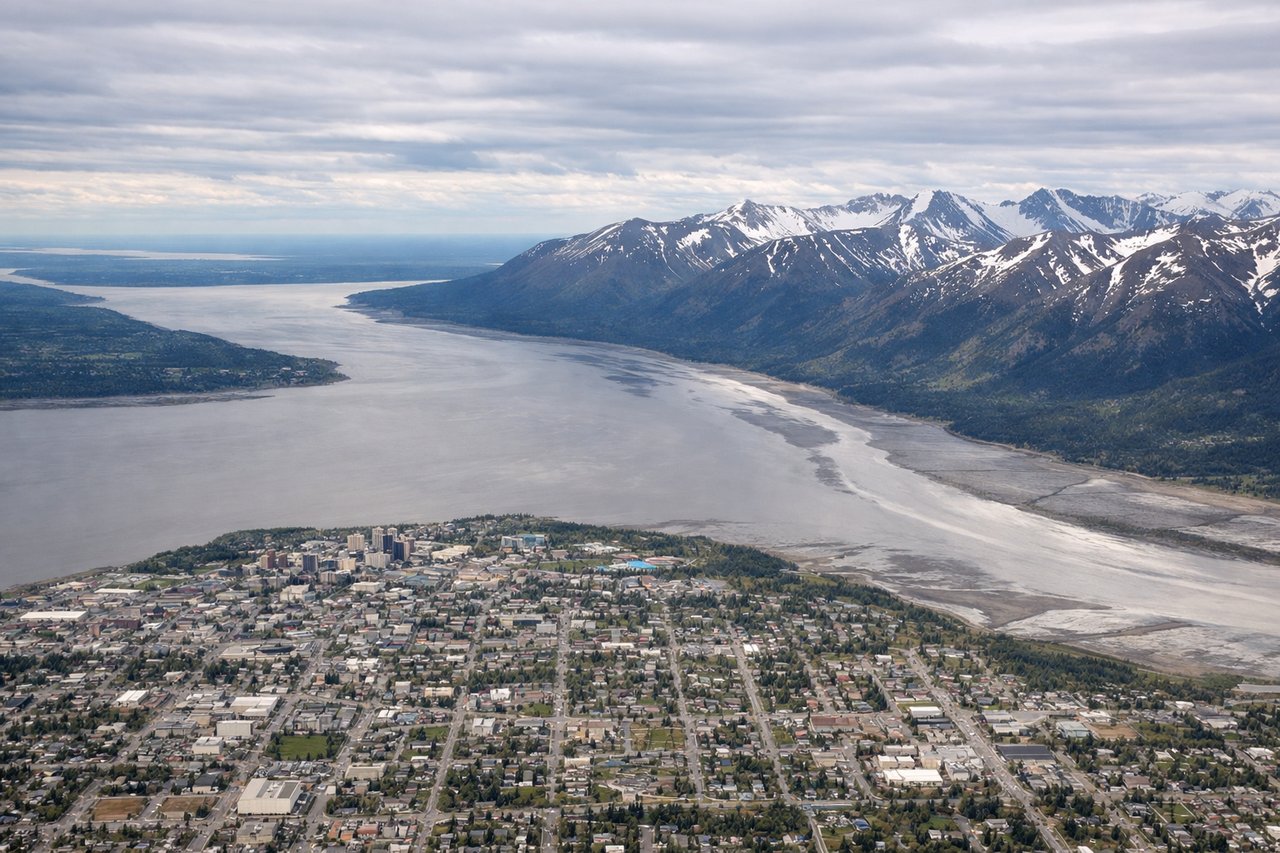
LEFTAnchorage departures heading south or southeast on runway 33/15 give the left side a direct view of the Chugach Mountains rising immediately east of the city, with the dramatic glaciated peaks of the Front Range clearly visible. Cook Inlet and the Kenai Peninsula spread out to the southwest on the right, but the Chugach wall is the more striking feature.
Landing at DFW
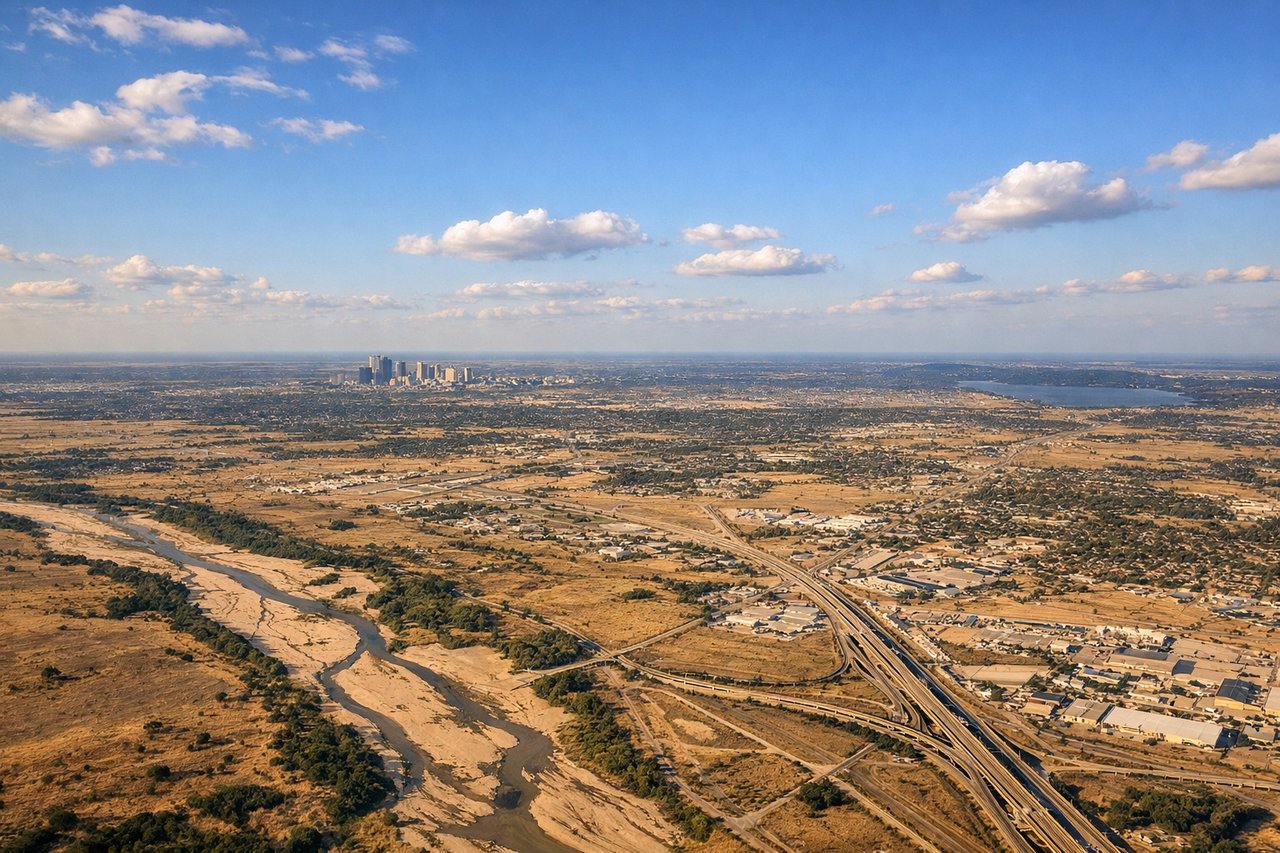
RIGHTDFW arrivals from the north typically land on runways oriented north-south, with the approach over the northern suburbs of the Metroplex. The right side gives a clear view of downtown Dallas skyline to the southeast, while the left side faces Fort Worth which is less visually distinctive at altitude.
Will your flight be in sunlight?
Pick a date and time in the Sun Map to watch the sun move across your whole flight.
About This Route
Which side of the plane should I sit on flying from Ted Stevens Anchorage International (ANC) to Dallas Fort Worth International (DFW)?
Sit on the Left side of the plane for the best views on flights from Anchorage to Dallas-Fort Worth. The left side delivers the most dramatic scenery of the entire flight during departure — the Chugach Mountains are one of the most visually striking urban-adjacent mountain ranges in North America. The landing right-side view of Dallas is interesting but relatively modest compared to the Alaskan scenery. Left wins overall for the departure alone.
What can I see during takeoff from Ted Stevens Anchorage International in Anchorage?
During takeoff from Ted Stevens Anchorage International (ANC), sit on the Left side for the best views. Anchorage departures heading south or southeast on runway 33/15 give the left side a direct view of the Chugach Mountains rising immediately east of the city, with the dramatic glaciated peaks of the Front Range clearly visible. Cook Inlet and the Kenai Peninsula spread out to the southwest on the right, but the Chugach wall is the more striking feature. Notable sights include: Chugach Mountains (Front Range), Knik Arm of Cook Inlet, Elmendorf Air Force Base footprint below, Turnagain Arm visible to the south.
What can I see when landing at Dallas Fort Worth International in Dallas-Fort Worth?
When landing at Dallas Fort Worth International (DFW), sit on the Right side for the best views. DFW arrivals from the north typically land on runways oriented north-south, with the approach over the northern suburbs of the Metroplex. The right side gives a clear view of downtown Dallas skyline to the southeast, while the left side faces Fort Worth which is less visually distinctive at altitude. Notable sights include: Downtown Dallas skyline, Lake Grapevine to the northeast, the dense suburban sprawl of the Metroplex grid, Trinity River corridor.
How long is the flight from Anchorage to Dallas-Fort Worth?
The flight from Ted Stevens Anchorage International (ANC) to Dallas Fort Worth International (DFW) takes about 6 hours 45 minutes. The shortest flight path between them is 3,038 miles (4,889 km); winds and air traffic control usually add a few percent.
What does the Anchorage to Dallas-Fort Worth flight path pass over?
The route tracks southeast across interior Alaska over the Alaska Range (including the Denali massif visible to the west on clear days), then crosses the Canadian Rockies and the broad interior plains of British Columbia and Alberta, transitions over the flat agricultural expanse of the Great Plains through Montana, Wyoming, Colorado, and Oklahoma before descending into North Texas. The Canadian Rockies crossing over Alberta offers dramatic terrain visible from both sides around the midpoint of the flight.