Right side scores higher due to the dramatic Apennine Mountains and Tiber River valley visible during the long cruise phase and final approach into Rome, providing sustained scenic interest. Left side offers a strong Buenos Aires departure but then faces 11+ hours of Atlantic Ocean with minimal landmarks, capping its overall score. Right side's landing sequence into Rome's mountainous terrain outweighs left's takeoff advantage.
Flown AEP to FCO? Did we get it right?
Flight Path
Buenos Aires to Rome is 6,914 miles (11,128 km), a flight of about 11 hours 35 minutes.
Transatlantic crossing over open Atlantic Ocean (minimal landmarks for 8-9 hours); approaching Europe: Iberian Peninsula coastline (Portugal/Spain), Bay of Biscay, French Atlantic coast, Alps visible at distance during descent into Mediterranean airspace, Italian coastline and Tyrrhenian Sea approaching FCO
Great circle distance and headings ›Phase by phase
Takeoff from AEP
LEFTDepartures from AEP use runway 13 heading southeast, climbing out over the Río de la Plata estuary. Left-side passengers see the wide river mouth, suburban Buenos Aires sprawl, and the Atlantic coastline receding. Right side faces inland toward flat pampas with minimal visual interest during initial climb.
Landing at FCO
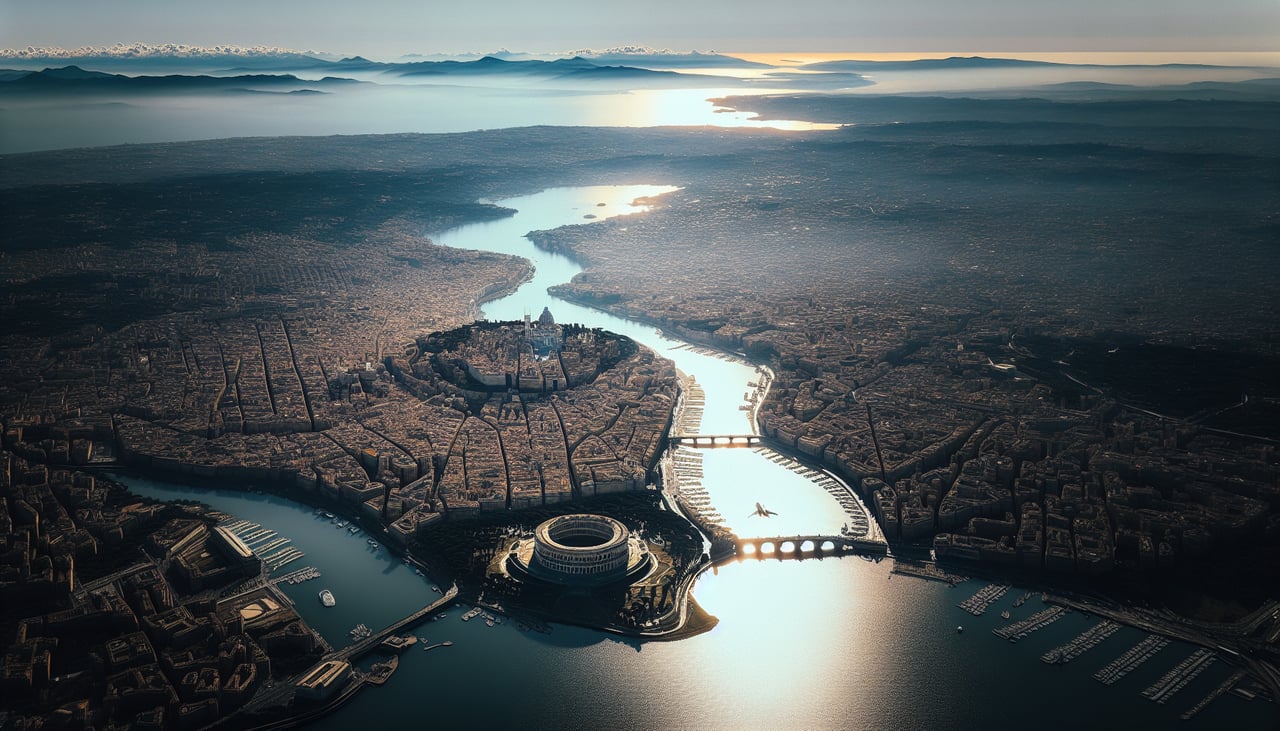
RIGHTArrivals at FCO typically approach from the south on runways 34L/34R, descending over central Italy. Right-side passengers see the Apennine Mountains, Tiber River valley, and the approach to Rome's urban area. Left side faces the Tyrrhenian Sea and coastal plains with less dramatic terrain variation.
Will your flight be in sunlight?
Pick a date and time in the Sun Map to watch the sun move across your whole flight.
About This Route
Which side of the plane should I sit on flying from Aeroparque Jorge Newbery (AEP) to Fiumicino (FCO)?
Sit on the Right side of the plane for the best views on flights from Buenos Aires to Rome. Right side scores higher due to the dramatic Apennine Mountains and Tiber River valley visible during the long cruise phase and final approach into Rome, providing sustained scenic interest. Left side offers a strong Buenos Aires departure but then faces 11+ hours of Atlantic Ocean with minimal landmarks, capping its overall score. Right side's landing sequence into Rome's mountainous terrain outweighs left's takeoff advantage.
What can I see during takeoff from Aeroparque Jorge Newbery in Buenos Aires?
During takeoff from Aeroparque Jorge Newbery (AEP), sit on the Left side for the best views. Departures from AEP use runway 13 heading southeast, climbing out over the Río de la Plata estuary. Left-side passengers see the wide river mouth, suburban Buenos Aires sprawl, and the Atlantic coastline receding. Right side faces inland toward flat pampas with minimal visual interest during initial climb. Notable sights include: Río de la Plata estuary, Buenos Aires waterfront and harbor districts, Atlantic coastline, suburban development patterns.
What can I see when landing at Fiumicino in Rome?
When landing at Fiumicino (FCO), sit on the Right side for the best views. Arrivals at FCO typically approach from the south on runways 34L/34R, descending over central Italy. Right-side passengers see the Apennine Mountains, Tiber River valley, and the approach to Rome's urban area. Left side faces the Tyrrhenian Sea and coastal plains with less dramatic terrain variation. Notable sights include: Apennine Mountains (central spine), Tiber River valley, Rome metropolitan area and urban sprawl, Fiumicino airport and Tiber delta.
How long is the flight from Buenos Aires to Rome?
The flight from Aeroparque Jorge Newbery (AEP) to Fiumicino (FCO) takes about 11 hours 35 minutes. The shortest flight path between them is 6,914 miles (11,128 km); winds and air traffic control usually add a few percent.
What does the Buenos Aires to Rome flight path pass over?
Transatlantic crossing over open Atlantic Ocean (minimal landmarks for 8-9 hours); approaching Europe: Iberian Peninsula coastline (Portugal/Spain), Bay of Biscay, French Atlantic coast, Alps visible at distance during descent into Mediterranean airspace, Italian coastline and Tyrrhenian Sea approaching FCO