While takeoff offers interesting regional French geography on the right, the landing approach into Salt Lake City provides far more dramatic and visually distinctive scenery. The Wasatch Range and Great Salt Lake combination on the left side during descent is geographically spectacular and worth prioritizing for the full journey.
Flight Path
The flight path crosses the Atlantic over the North Atlantic, passing south of Greenland and Iceland. Over North America, you'll cross the Canadian Maritimes, then traverse the Great Lakes region (visible on clear days), the Great Plains, and the Rocky Mountains. The Rocky Mountain chain becomes increasingly prominent as you approach Utah, with the Continental Divide visible in the final hours before descent into the Salt Lake Valley.
Great circle distance and headings ›.jpg?width=600)

Phase by phase
Takeoff from AGF
RIGHTAgen typically departs eastbound (runway 04/22 favors 04 for morning operations). Right-side seats face north initially, offering views of the Garonne River valley and the rolling terrain of southwestern France as you climb.
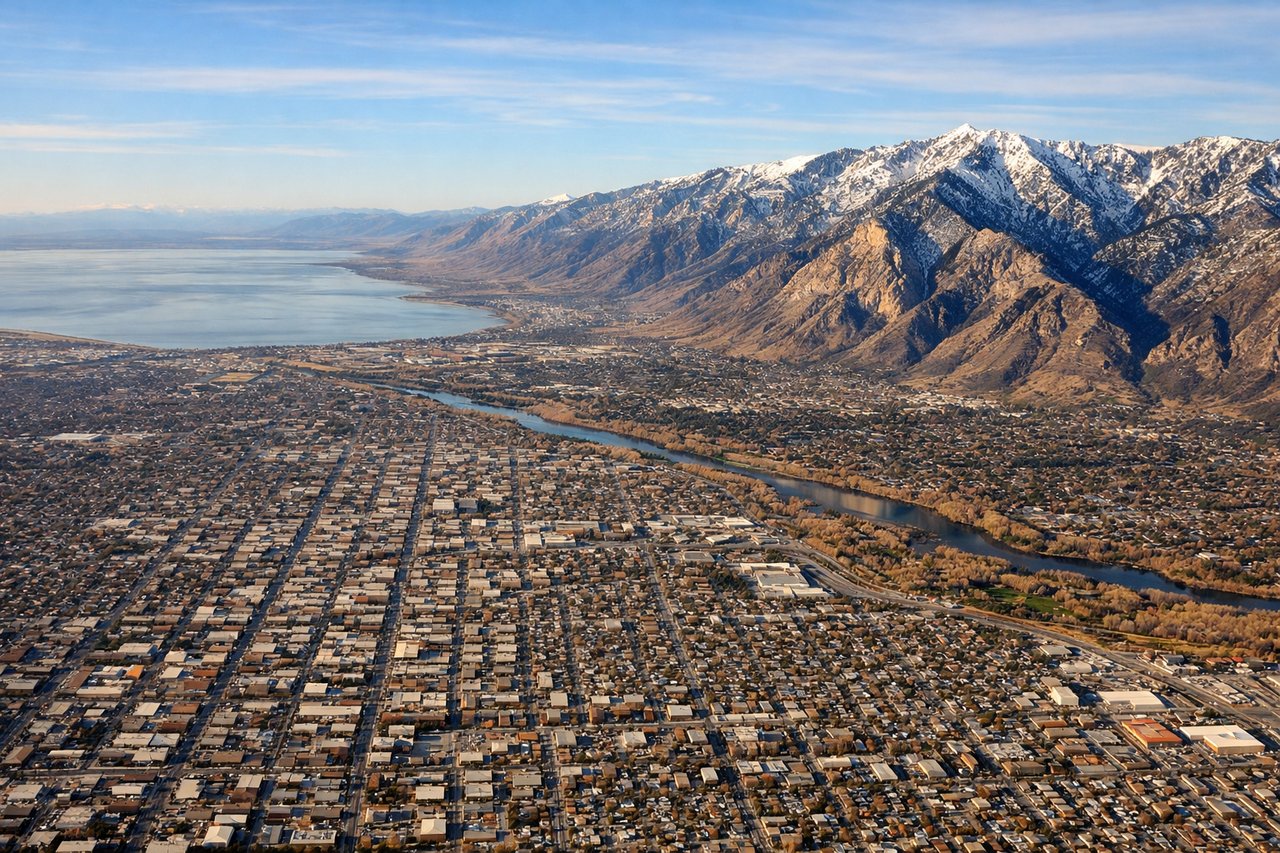
Landing at SLC
LEFTSalt Lake City's primary landing runway is 16L/16R (north-south orientation). Approaching from the east, left-side seats face south and southwest, providing views of the Wasatch Range's western face and the Great Salt Lake as you descend into the valley.
Landmarks on this routeAll landmarks →
Will your flight be in sunlight?
See exactly which side of the plane gets sun and shade at your departure time.
About This Route
Which side of the plane should I sit on flying from La Garenne (AGF) to Salt Lake City International (SLC)?
Sit on the Left side of the plane for the best views on flights from Agen to Salt Lake City. While takeoff offers interesting regional French geography on the right, the landing approach into Salt Lake City provides far more dramatic and visually distinctive scenery. The Wasatch Range and Great Salt Lake combination on the left side during descent is geographically spectacular and worth prioritizing for the full journey.
What can I see during takeoff from La Garenne in Agen?
During takeoff from La Garenne (AGF), sit on the Right side for the best views. Agen typically departs eastbound (runway 04/22 favors 04 for morning operations). Right-side seats face north initially, offering views of the Garonne River valley and the rolling terrain of southwestern France as you climb. Notable sights include: Garonne River (meandering south of the airport), Lot-et-Garonne agricultural plains, Pyrenees foothills visible on the distant southern horizon during climb-out.
What can I see when landing at Salt Lake City International in Salt Lake City?
When landing at Salt Lake City International (SLC), sit on the Left side for the best views. Salt Lake City's primary landing runway is 16L/16R (north-south orientation). Approaching from the east, left-side seats face south and southwest, providing views of the Wasatch Range's western face and the Great Salt Lake as you descend into the valley. Notable sights include: Wasatch Range (dramatic snow-capped peaks dominating the eastern skyline), Great Salt Lake (large body of water to the northwest), Salt Lake Valley floor with the city grid visible below, Oquirrh Mountains to the west.
How long is the flight from Agen to Salt Lake City?
The flight from La Garenne (AGF) to Salt Lake City International (SLC) takes Approximately 10.5 to 11 hours.
What does the Agen to Salt Lake City flight path pass over?
The flight path crosses the Atlantic over the North Atlantic, passing south of Greenland and Iceland. Over North America, you'll cross the Canadian Maritimes, then traverse the Great Lakes region (visible on clear days), the Great Plains, and the Rocky Mountains. The Rocky Mountain chain becomes increasingly prominent as you approach Utah, with the Continental Divide visible in the final hours before descent into the Salt Lake Valley.