Auckland to Faleolo is 1,797 miles (2,892 km), a flight of about 3 hours 45 minutes.
The right side edges ahead because Auckland's harbor-and-volcanic-island departure offers a denser, more varied scene than the single mountainous landing view on the left, even though both sides are otherwise dominated by featureless open ocean during the long cruise phase.
Flight Path
Open South Pacific Ocean with no islands or landmarks visible; the flight crosses vast empty water between the Kermadec Trench area and the Tonga-Samoa region before nearing Upolu.
Great circle distance and headings ›

Phase by phase
Takeoff from AKL
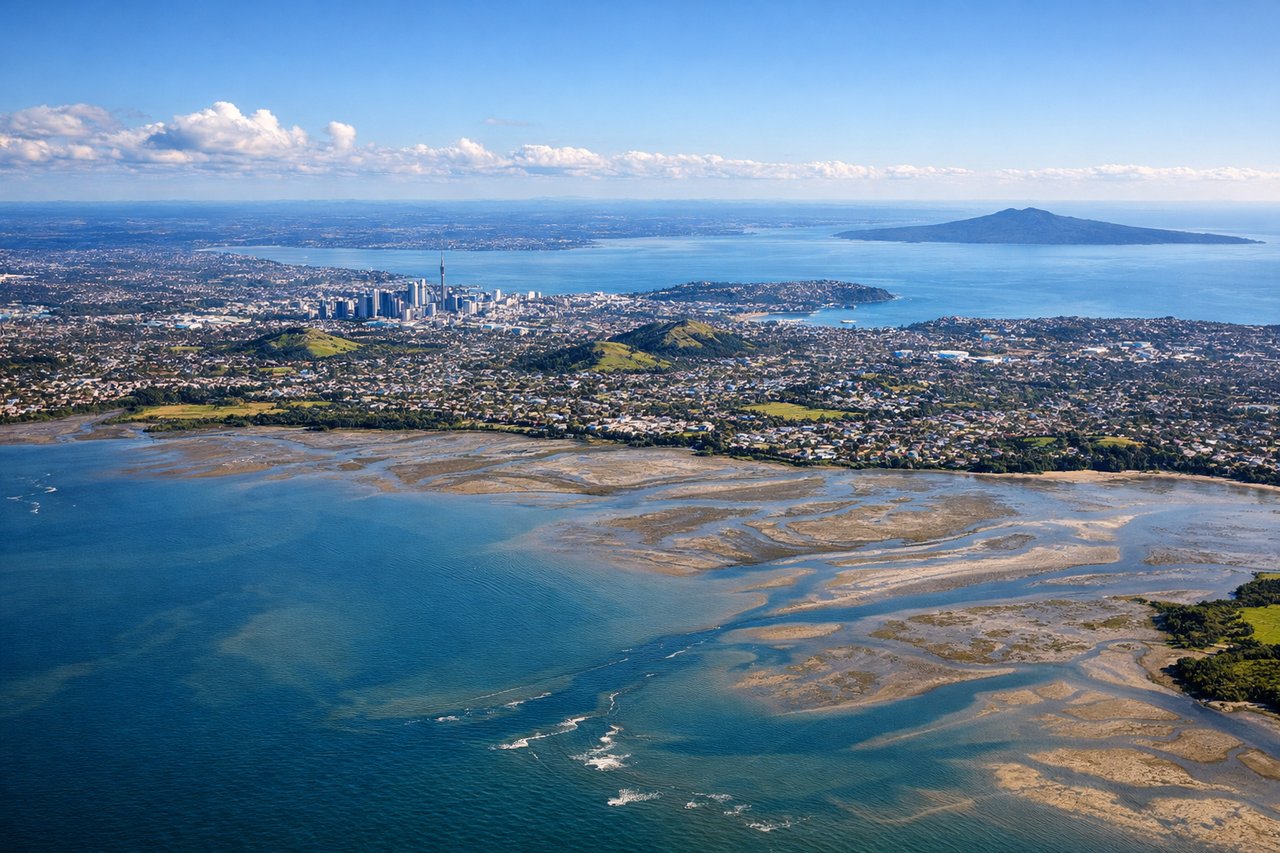
RIGHTDeparting AKL on runway 23L, the aircraft climbs out over Manukau Harbour before turning north toward Samoa, swinging the right side of the plane over Auckland's city skyline, Waitemata Harbour, and the volcanic cones of the Hauraki Gulf. This gives a brief but striking urban-and-island view before the long ocean crossing begins.
Landing at APW
LEFTArriving into APW on runway 26, the approach tracks west along Upolu's north coast, putting the island's mountainous, rainforest-covered interior on the left side of the aircraft. Passengers get a close view of volcanic ridgelines and dense green terrain rising sharply from the coastal plain just before touchdown.
Landmarks on this routeAll landmarks →
Will your flight be in sunlight?
Pick a date and time in the Sun Map to watch the sun move across your whole flight.
About This Route
Which side of the plane should I sit on flying from Auckland International (AKL) to Faleolo International (APW)?
Sit on the Right side of the plane for the best views on flights from Auckland to Faleolo. The right side edges ahead because Auckland's harbor-and-volcanic-island departure offers a denser, more varied scene than the single mountainous landing view on the left, even though both sides are otherwise dominated by featureless open ocean during the long cruise phase.
What can I see during takeoff from Auckland International in Auckland?
During takeoff from Auckland International (AKL), sit on the Right side for the best views. Departing AKL on runway 23L, the aircraft climbs out over Manukau Harbour before turning north toward Samoa, swinging the right side of the plane over Auckland's city skyline, Waitemata Harbour, and the volcanic cones of the Hauraki Gulf. This gives a brief but striking urban-and-island view before the long ocean crossing begins. Notable sights include: Auckland city skyline, Rangitoto Island volcanic cone, Waiheke Island, Hauraki Gulf.
What can I see when landing at Faleolo International in Faleolo?
When landing at Faleolo International (APW), sit on the Left side for the best views. Arriving into APW on runway 26, the approach tracks west along Upolu's north coast, putting the island's mountainous, rainforest-covered interior on the left side of the aircraft. Passengers get a close view of volcanic ridgelines and dense green terrain rising sharply from the coastal plain just before touchdown. Notable sights include: Upolu's central volcanic ridge, dense tropical rainforest, coastal plain near Faleolo, coral-fringed shoreline.
How long is the flight from Auckland to Faleolo?
The flight from Auckland International (AKL) to Faleolo International (APW) takes about 3 hours 45 minutes. The shortest flight path between them is 1,797 miles (2,892 km); winds and air traffic control usually add a few percent.
What does the Auckland to Faleolo flight path pass over?
Open South Pacific Ocean with no islands or landmarks visible; the flight crosses vast empty water between the Kermadec Trench area and the Tonga-Samoa region before nearing Upolu.